The Disappearance of Boredom

Blaise Pascal said that all of humanity’s suffering comes from being unable to sit quietly alone in a room. That was over three hundred years ago, back when there were no phones, no algorithms, no app demanding a refresh every few minutes. Pascal probably never imagined that later generations wouldn’t solve this problem so much as route around it entirely. The kind of boredom he was talking about simply doesn’t exist anymore.

In the 19th century, European doctors would prescribe “rest cures” for patients with nervous exhaustion — confining them to sanatoriums, forbidding reading, writing, even conversation, just lying there. That was boredom dispensed like medicine. Simone Weil said attention is the purest form of prayer; Kierkegaard wrote somewhere that boredom is both the root of all evil and humanity’s only true rest. But the “boredom” people need no longer exists in the present, nor in some objective void out there. Every gap in time is now stuffed with stimulation — on the subway, in the bathroom, in the five minutes before sleep… people increasingly resemble a spinning top running on empty, appearing to move while going nowhere at all.

The disappearance of boredom isn’t, as those relentlessly upbeat self-management books would claim, a sign that “humanity is advancing, efficiency is improving.” Its exit, from a personal standpoint, comes because we can no longer tolerate the emptiness within; from a social standpoint, because capital discovered the value of attention and turned every blank second into something sellable. Because of this, people no longer drift aimlessly through an afternoon, no longer suddenly recall some small thing from three years ago… all that’s left in memory is a lazy afternoon, and a question mark we can never return to.

I recently heard a bit from comedian Des Bishop: for his generation, “meditation” was nothing more than staring at a water droplet sliding down a bus window. Back then nobody called it “mindfulness” — it was just boredom, just an afternoon, just water on glass. As a kid riding the old green-painted trains, you could spend hours counting railway ties going by… Without boredom, we seem to have drifted further from ourselves.

Every Day a Good Day - Part 2

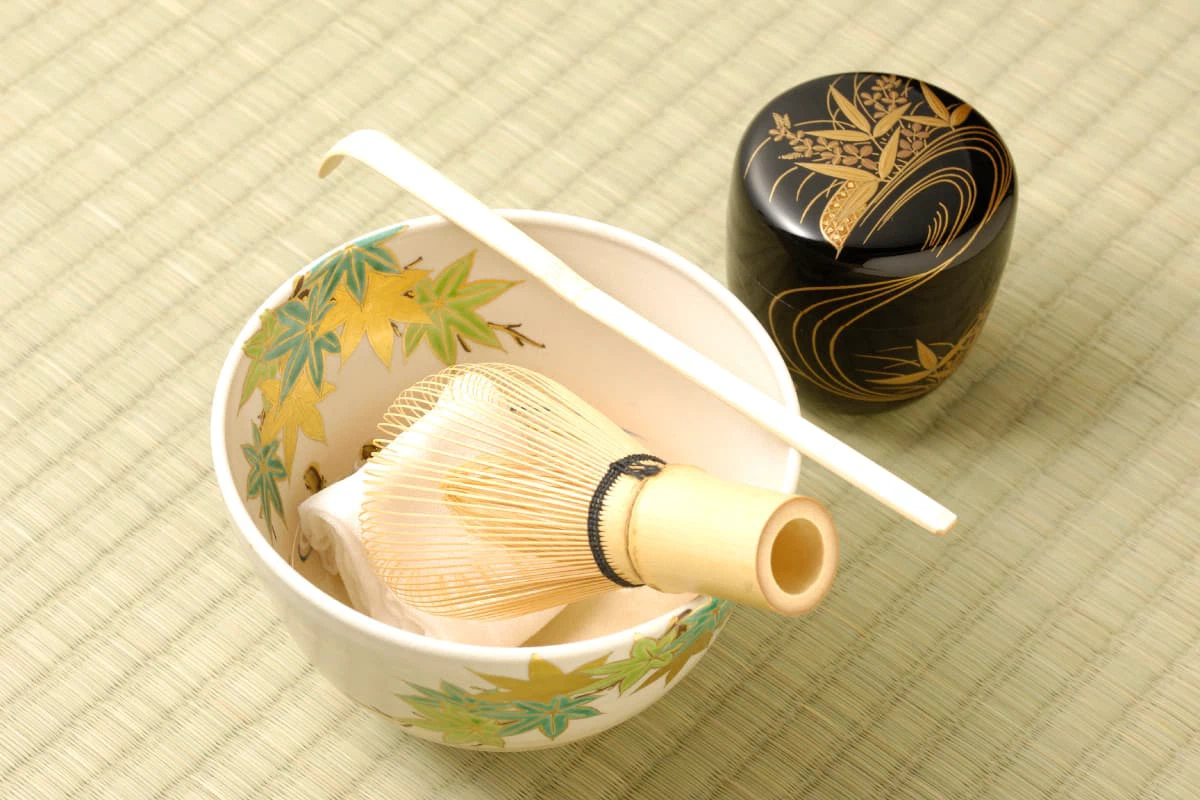
(Part 1) Otemae (お手前) refers to the formal procedures and etiquette for preparing, whisking, and serving tea in Japanese tea ceremony. It’s not just a set of instructions for movement — it’s the tangible expression of the tea ceremony’s spirit (harmony, respect, purity, tranquility). Broadly, it varies by school (Omotesenke, Urasenke, Mushakojisenke, and others), and further branches into many variations — “usucha temae” (thin tea), “koicha temae” (thick tea), “ro temae” (sunken hearth), “furo temae” (portable brazier) — depending on the season, utensils, and occasion.

In its narrowest sense, “otemae” refers to the precise sequence of interactions and movements between host and guest within the tea room — literally, “temae” means making tea in front of the guest. But in a broader sense, it also refers to the artful shaping of time, space, utensils, and state of mind throughout the entire tea gathering. Setting aside the elaborate choreography, otemae is essentially a spiritual practice of seeking stillness within motion. Its core utensils include the tea bowl, the whisk, the tea scoop, the tea container, and the water jar. In theory, every shift in movement should resonate with the dim light of the tea room and the turning of the seasons outside the window. Each school has its own distinct aesthetic, and both the choice of utensils and the rapport between host and guest demand great care. Beyond these technical considerations, the fluidity of the movements and the visual beauty of the ritual matter just as much.

Apart from the rhythm of the whisk striking the tea, the external tools of tea-making have remained largely unchanged in their austere form; yet the seemingly rigid internal choreography demands that the host, through years of practice, peel away distraction and restlessness layer by layer with focus and mindfulness, until the tea reaches its ideal flavor and state.

The Town and Its Uncertain Wall

There’s a kind of system in the universe called a binary star, where two stars orbit a shared center of mass, circling each other, their outer atmospheres warped by mutual gravity. The self and the subconscious are a bit like two stars entwined in the darkness, surrounded by an infinite universe. The shadowless little town walled in by towering ramparts in The City and Its Uncertain Walls feels something like that. What stays with me most is the shadow. It isn’t the weaker half — the “shadow” outside the wall is more alive than the body inside it: it feels pain, desire, death. The body inside finds peace, but grows ever more like an empty shell. Murakami never spells it out (that slyness is his trademark), but the direction is clear enough: the wall isn’t just a defense, it carries a strain of self-punishment too. The protagonist isn’t trapped inside — he doesn’t want to leave.

In the afterword, Murakami notes that the novel went through several revisions and took more than forty years to finally be published. The endless reworking of an idea may be one of the most valuable things about human intelligence — or perhaps one of the most time-consuming. As a reader, you can sense the accumulated weight of the author’s life experience folded into the text — and that, on the whole, feels like a good thing. Of course, a master storyteller never makes it easy to deconstruct his own method. Why write an “old novel” at all? Probably only he knows the answer.

The Middle-Aged Virgin

The Middle-Aged Virgin: A Documentary Report on Japanese Society, through interviews with older male virgins in Japan, reveals a forgotten stratum at the bottom of society.

The subjects in the book are shaped by overlapping factors: poverty, social anxiety, trauma from their family of origin, mental illness — this book isn’t really about “sex” at all, it’s about loneliness. These men, who have never had a sexual experience and are mostly stuck in temp work or long-term unemployment, are a product of the employment instability, the erosion of social communication skills, and the breakdown of family ties left behind by Japan’s lost thirty years. The author’s intentions are admirable, but the book has its blind spots.

  • It equates the physical or social state of “virginity” with social abandonment — implying that being a middle-aged virgin must come bundled with career failure and personality defects. This is, in effect, reversed causality, and it overlooks those who remain single (and virgins) by personal choice.

  • The book repeatedly implies that sexual experience is the entry ticket into mainstream society. Under that logic, the complex emotional needs of an individual get flattened into a simple socioeconomic indicator. Someone who’s merely introverted but holds a stable job loses any claim to being worth discussing within this framework — which leads to a lopsided picture.

That said, it’s unfair to expect a work of documentary nonfiction like this to cover every angle. What makes it valuable is that it lets readers see not a faceless group, but a set of individual “victims” — marginalized by society and stripped of the ability to speak for themselves.

Color Matters

The Secret Lives of Colour
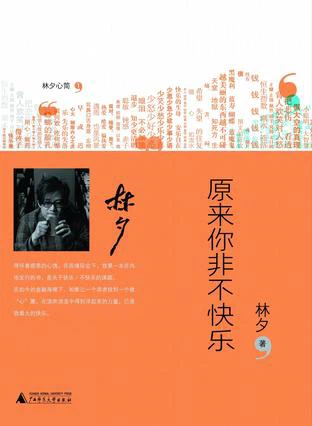
Chinese edition cover of The Secret Lives of Colour

Over the Lunar New Year I read The Secret Lives of Colour (Kassia St. Clair, 2017) — a wonderfully fun and thoroughly researched popular science book on color. It covers everything from the physics of spectral analysis to the origin of the term “blue-collar worker” (indigo-dyed jeans), a little of everything. And quite a few long-standing sociological puzzles find their answers here too.

For instance: why have so many civilizations been drawn to red in particular?

The book explains that red, sharing its color with blood, has always been tied to life, danger, and death. We put money into red envelopes; Catholic bishops wear red; the ancient Egyptians wrapped mummies in linen dyed with red ochre; red appears on the flags of 74% of countries; waitresses wearing red uniforms earn 26% more in tips. Across all these seemingly unrelated customs, red’s special status shows through in a startling way. When red was first noticed, it probably meant nothing at all; people everywhere, independently, turned it into a vessel for special meaning.

The author even includes some history with a sharper edge. Purple dye, for instance, came from sea snails, was extraordinarily expensive and famously foul-smelling, which is exactly how it became the exclusive “scent of power” reserved for royalty. The wildly popular 19th-century wallpaper color Scheele’s Green actually contained arsenic — Napoleon’s death on Saint Helena may well have had something to do with the toxic green coating the walls of his room… The book doesn’t even spare Mummy Brown, the 18th- and 19th-century oil paint pigment some painters made by grinding up actual mummies. It really does run the gamut, from the sublime to the absurd.

The Silver Lyre

The album The Silver Lyre, produced by Lorna Govier and Anne Kilmer, is a remarkably rare find. Many people who’ve studied human history know that the oldest writing system was invented by the Sumerians — cuneiform — but far fewer know that the oldest complete piece of written music is a set of cuneiform songs inscribed on clay tablets.

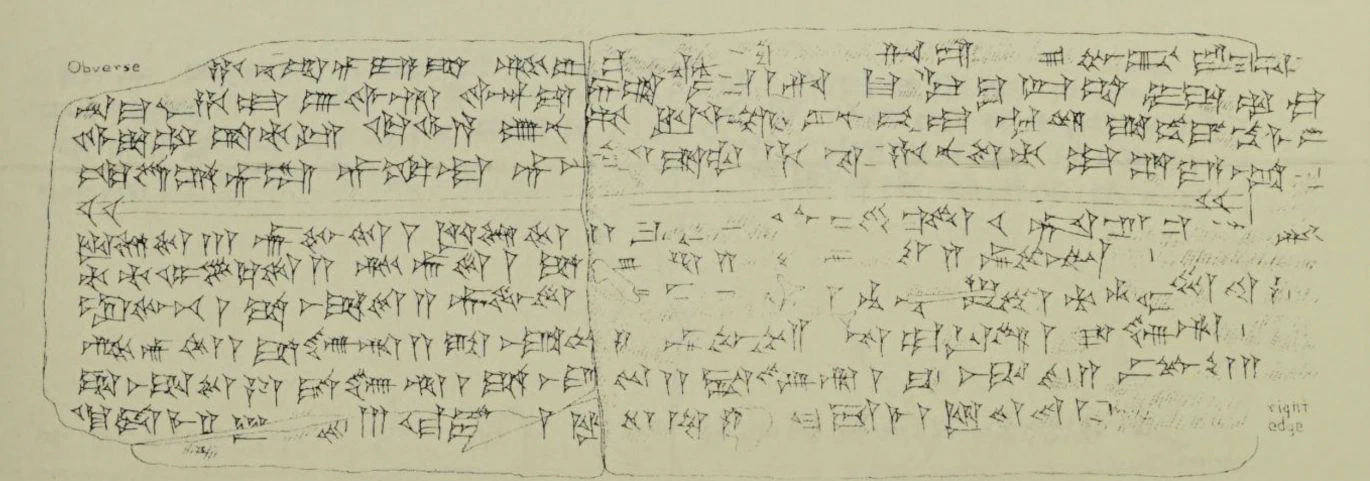
The album’s track “A Hurrian Cult Song” is based on Assyriologist Anne Kilmer’s decoding of the Hurrian cult songs found on cuneiform tablets unearthed at Ugarit. Kilmer made significant contributions to this formidable task, matching the interval instructions on the tablets against the syllable counts of the Hurrian lyrics to derive something resembling a “natural scale” melody.

A Hurrian Cult Song
The song text as transcribed by Kilmer

The interpretation of these cuneiform musical scores remains a contested topic in academia. While the tablets clearly record the names of the strings and the interval instructions, the Hurrian language itself is an extinct linguistic isolate, so there’s no single agreed way to translate these symbols into concrete rhythm and melodic movement. Some scholars argue for a pentatonic-leaning chant; others claim a more complex polyphonic logic lies behind it. Near Eastern archaeology, it must be said, remains a field charged with both passion and controversy.

Silver Lyre
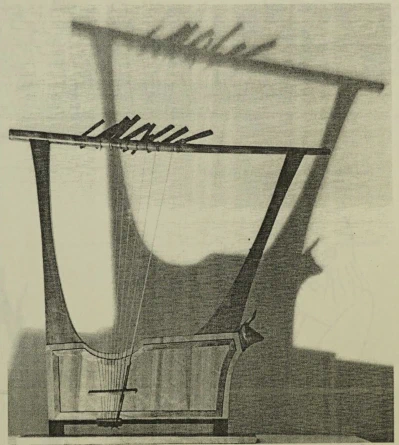
Photograph of a replica of the Silver Lyre, made by R.R. Brown

The instrument used on this track is a modern replica based on the “Silver Lyre” unearthed in 1927. The working model of this ancient instrument was originally conceived by Kilmer and built by R. R. Brown of the physics department at UC Berkeley. Its frame is made of red birch, and its soundbox of spruce. The strings are traditional gut strings, running over a bridge on the soundboard and anchored at a bottom block. For tuning, the tops of the strings wrap around a crossbar and oak pegs — twisting the pegs applies leverage to adjust string tension, allowing for fine pitch control.

Imagining how this might have sounded in the 14th century BCE, the album’s performance is probably too modern, layering in a fair amount of imagined “ethereal” and “sacred” atmosphere, and the harp parts carry a touch of contemporary scoring polish. Still, none of that diminishes its artistic value.

Part of this introduction is adapted from Sounds from Silence: Recent Discoveries in Ancient Near Eastern Music, 1976.

Treasures Plucked from a Sea of Romance, Part 2

apollo song
Still from Song of Apollo

I recently watched last year’s Japanese drama adaptation of the manga Song of Apollo. Flipping back through my old blog, I realized I read that manga some fifteen years ago — time really does fly… though that’s just a few extra lines of preamble. To keep things short, you can find a recap of the manga’s plot in this old post (Chinese only).

People are divided into men and women, and everyone goes along with it, but few stop to ask why. Why does humanity classify at all? The question, traced to its roots, is complicated. From the standpoint of biological evolution, classification is a cognitive shortcut the brain evolved to save energy. If early humans had to spend hours deeply observing every object they encountered just to judge whether it was dangerous, humanity would likely have gone extinct long ago. So the brain learned to slap on labels, abstracting away the complexity of reality. Psychologically, ambiguity tends to breed anxiety, while classification offers a sense of security.

In modern society, the purpose of classification leans more toward ease of management. If people were sorted into countless intermediate states, the cost of drafting laws, allocating resources, even building public restrooms would balloon. The protagonist, Shogo, is clearly an outlier. Childhood trauma left him deeply averse to love, unable to play the “normal” male role society prescribes — pursuing women, starting a family. Society, through psychiatrists and the law, diagnoses and tries to correct him, attempting to force him back into being “normal.” Shogo’s rejection of women is really a fear of the complexity of love itself; and society’s punishment of Shogo is really its collective fear of an individual it cannot control.

Every view society imposes on an individual runs both ways. Shogo’s resistance is, at heart, a refusal of society’s classification rules. Society’s attempt to “correct” him back into heterosexuality, reproduction, and law-abiding citizenship is itself a kind of violent abstraction. If you can’t manage to be a good man, then become a rogue, a drifter instead. To define your own identity and hold onto it to the end — that is victory. Sadly, in the end, he is “cured.” Once a system of classification shifts from being a tool for survival to a tool of domination, it becomes something frightening.

As for the drama adaptation itself, I’d call it passably competent. As for the long stretches devoted to scenes between the male and female leads (with the “treatment” angle largely left out), some viewers found it tedious, even gimmicky — trading on the name Song of Apollo for something else entirely. I can live with that, though — in the end, giving the male and female leads roughly equal weight is its own kind of generosity toward human feeling.

A Root, a Cup of Tea

Every Day a Good Day

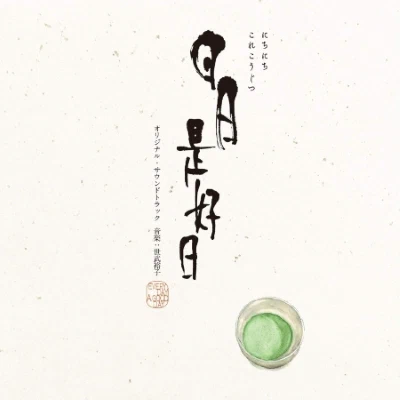
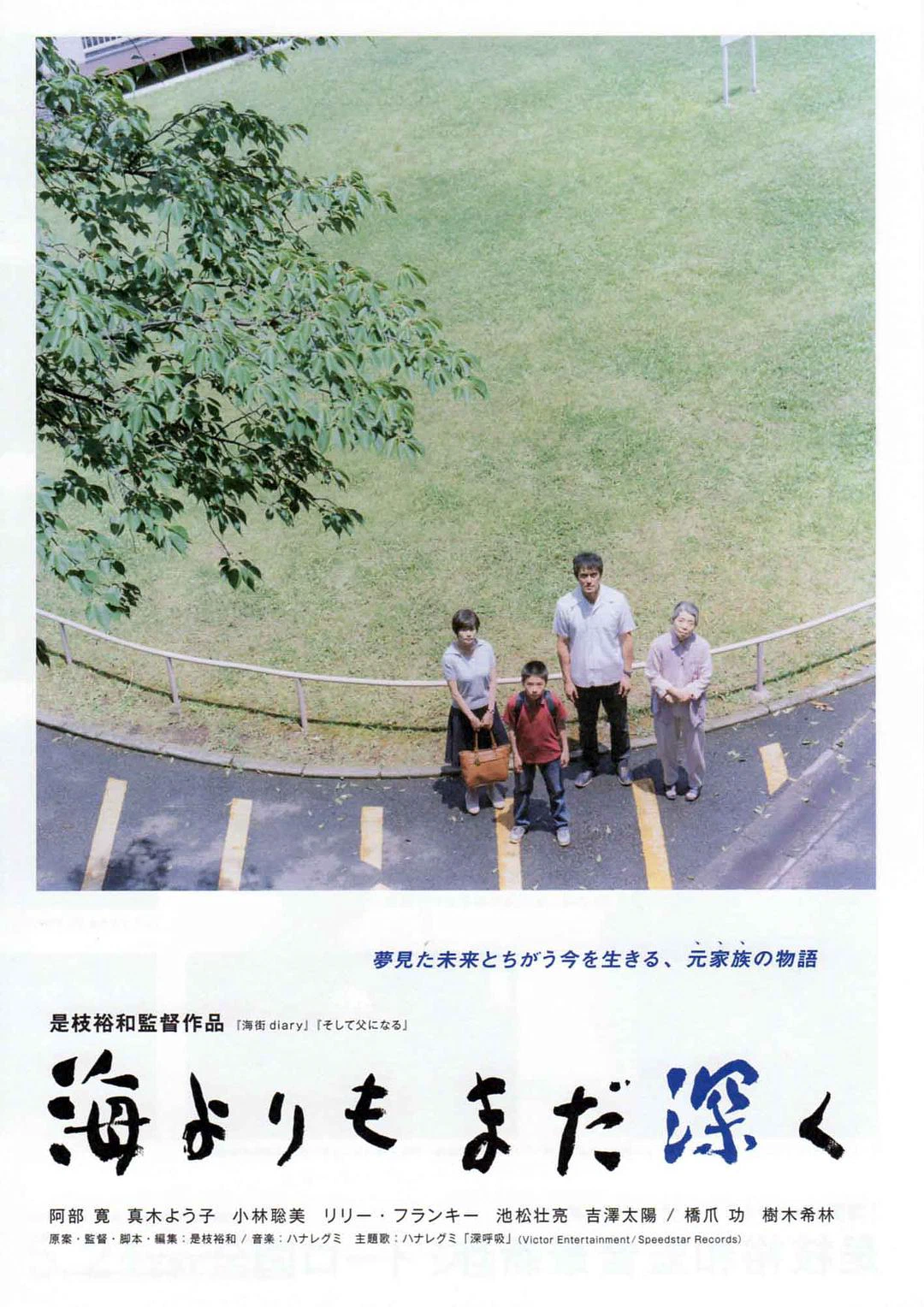
Every Day a Good Day (日々是好日, 2018) is a film adapted from the memoir of Japanese tea ceremony instructor Noriko Morishita. At twenty, Noriko began learning, in a tea room, how to fold cloth, rinse bowls, and pour water — coming to understand, through repetition, the discipline behind every small gesture. Noriko was no prodigy; she was ordinary, hesitant, and for a long stretch of time, unsure what the tea ceremony even meant. In that narrow tea room, she learned to tell apart the subtle difference in sound between hot water poured into a bowl in summer and cold water in winter, learned to listen to rain on rainy days and watch clouds on clear ones. Those seemingly tedious, day-after-day rituals were, in fact, time made tangible…

By the end of the film, Noriko is no longer the lost girl peering in from outside the tea room, nor is she still troubled by the meaning of life — she has become part of the tea room itself: tranquil, yet holding a quiet strength; old-fashioned, yet moving with the seasons; silent, yet brimming with life. The film’s theme song is deeply soothing, and paired with the story, it makes you feel time itself slipping past.

As for the history of matcha, it’s a “bitter” journey of migration, craft, and culture. As early as the Tang dynasty, the Chinese were already steaming tea leaves, drying them, and grinding them into powder to drink with water. The Song dynasty developed the practice of “dian cha” (点茶) — placing tea powder in a bowl, pouring in water, and whisking it with a bamboo whisk until foam rose. In the Southern Song, the Japanese monk Eisai brought Chinese tea seeds and this mature “whisking” method back to Japan. As the practice in China was gradually replaced by loose-leaf brewing, Japan elevated it into a full ceremonial art. In pursuit of the most vivid green and freshest flavor, tea farmers developed a distinctive technique: shading the plants under trellises before harvest so the leaves, starved of direct light, produce more chlorophyll and amino acids; the leaves are then ground slowly on stone mills into a fine powder with a silky texture, without damaging the aroma.

For centuries, the tea ceremony served as a spiritual anchor for samurai, and embodied the Zen idea of “ichigo ichie” — one encounter, one chance, never to be repeated. These days, of course, matcha has transformed into the darling of the wellness and baking world :)

Counter-Stereotyping

The Substance
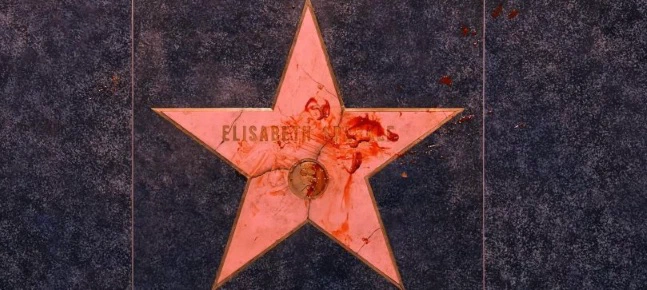
The Substance (2024) — Sue dies beneath Elizabeth’s ‘star glow’

Every perception society imposes on an individual or a group runs both ways. I recently noticed, in some programmers’ social groups, that when asked about their hobbies, most mentioned some kind of sport. That’s a clear example of the counter-stereotyping effect at work. The dominant social attitude (once?) held that programmers were socially awkward, health-sacrificing homebodies — dull, inarticulate, indifferent to appearance. Yet many programmers I know are nothing like that: they go to the gym regularly, love the outdoors, and no one looking at them would think “dull tech nerd.”

Counter-stereotyping is a form of “psychological compensation” and “identity reconstruction.” The sociologist Erving Goffman, in Stigma, observes that individuals with a damaged identity often seek social acceptance through concealment or compensation. Once someone becomes aware that their group carries a certain label, a defensive, reactive drive often emerges — a push toward traits diametrically opposed to that label, as if declaring: I am not what you imagine. But this kind of pushback is a double-edged sword. Once “counter-stereotype” hardens into a new paradigm one must conform to, the individual simply falls into another kind of trap.

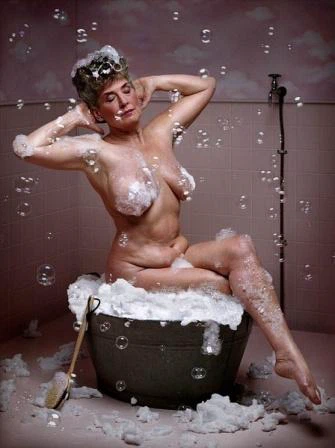
The film The Substance (2024) pushes this psychological effect to an extreme. Under the rule that “beauty is justice,” the fading star Elizabeth injects “the substance” and splits off Sue — young, flawless. Elizabeth is the pitiable one: she has internalized society’s contempt for aging and tries to defeat it by adopting a disguise more in line with mainstream expectations; she cannot accept growing old, or rather, her aging is something society refuses to permit. In the end, as Sue recklessly drains away her life force, she collapses into a heap of flesh and blood.

The film is also full of commentary on how patriarchal society suppresses women, dictating what women should or shouldn’t be… even off-screen, some Canadian viewers reported men in theaters bursting into loud laughter during several of the film’s most horrifying scenes. Real social progress, perhaps, doesn’t lie in everyone having to prove themselves through “counter-stereotyping,” but in a society that can simply accept the uniqueness of every individual.

Virus Tropical

virus tropical

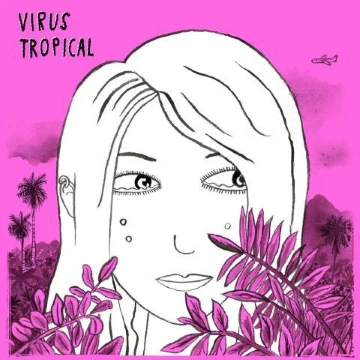
This animated film is adapted from the autobiographical graphic novel of the same name by Colombian illustrator Power Paola. It tells the story of Paola breaking free from the constraints of a conservative South American middle-class family.

Paola’s very birth was treated as a kind of “miracle” — doctors had told her mother she’d already gone through menopause, and even referred to the child in her womb as a “tropical virus.” Because her father had once been a priest, her childhood was shadowed by religious conflict and family upheaval. In high school, she and her mother left Ecuador for Cali, Colombia. Far from home, Paola went through the usual confusions of adolescence. In Cali — a city both seductive and turbulent — she experimented with drugs, lived through the disillusionment of first love, felt the hardship of striking out on her own, and worked hard to find herself through art. After graduating, Paola packed her bags amid the chaos and said goodbye to her family…

The soundtrack, composed by Adriana García Galán, blends Latin indie rock with psychedelic folk — a nostalgic mood thick with tropical humidity, bittersweet yet full of life. Paired with the film’s raw, sensitive black-and-white hand-drawn animation, it becomes deeply affecting.

A Modest Menu

food

Having finished our study of nutritional chemistry, and wishing to put it to practical use… at the end of it all, here is the best menu I can offer you:

  • Morning: whole grains/mixed grains, milk (or soy milk), one egg.

  • Midday: brown rice, plenty of seasonal vegetables, a little fish or meat.

  • Evening: root vegetables, a warm light soup, a small amount of seasonal fruit.

Years may go by

We’re always inclined to label the world as continuous. We build logic and causality, trying to find a “reasonable,” “stable” timeline in memory. And yet, what’s truly worth remembering is so often the sudden, the senseless event. A string of accidental occurrences happens to assemble into something called “me,” which only deepens the confusion: why me, why now, and not some other moment? Seen through an existentialist lens, this confusion is itself a kind of luxurious illusion — everything is simply contingent.

That contingency is unsettling (and also strangely captivating). If everything is random, then are choice, effort, even suffering, all meaningless? In truth, our existence is nothing more than an accident. The accident carries no emotional color of its own — it simply happened. But just as probability theory exists within mathematics, people always seem to find some curious balance between chance and certainty.

Speaking of the song “On Saturday Afternoons in 1963,” I love this lyric from Rachel Yamagata: as far as you ever wander, you end up back home… and while it stings a little, thinking of Cao Pi’s line — “life is but a sojourn, why burden it with worry” — might ease that feeling somewhat.

The most as you’ll ever go

Is back where you used to know

Years may go by

The Goldberg Variations

I’ve recently been watching a YouTube channel called “The Boring Life of a Musician.” Classical music is a tangled, difficult world, and for a complete beginner like me, channels like this are far more welcoming.

bach
Cover of the first edition

A search on Google turns up countless versions of the Goldberg Variations — harpsichord, organ, clavichord, piano, and recordings by famous performers across every era. A hundred fingers couldn’t point to just one. On Reddit you’ll find comments like: I thought this version suited my taste perfectly, and then suddenly I heard another, and it was an entirely different sky. It’s hard not to admit that human perspective is always too narrow, capable only of being slowly stretched wider. We are to music what an eye is to a forest — the more we possess, the more leaves there are blocking our view ahead.

As for Bach (J.S. Bach), there’s probably not much left to say. After his death he was crowned with honor after honor, yet in life he was, in truth, rather pitiable. Even so, people still love to compare him to his contemporary Handel (G.F. Händel). In German, “Bach” means a small stream — a thin trickle that never stops; “Händel” means merchant (from Fifteen Lectures on Music Appreciation, Xiao Fuxing). It’s hard to deny — Handel really was a good deal wealthier than Bach :). Hendrik Willem van Loon writes in his biography of Bach:

Handel, as a composer, drew far more attention than Bach… and people generally considered his life more interesting than Bach’s… people always loved to gather in the homes of distinguished German masters and opera-house managers. As for Bach, his rooms were nearly bare, furnished with a few simple pieces, and guests were rare…

Historically, Bach and Handel never actually met. They were practically neighbors, born only a month apart; Bach visited Handel’s hometown more than once when Handel returned to see his mother; Bach admired Handel deeply throughout his life… and yet, they never crossed paths. It can’t help but recall the plot of Jimmy Liao’s Turn Left, Turn Right.

Bach stayed in the countryside leading a choir and writing his own music; Handel traveled abroad, touring one country after another. Perhaps it was precisely this humility and restraint that allowed Bach’s music to speak to the soul — beyond religion — since he could never have been as aloof or hot-tempered as Handel. Of course, he wouldn’t have wanted to be. Bach, one imagines, always kept his composure, sitting calmly, never the type to have his wig fly off in a fit of rage like Handel. Later, people grew used to saying Bach’s music carries a religious air; later still, people found in Handel’s music that same sense of faith and reverence.

Having said all this, I’ve fallen into the old trap of comparison myself… ah, it seems simply listening to music for its own sake is never quite possible. Only by setting aside comparison and bias can one actually be moved. Perhaps I’ll add a new tag after this, to record the interesting history I “hear” along the way.

13-Last Swim

The soundtrack to Gods and Monsters feels deeply somber from beginning to end — much like the somberness of James Whale himself. It carries so much: his dying, his career, his Frankenstein… and, of course, his unconventional sexuality.

In Michael Cunningham’s words, for James, the time that remained “doesn’t belong to him, which is why he thinks about killing himself.” This recalls, in some strange way, the old man with Alzheimer’s in The Father. As time and the palace of memory collapse along with the disease, he weeps: my leaves have all fallen. Seen through that comparison, his sudden death becomes a little easier to understand.

Anyone who’s seen the film knows there’s an unspeakable bitterness to how he dies. James’s body is pulled from the pool by Clayton, who, fearing he’ll be suspected of some connection to him, pushes the body back into the water. Watching the body drift weightlessly on the surface, sunlight everywhere — it hardly looks like death. It looks more like a dance. This track, “Last Swim,” records the violin melody that plays in that very moment. I think it’s a moving scene.

Gods and Monsters — which one is the god, and which the monster? Maybe listening will offer a different answer.

The Humanistic Sensibility of the Social Researcher

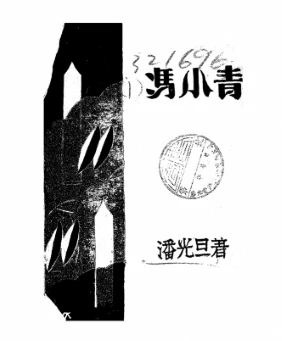
xiaoqing

What used to be called “shadow-love” (影恋) is what we now call narcissism. Most people know the root of the term from the Greek myth of the beautiful young man Narcissus — the English word “narcissism” is simply a variation of his name.

Compared to our modern “narcissism,” the older Chinese phrase “shadow-love” sits closer to the classical idiom “to pity one’s own reflection” (顾影自怜). In the words of the scholar Pan Guangdan himself: “Whether the reflection is a mirror image, a ripple on water, or a painted or photographed likeness, it can all be summed up by the character for ‘shadow’; China has long had the saying of pitying one’s own reflection — some minimal form of shadow-love is a psychological state shared by everyone…” Likewise, in Pan’s translations, terms like “withered-willow love,” “the wild-goose phenomenon,” and “gene” all carry a distinctly local flavor. Li Yinhe, in Subculture of Sadomasochism, adopted the term “love through cruelty,” noting that the translation captures both the cruelty and the love embedded within it. Indeed, “love through cruelty” sounds far more humane than “sexual abuse.”

The surprises in the language don’t stop there. Read this book closely and you’ll keep finding little delights. Take “Nasha-Xishi phenomenon” (奈煞西施现象) as a rendering of “Narcissism” — a translation so much better than a flat phonetic transliteration that I couldn’t help but applaud. Some social researchers’ translations can barely achieve basic clarity, reading as if Chinese were being forced into the original language’s word order. And looking at the horrifying translations AI now produces, I sometimes think I’d be better off just learning a foreign language myself. The prose in this book reads almost like poetry — its retelling of the Greek myth takes only a few sentences, yet captures both the form and the spirit, flowing beautifully… there’s no end to what one could praise here.

On the case of Xiaoqing discussed in the book, Pan Guangdan says it is “the earliest example I have found in the historical record, and without doubt the most elegant one” — its psychological value, he writes, “surpasses many of the cases documented in the West over the past forty years.” That alone speaks to how valuable the Xiaoqing case is. It is, in fact, a real pity for the history of scholarship East and West that Pan never rendered this significant case into English.

A John Waters Christmas

jw

Over a career spanning more than fifty years, John Waters has long since moved from the fringes of subculture into the mainstream, while still holding onto his singular anti-idol sensibility and aesthetic across his filmmaking, writing, performing, and photography. Of course, an aging mind inevitably accumulates a stash of old, stale things, and the single “It’s a Punk Rock Christmas,” released in 2024, is no exception.

As far back as 2004, John Waters first brought his particular spirit to a Christmas album: A John Waters Christmas. The record is both very traditional and very novel. If you’re tired of “Silent Night” or “White Christmas,” here’s a change of pace. I’d always assumed John Waters, with his seemingly “punk,” rebellious image, must have a very traditional side to him too — and this album confirms it.

He puts his peculiar talents to use on these decidedly disreputable tracks, songs like “Here Comes Fatty Claus” and “Santa! Don’t Pass Me By” — things we’ve never heard, or have forgotten we ever heard, or wish we could forget. This obscure assortment, spanning everyone from Tiny Tim to the Chipmunks, Fat Daddy, Rudolph and Gang, and plenty of other never-popular artists, makes for an ideal sweet little “antidote” to the holiday season — irreverent, mocking, and entirely its own thing.

John Waters tours every year around Christmas, and this year he happens to be coming through Boston! In an interview he once said: “Close your eyes, and imagine you’re at my house on Christmas morning, listening to your favorite carols with me…” Not the most Dickensian image, perhaps, but the spirit running through the album turns out to be far more traditional than you’d expect. Still, it seems most people remain partial to the old standard carols, sleigh bells and all.

As the year draws to a close, let me borrow his words: wishing you a merry, filthy, dreadful, sexy, multiracial, hilarious, happy little holiday season!

Paco and the Magical Picture Book

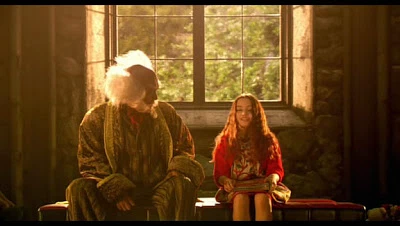
A lovely scene of Mr. Onuki and Paco reading together

Revisiting a film like this in a spare moment between playing with my child feels wonderfully relaxing. Watching a movie steeped in this kind of fairy-tale color now and then feels like being handed a piece of jelly by a small child. This kind of children’s film has no “depth,” and isn’t meant to be deep. The children in it are simply children — and even the adults end up learning from them.

The patients in the film (including the nurse) are, in truth, all psychological patients themselves — some lost in past glory, some unable to stand weakness in others, some weighed down with guilt over their own cross-dressing… but through some inexplicable force, everyone ends up healed. That force is love.

At the end, Paco’s death still moved me a little. To be moved now and then by a fairy tale — I think that’s a good thing.

11-The Pool

Saying this now is probably out of season — a cold wave is sweeping through New Hampshire while, on the other side of the country, wildfires rage — which only goes to show just how varied North America’s climate really is.

The deep-winter wind seems to have drifted into YouTube Music too, with all the “lonely, cold, and tragically beautiful” artists rising to the surface. Well, that’s fine — a little cooling-off does no harm. I’ve been listening to a lot of Tori Amos lately, and this song, “The Pool,” left an especially deep impression on me. As eerie as PJ Harvey’s The River, yet with a different sound entirely… which gets me thinking about poets, and about the soul.

Coronation Mass

A Lancet article last month pointed out that a “stroke-reviving” traditional Chinese medicine showed no significant benefit over placebo in patients with acute cerebral hemorrhage. Trying to make sense of traditional Chinese medicine through double-blind trials strikes me, more often than not, as a futile exercise. In the philosophy of Chinese medicine, everything is connected to everything else. Amid one chance, random event after another, logic becomes a pile of expensive scrap. Its devotees, meanwhile, like to insist that traditional culture is mysterious, unfathomable, beyond words. The opposition and endless bickering with modern medicine leaves one exhausted and gets nowhere. Science can treat the person, but it cannot save them.

Religion sits above the fortress of science; its nobility and its calling are things science can hardly reach. Scientists, more often than not, find their inspiration through theological revelation. In his later years, Newton devoted himself painstakingly to theology — research that, for Newton, may have carried far more meaning than any apple ever did.

Mozart’s Coronation Mass (note: a “mass” here refers to the music sung during a Catholic Mass) is clearly the result of just this kind of religious calling, and of Mozart’s own devout self-cultivation. Mozart was going through a hard time then — financial crisis, the death of his mother, a failed love affair — all of which gave the still-young composer a deep sense of the cruelty and helplessness of social reality. What help could he seek? It seems only religion remained, comfort sought through devout prayer. The Coronation Mass has far less pomp and splendor, and far more of the genuine feeling and depth of an ordinary person experiencing real grief. It is moving.

This live recording is Karajan conducting in 1985 at the coronation ceremony of Pope John Paul II, with video of the performance available as well. Compared to some other well-known versions (such as Trevor Pinnock’s), this one is much slower in tempo, but that pacing suits the atmosphere of a coronation mass perfectly — a kind of baptismal restraint that other conductors, or even a younger Karajan, would have struggled to achieve. Listening to it, you can almost glimpse the Mozart of that time — a Mozart cornered and helpless.

It’s time, time, time

It’s time, time, time… this murmur is what I fear most. Click to listen

Early this morning I watched the clouds in the west drift up like smoke, curling skyward — it reminded me of the scene where Mcdull’s mother is cremated, that slowly rising plume of black smoke. Aging, oh, aging. I can’t deny you’re a natural process, and I can hardly change the fact that I’m just another product on this same assembly line — but I still resent you. When we’re young we don’t know what it means to grow old; once grown, we fear growing old; only in old age do we finally accept it.

The Big Bang produced the universe, and the universe is still expanding, so the world is in motion. Because of that motion, time arose — or so it would seem? Einstein said that moving at, or even beyond, the speed of light would make time stand still, even turn it backward. So, chasing after sunlight — could that make a person young again?

An Unexpected Encounter

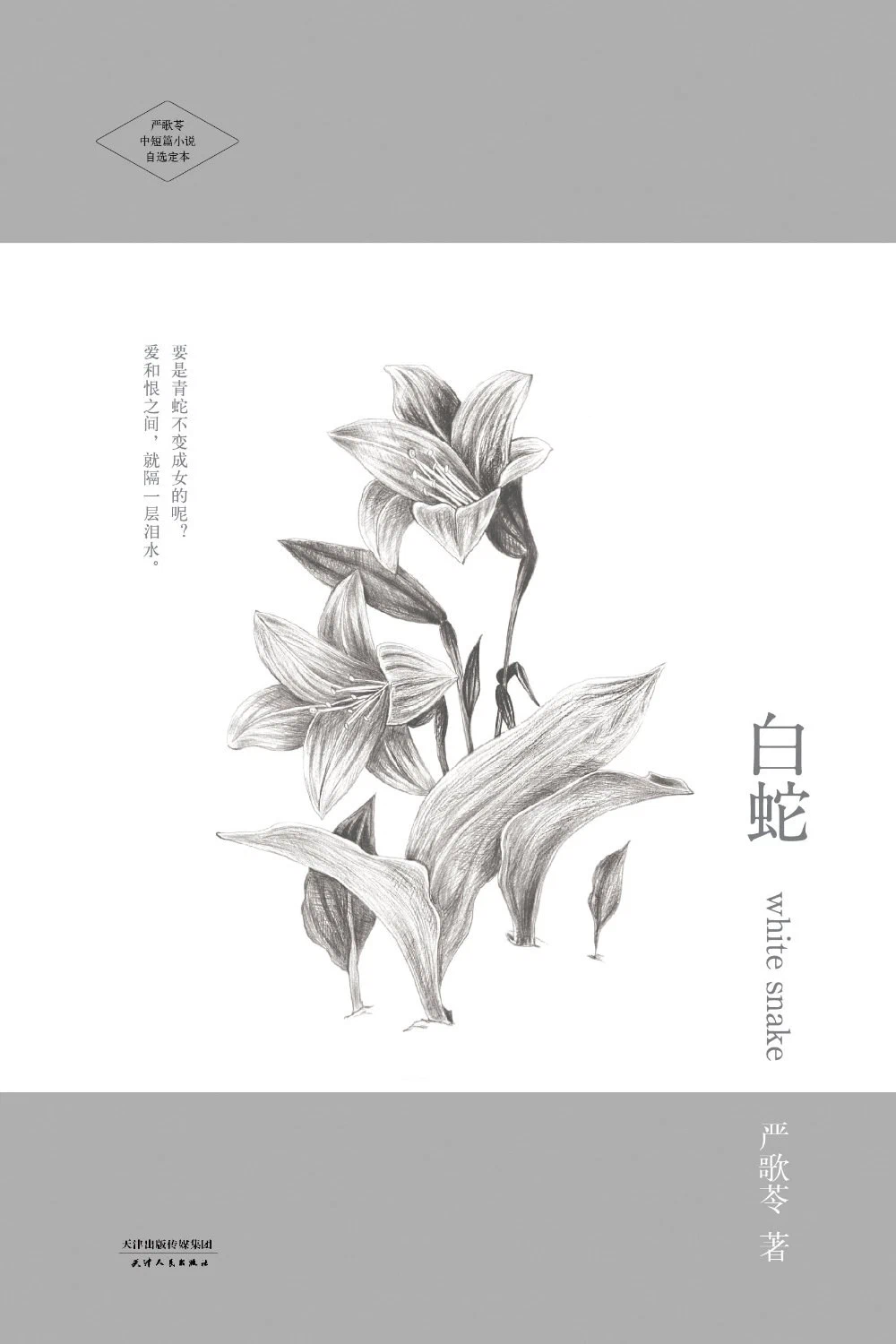
I dawdled through a few more stories in White Snake, sleeping off the lingering effects of last night’s wine, and finished an old piece.


Over the years, my life has gradually moved from contradiction toward unity. After many things happened, I came to embrace an existentialist idea — that everything is contingent. The shifts in the trajectory of my life, the relationships I’ve formed with one person after another — none of it happened out of necessity; there is no inevitable cause.

On Sunday at church I met an older woman; hearing I was from Chengdu, she pulled me aside and chatted for a long time, saying she’d spent her college years there, leaving behind her own green years. Everyone’s memories of youth could probably fill a thick book; pulled out and savored on some afternoon, they’d likely feel only warm and peaceful. And yet youth is like a tedious bout of self-indulgence — it slowly fades away all the same.

I can no longer remember when the landscapes in so many of the photos on my phone were taken. I could probably dig up the exact dates from the metadata, but I choose not to. I prefer to think of the brain’s forgetting mechanism as a filter — whatever it can’t hold gets swallowed by itself. Emerson said the landscape belongs to the one who looks at it. Memory should work the same way — belonging only to those worth remembering.

It was a winter mountain scene. I still remember the deep-winter mountain road, lined the whole way with withered wild grass, the whole visible mountain a bare, sandy gray. The sun scorched the skin a little, but it was still warm. If the car back then had been a little more vintage, the road seen from inside it would have looked just like in an American road movie.

I remember the roadside was scattered with cacti, withered to the point of being shriveled, even yellowing at the edges. The spines growing on them seemed limp too. There was hardly any wind on the road. This was the first time I’d ever spent a winter in the subtropics. Compared to the city I lived in year-round, which always seemed on the verge of growing mold, this winter at least didn’t look moldy.

I don’t know if it’s innate, but I instinctively love sunlight. In school, my English teacher once had me stand up and make a sentence: “Reading in the sun is bad for your eyes.” I strangely said the opposite — that sunlight was good for the eyes — and stood by it as correct. Some things that happened afterward were tied to sunlight too, though I don’t remember much of them now. As a child, everyone said I was a lonely, well-behaved kid, which by all logic should have meant I’d love the moon — but I loved the sun instead. Maybe my heart really had gone moldy, that thick, white, fuzzy kind of mold.

There was another car traveling with us; I’d heard there were two people my age in it, but I mostly didn’t register their presence — just part of the surroundings. The first time I really took notice of the two of them was at a meal. A boy and a girl, apparently a couple. I thought they seemed rather childish — who still does the whole “childhood sweethearts,” “innocent young love” thing these days?

“Do people there ride elephants to go shopping?” The girl’s question matched her cartoonish look perfectly. A pink coat with two white pom-poms hanging from the shoulders, a very short white skirt underneath, white shoes too. Even her pink hairpin looked cartoonish. She looked like someone who’d been splashed head to toe in white paint and was using a pink coat to cover it up. I couldn’t help but snicker at the thought. She opened her eyes wide and turned toward me, awkwardly, with an expression of surprise like she’d just seen an elephant laugh. She seemed to be waiting for me to say something, but I didn’t. She must have lost interest too, and turned back to her food.

The sky darkened and the stars came out. Though the stars here were bright, this kind of night still made me think of that moldy city. The sounds of nature, insects chirring, animals running about — all of it felt like mere decoration; once night fell, everyone had to face the matter of sleep, just as in old age everyone has to face the matter of death. That inescapable “weight,” whatever form it takes, always fills me with dread. The books say tomorrow is always a brand new day, but for someone as “strange” as me, the transformation from today into tomorrow is a painful metamorphosis.

Staying somewhere away from home also meant the problem of a new bed. I feel like every bed has a life of its own. Sleeping in a new bed for the first time is like sleeping with a stranger — you have to find the right position, the right orientation, even the right timing, and if you think about it any further, you might start wondering about the hotel’s history: had anyone ever been dismembered here, or hidden a body, or was the place haunted? In my experience, once you’ve fought through all that, both the psychological and the physical obstacles, the first light of dawn is already hazily appearing…

I was watching TV, bored out of my mind, when he walked in. He said his cousin was a girl, and it wasn’t convenient for her to share a room with someone else, so she’d get her own room and he’d stay with me instead. I thought: why hadn’t I noticed how tall he was until just now? I remembered, in chapter twenty-four of Water Margin, when old lady Wang lectures Ximen Qing, mentioning the word “young.” I suddenly felt certain he must be a man often around girls, someone “young” enough to get away with anything. Then I thought of the other word old lady Wang used — “donkey”…

Oh right, why do I say I’m reclusive? Because in elementary school I basically didn’t talk, whether at school or at home. With nothing to do I’d read or zone out — by “zone out” I mean outwardly; inwardly I was off daydreaming. But not talking doesn’t mean I couldn’t talk. I’d stockpile everything I wanted to say, and then on Sunday night I’d unload an entire week’s worth to my best friend in one unbroken, unpunctuated rush, then sink back into silence once I finished.

As far back as I can remember, this was the first time I’d ever shared a room with someone, sleeping in the same space. The people traveling with my parents were friends of theirs, and the one talking to me now was their son. The person I’d assumed was his girlfriend was actually his sister — his cousin. Why I keep emphasizing the “cousin” part, I’m not even sure myself. By Chinese tradition, a birth sister is supposed to feel closer than a cousin — so does that mean I was unconsciously pleased at the distance implied between them?

After he finished talking he just stood there for a while, as if waiting for my approval. I liked looking up at him like that, because I could clearly see the stubble at the corners of his mouth, and his whole face, which didn’t look much like my classmates’ faces at all. Looking at someone this closely, for this long, this intently — it must have been the first time in my life.

Time passed so fast — a few seconds and it was just gone. He must have gotten tired of me staring, because he suddenly pinched my cheek. So a stranger’s skin could feel this warm — I was happily dazed for several minutes. For the next while I just stayed frozen like that, staring blankly at whatever was on TV. The next time I looked at him, he’d taken his clothes off entirely.

The next day, things between him and me had progressed. He came and sat with me, leaving his cousin alone in the other car. He’d talk, I’d respond; he’d joke, I’d laugh; he’d go quiet, I’d go quiet too. The scenery outside no longer seemed so withered and monotonous.

Both my mom and dad seemed quite pleased with him, telling him to take me out more, talk to me more. Whether out of politeness or something else, he told my mom that he liked hanging out with me from the very first glance. He even said that although I was older than him, I felt like a cute little brother…

Then my mom, probably just to keep things from going quiet, said some even more bizarre things — that before either of us was even born, our families had joked about becoming in-laws, only it didn’t work out since we were both boys. She also said we should have met much earlier, but his father kept moving for work, and had only just now come back.

In truth, I was 18 and he was 17 and a half. The gap was too small to make me feel, in any meaningful sense, like an older brother, so I didn’t want to play that role. I almost wanted to be his little brother instead — he was six-foot-one and so warm. There was something of the sun about him. And after what happened the night before, I felt he’d “earned” the right to be my older brother.

A few minutes after I’d been sitting there in a daze, he walked in with nothing on. Honestly, his body was great — his abs looked like two rows of sticky rice cakes. He didn’t ask me anything, just turned off the TV. He came over smiling and said, let me teach you something. He talked me through it, sometimes guiding with his hands. A few minutes later I realized I had quite a natural gift for this sort of thing, and his praise drew out a rare smile from me. He told me to go shower, but I was already sprawled out on the bed, with no desire to move at all. I suddenly felt changed — before, whenever I saw these white traces, I’d always be irritated and quietly wipe them away, ruining my mood for the whole day; now there was a kind of happiness in it instead.

He showered, and seeing I wasn’t moving, used a tissue to clean me up himself.

The dim yellow light fell evenly across his back, and the faint, raw smell mixed gently with his slightly hurried breathing. His face was flushed red, like a tipsy little brother playing a game with me, or like a sturdy little tiger cub. Even the thing hanging between his legs looked endearing, like a sleeping little bird, deaf to the occasional birdsong drifting in from outside the window.

Night fell quickly. I felt I’d always had this ability — to make the time I was hoping for arrive sooner, and to meet it with everything I had. I lay in bed and undressed. The TV had already been turned off, since his actions the night before seemed to suggest: when doing that happy thing, don’t watch TV.

A few minutes later he came to open the door, and my heart pounded uncontrollably. But his movements were slow — he gently shut the door, then turned off the light. I had no idea what he was about to do; I felt both a little scared and a little excited, like riding a roller coaster, where sometimes I genuinely can’t tell whether I’m terrified or thrilled. After what felt like a long while, he appeared under the faint moonlight. The curtains were white, so a thin, pale blue light filtered through.

I caught the smell of cigarettes on him. He knew I didn’t like the smell, so he must have snuck outside to smoke before coming to find me.

“Aren’t you cold standing there?”

“You were cold, all day long.”

I knew he was upset, because during the day I really hadn’t wanted to seem too warm toward him, just to keep up appearances. Besides, my usual coldness left me without the skill to be that affectionate anyway. I got up, sat on the edge of the bed, and, in the same angle as the night before, said to him: “I want you to hold me while I sleep, like last night. I really liked that.”

He seemed a little helpless, smiled, and said: “That sounds just like you. But I can’t hold you forever, you know, bro.”

I don’t know if it was the word “bro” or his helpless look, but I jumped up anxiously and hugged him — I didn’t want to hear him keep talking, because “bro” didn’t feel like what we were to each other. But then what were we? I didn’t know that either. I hadn’t even noticed, but I’d already reacted.

“I don’t want you to call me bro. I don’t want to be brothers with you either.”

Suddenly I felt a wave of mint sweep across my lips. I’d always heard mint described as cooling, but only now did I learn mint could burn hotter than chili.

The wind outside was gentle, the curtains rippling like waves. The moonlight, sometimes pale blue, sometimes milky white, finally cooled me down a little. After showering with him today, I didn’t feel as happy falling asleep as I had the night before, because so much of his scent was gone, replaced by the cheap hotel shower gel instead.

It was already the third day, with one more day left before the trip ended. I had less and less idea what to do. Thankfully his family had now moved to the same city as mine, but I still had no idea how I’d even contact him. So many old classmates exchange yearbooks at the end of a term, all symbolic gestures, and afterward everyone drifts apart and forgets each other anyway — I was afraid he and I would end up the same way. By now I was already familiar with his smell and the warmth of his body — without those, how would I ever sleep again? But we could hardly keep sleeping together forever… ugh, I was tormented all day by these thoughts.

And today he didn’t even ride with me — he went to keep his lovely cousin company instead. Maybe I’d already fallen for him, so why was he acting like this? Well, the books do say even love isn’t reciprocal in equal measure, let alone mere affection. He seemed so “young” on the surface, ugh, he must already have a girlfriend. I might as well give up on this.

Outside, cacti and ash-gray rock and soil kept alternating, the same tedious, unbearable scene repeating over and over. Realizing there were less than two days left, my eyes actually grew a little moist.

The car drove back toward the moldy city. My dad said a four-day vacation was quite a luxury for a high school senior, but at that point my mind held nothing but him.

The whole day passed in a daze, like floating. His parents noticed too and asked if I was tired; I said I was. He was completely different — chatting animatedly with his cousin, while I sat there like a banished concubine, brooding gloomily over this and that.

Night came again. I used to feel like each night’s conversation grew more and more interesting, but now it felt unbearably heavy.

I finished dinner early and went to my room to watch TV. I wasn’t really watching, of course — I was waiting for him. The last light of sunset still lingered, like the curtain call of something. I felt this kind of atmosphere usually accompanied scenes of lovers parting — maybe for others it’s a happy parting, but for him and me, the future was uncertain.

Maybe only five minutes passed before he came in. I was overjoyed. He was wearing flip-flops and shorts. My eyes never made it back up — he clearly understood, set down the lemongrass-grilled fish he was carrying, and pushed me onto the bed.

Because he tried a different approach today, I finished quickly. He crouched in front of the bed, breathing with a strange smell to it; I reached out and touched his mouth with my hand. I still couldn’t help myself, and said to him: “I like you.” He didn’t say anything, just held me tightly, tight enough that it hurt a little. By then the sun had been swallowed by a deep blue twilight; I thought the sun, too, must feel suppressed, in pain.

We’d both eaten too fast, so we were still hungry, and happily finished off four grilled fish. Both our mouths were greasy; we smiled at each other and kissed for a long while, tasting of grilled fish.

By ten-thirty I assumed we’d go to sleep. Instead he told me to get dressed and come with him.

“Is this an elopement? Where could we even go?”

“I took Dad’s card. We’re leaving this place.”

I ran off with him, both of us in flip-flops, shorts, and short sleeves. The air outside was faintly cool, but there was an inexplicable happiness to it. Neither of us said a word — we were eloping, in all seriousness.

Suddenly the headlights of a car ahead lit up and stopped us in our tracks.

It was his father’s car, with my dad, his dad, and his cousin inside — they’d been out buying things.

Our elopement never came off. But years later I still remember those two boys in flip-flops under the headlights, hands joined, running toward some place neither of them knew.
Slide to Freedom

slide to freedom

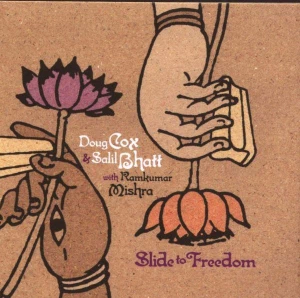
Slide to Freedom has truly absorbed the essence of late-1960s San Francisco counterculture. This album, brought to life by Doug Cox and others, blends Mississippi blues with Indian music. It crosses genre boundaries, because sometimes — rarely, of course — the music itself is everything. From the beautifully sliding “Pay Day” to the bustling “Meeting by the River,” this group of musicians is something special.

“Pay Day” is the perfect opener. Doug Cox’s voice differs slightly from that of a Mississippi Delta native — there’s a faint roughness and tremor to it, but it suits the music perfectly. Cox’s guitar and Bhatt’s Mohan Veena play off each other with a simplicity that’s also wondrous, arguably outshining every other acoustic blues record out there…

They say this CD was made by “the gathering of many talents,” and that’s no exaggeration — there’s plenty of unseen, unheard work behind it. Cox himself notes on the sleeve: “These aren’t ordinary musicians. Forming a free musical collective with players of such extraordinary gifts is one of the bright spots of my career.” The music on this record is more than mere words — it’s a covenant between people and gods.

Click to listen

Mengdiou

Gay culture is a remarkably creative community, and its linguistic world is every bit as colorful and inventive. The arduous task of popularizing this vocabulary has traditionally fallen to fans of boys-love fiction, who tirelessly explain to the public what “coming out,” “bear,” “top,” “bottom,” and “younger top” mean (English has its own queer slang dictionaries too — see A Brief Dictionary of Queer Slang and Culture, and Watching The Normal Heart — Part Three). A good deal of my own “linguistic” education has come this way — take, for instance, the term “Mengdiou” (蒙迪欧). I looked it up online and it seems this term hasn’t really caught on yet. So let me presume to explain it myself. “Mengdiou” refers to a muscular, well-built bottom: “Meng” (蒙) echoes “meng” (猛, “fierce/strapping”), suggesting a sturdy, muscular build; “di” (迪) echoes “de” (的, a grammatical particle); and “ou” (欧) is literally the letter O, a sly nod to the bottom’s role (sometimes called “0”).

Those well versed in this vocabulary might say “Mengdiou” is just a synonym for “buff bottom” (强受), but the two terms differ:

  1. “Mengdiou” functions both as a noun and as an adjective, while “buff bottom” is only a noun. For example, “Li Lei is a Mengdiou” uses it as a noun, meaning Li Lei is a muscular bottom. But “Li Lei is so damn Mengdiou!” uses it as an adjective, which can carry multiple meanings — shock at learning Li Lei’s role, or simple admiration for his physique. Context determines which.
  2. “Mengdiou” is more refined than “buff bottom.” “Buff bottom” points directly at the sexual dimension, whereas “Mengdiou” also emphasizes role and identity — the psychological side of things.
  3. “Mengdiou” is used mostly within the community itself and carries more of an insider, in-group flavor than the more widely understood “buff bottom.”

From the standpoint of linguistic development, “Mengdiou” really does have an edge over “buff bottom.” It expresses, in a more humane way, a gay identity that doesn’t fit the social stereotype, rather than slapping on the blunt label of “weak top, strong bottom.” At the same time, it captures, from a psychological angle, a certain type of gay man who appears tough on the outside but is soft within. Sometimes that “toughness” on the outside even forces them to change things about themselves they otherwise couldn’t — getting married and having children, for instance. So the deeper social and psychological questions hidden beneath the word “Mengdiou” are still very much worth studying.

Monster

You’ve grown up a good deal
no longer that boy on the grass
with the long neck
like a stem
.
You walk down the empty holiday street
quietly swallowed by sunlight
.
I can’t see you anymore
.
Addendum –> 07-Monster

There Should Still Be a Little Curiosity

This is an age of dazzling pleasures, an age of bizarre and bewildering spectacle, an age indifferent to right and wrong. So many things have become habit without anyone knowing their origin or reason. I’ve never quite understood why Leonardo da Vinci is so revered, just as I’ve never understood why psychology discussion groups are supposed to relieve anxiety, or how someone can hold forth at length about how to “not grind” while “casually” letting slip which district they live in, how many properties they own, and how many of their children got into Ivy League schools…

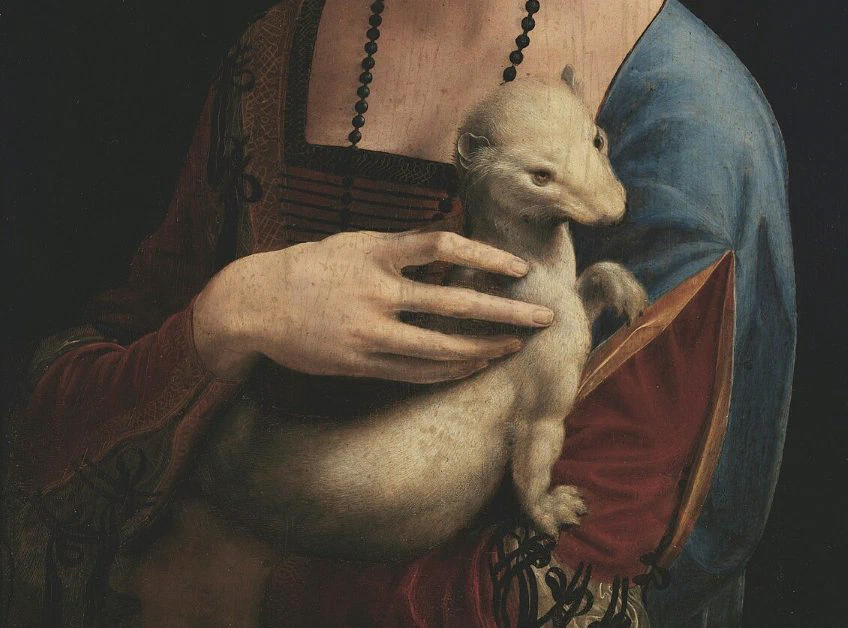
Granted, da Vinci is a master of some sort — though exactly what sort is hard to pin down. Many people say his paintings inspire a mysterious longing, but my first glance at the Mona Lisa only made me think: a person with no eyebrows. My first look at his manuscripts: the doodles of a scientist. My first look at The Last Supper: an old man, sick of painting murals, putting on airs of profundity… The one exception was Lady with an Ermine — I gazed at it for a long time, as if conducting a careful psychoanalysis; I suspect there’s more than a little of the dream-world mixed into its creation.

A patchwork documentary, The Genius of Leonardo Da Vinci (click to watch), seemed to offer me a small revelation. Da Vinci never handed down “master’s” pearls of wisdom, nor did he confine anyone to his own way of thinking — he simply showed a way of seeking answers. Faced with complicated questions like “science,” “happiness,” or “joy,” what’s needed isn’t some intangible debate over which came first, mother or child (Chapter 52 of the Tao Te Ching), nor the all-embracing idea that the whole universe fits inside a mustard seed — what’s needed is to understand the world outside and the world within, to stay curious, and then — to ask oneself honestly.

Symbolized

logitech pop keys

Seeing this Logitech POP Keys keyboard, I find myself wishing so many things in life could be simplified this way. For eating, we could draw a symbol of a meal; for writing, a pen; for sleeping, a person on a bed; for happiness, a smiling face; for sadness, an ugly face; for love, a little heart… All of food, clothing, shelter, and travel could be expressed in full.

Monster OST

monster

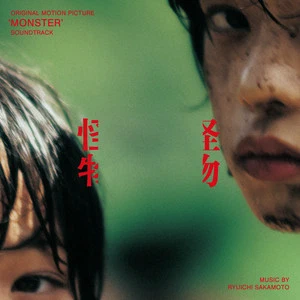
Hirokazu Kore-eda’s 2023 film Monster (かいぶつ). A single mother suspects her son, Minato Mugino, is being bullied, takes it up with the school, and finds herself in an endless tug-of-war with the teacher involved. Meanwhile, the tangled relationship between her son and a classmate, Yori Hoshikawa, unravels piece by piece.

The film opens with a fire in the busy part of town and closes on a calm, settled note. Fields, blue sky, white clouds, children walking carefree to school — everything signals the quiet peace of this small Japanese town. It reminds me of the town of Spectre in Big Fish, where people hang their shoes on the wires and live happily on soft green grass. Even the houses are painted in cheerful, cozy colors. But the extreme conservatism hiding in people’s hearts there is also part of what makes it a small town — no ambition left, idleness shading into boredom, a poet who can no longer write poems. Such a town is undoubtedly the product of a fairy tale, and also its end.

If Big Fish is built on a fairy tale, then Kore-eda’s Monster carries more of a social edge: a surface calm riddled underneath with holes, full of sanctimonious posturing. A dead cat is examined in close, careful detail — set alight, you can almost smell the corpse; the principal, who seems so meek and deferential, may have killed her own granddaughter; the boy’s dead father is “fashioned” by the mother into a role model meant to inspire her son’s growth, when in fact he died unexpectedly while having an affair… At the same time, the film is full of details worth lingering over, with a distinctly psychoanalytic flavor — the little drawing that falls to the ground midway through with the word “monster” scrawled on it, the wall covered in students’ handprints, and of course Kore-eda’s signature warmth, which always leaves you thinking long after the credits roll.

This OST (click to open) is full of understated color, yet shot through with something mysterious and eerie. Aqua renders that uncanny mood to the fullest. Listening to the score, it’s easy to picture the scenes of Minato and Hoshikawa together, as if it forms a strange feedback loop, breaking you apart bit by bit and then putting you back together bit by bit. A mood of melancholy, strangeness, and dreaminess lingers in the ear like a dream itself.

A “Boring” Music Film

YouTube actually recommended me a short clip from the film Cry-Baby (1990) — so much for the precision of algorithms. In every respect, this film bears the marks of the late 1980s and early ’90s, though it also carries plenty of director John Waters’s own distinctive flavor. The music in it has that feel of skipping class to fall in love. Of course, I imagine many people watch this film just to catch a glimpse of a young, handsome Johnny Depp, which is a perfectly natural visual craving. Depp really is handsome in it, especially when he cries. I imagine scenes like that must have swept quite a few viewers off their feet back then (see comments like this one).

What interests me more is where this film stands within John Waters’s body of work as a whole. Why this particular eccentric director would make a film like this genuinely puzzles me. If we go with the conventional critical line — that it’s a reflection on adolescent coming-of-age — didn’t Female Trouble (1974), from the ’70s, address that far more thoroughly? Perhaps that’s exactly why, in the eyes of most people, Cry-Baby comes across as nothing more than a lighthearted teen romp.

John Waters has admitted he enjoys watching “mainstream” films like Final Destination 2 (2003). When asked in an interview whether his style had changed since Polyester (1981), he gave an amusing retort: “Why would I be a 61-year-old faux-rebel asshole?” I now feel that I’ll never be able to guess what he’ll say next, what colored clothes or socks he’ll wear, or what his next work will even be about. But a person like that is certainly no asshole.

A Meditator’s Handbook

Meditation is a practice with a long history, one that keeps our inner and outer worlds at peace, cultivating harmony between the individual and their environment, spirit, and even the metaphysical. Meditation needn’t be grounded in any particular faith, and can still ultimately bring about a sense of completeness between a person and what surrounds them. It is precisely this kind of tradition — one that can be either religious or secular — that offers people a sense of calm, of understanding, of freedom, and of eternity. (Excerpted and translated from the preface.)

This book (click here to open) leads readers gently into the vast and sprawling forest of knowledge about meditation. Nor is it a dry, purely academic read — the author introduces his own views on meditation, along with his personal experience of it, in plain, warm, and heartfelt language.

This book, combining both scholarship and practice, is truly an essential companion for staying at home, traveling, or getting through long, sleepless nights — one that can give you an entirely fresh perspective on meditation.

Another Possible White Snake

White Snake is a short story written by Yan Geling in 1999. Sun Liqun, a dancer renowned for her role as the “White Snake,” falls into disgrace during the Cultural Revolution. Her figure changes, she becomes an object of ridicule, even mocked while using the bathroom. Gradually, she grows accustomed to this kind of life. The arrival of a central government official named Xu Qunshan disrupts this surface calm. Xu’s admiration warms her cold, quiet life like autumn sunlight. What she doesn’t expect is to soon discover that Xu Qunshan (actually Xu Qunshan, a woman) is in fact a girl. This may be the final straw that breaks Sun Liqun — after her breakdown, she’s sent to a psychiatric hospital. After all manner of turns and changes, the two come to understand each other, find release, and fall in love. After the Cultural Revolution ends, Sun Liqun becomes a dancer again. And just after her solo performance, the long-absent Xu Qunshan reappears. By then, each of them has her own family, and it seems as though their earlier infatuation was merely an episode in the larger course of life.

In a heterosexual world, any love between two people of the same sex is an arduous road of resistance. Sun Liqun and Xu Qunshan move from an attraction that begins, seemingly, between “opposite sexes,” into a tangled same-sex entanglement — a love that drags on messily, painful yet not without its warmth. But what they face is not merely the parental authority that Romeo and Juliet, or Liang Shanbo and Zhu Yingtai, had to confront; it is the crushing erosion of an entire society, like a thick fog hanging over a dim, oppressive sea, settling there as something eternally renewed and never lifting.

The final scene of the story is rich with implication: Sun Liqun sighs that all her longing can finally come to rest; Xu Qunshan, clumsily, is learning to become a “woman”; Sun Liqun can’t help reaching out to smooth Xu Qunshan’s hair; Xu Qunshan wipes away Sun Liqun’s tears… It can’t help but make you wonder — were they really assimilated by the secular world? Were they really violated by the heterosexual world? Did they really both become bisexual?… Of course, the answer to that is unknown. What happens after can only live on in the reader’s own thoughts.

Many TV series these days end this same way — some confusing, some seemingly complete — and behind these surface appearances lies an openness. Viewers can imagine all the different lives Rose might lead after The Story of Rose; they can fantasize about the wonderful struggles of the three characters after Hidden Love (or Ripe Town). As Valéry said: “There is no true meaning of a text.” That captures the essence of openness precisely: it is the free combination of infinite possibilities. Sartre, too, believed that “existence” cannot be reduced to any fixed set of expressions, because an individual’s existence keeps changing with each person’s free choices.

Rather than say there is no ending, it would be more accurate to say the ending never began.

Shadows of the Bed

Loving sleep is, more or less, a human instinct. A newborn infant sleeps roughly 20 hours a day, and once grown, aside from a few rare exceptions who need little or no sleep, most of us manage around 7 or 8 hours a night. But in this fast-spinning age, the luxury of waking up naturally, whenever the body decides, isn’t really available to most people. The folk tunes, the idleness, the wandering, the vagrants that Milan Kundera longs for in Slowness seem, against this backdrop, like an especially blessed kind of leisure.

Lying in bed can be a real pleasure. Lu You, lying idle in bed, once wrote “A Sudden Storm on the Fourth of the Eleventh Month” and “Spring Rain Clearing in Lin’an.” “All night the rain falls softly on the little tower; by dawn, deep in the lane, someone hawks apricot blossoms.” Such poetic lines have shaped no small amount of distinctly Chinese romantic fantasy — spring rain falling gently in the night over quiet streets, soaking and cleansing the thirsty alleys; by day, the poet, lingering in bed, is roused by the warm sun, half-aware of a peddler’s cry drifting in from outside. Chen Yuyi, too, as the ice thawed in the second lunar month, wrote: “A traveler’s days pass within the pages of poems; news of apricot blossoms arrives in the sound of rain.” The apricot blossoms here, the sound of rain — too delicate, too refined, falling short, in the end, of Lu You’s deft little tower.

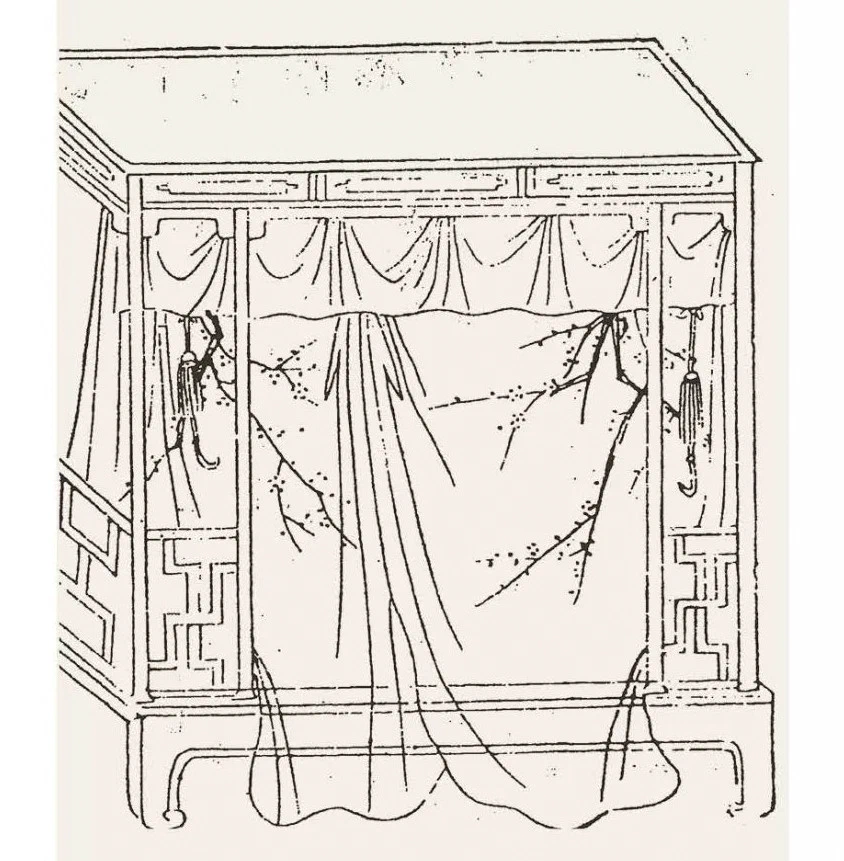
The Qing-dynasty novelist Li Yu, stepping outside such poetic imagery, devoted a section of Sketches of Idle Pleasure specifically to beds and bed curtains. He wrote: “This bed is the thing I have shared half my life with — even ranked ahead, in some sense, of the wife who shared my hardships from our wedding day. Of all the things a person treats with the deepest regard, none surpasses this.” Here, Li Yu compares his bed to his own wife, which tells you he must have been someone who truly loved sleep. He also proposed four ways to beautify a bed: “First, let the bed bear flowers; second, let the curtain have a frame; third, the curtain should be fitted with a lock; fourth, the bed should wear a skirt.” Specifically, “letting the bed bear flowers” means placing potted flowers by the bedside; “letting the curtain have a frame” means setting up a mosquito net with an internal structure to keep insects out; “the curtain should be fitted with a lock” suggests a mosquito net with three fasteners, so mosquitoes can’t slip in; and “the bed should wear a skirt” means adding a valance to the bed, both for looks and ease of cleaning. Li Yu also wrote about his own methods for keeping a room cool in summer and warm in winter.

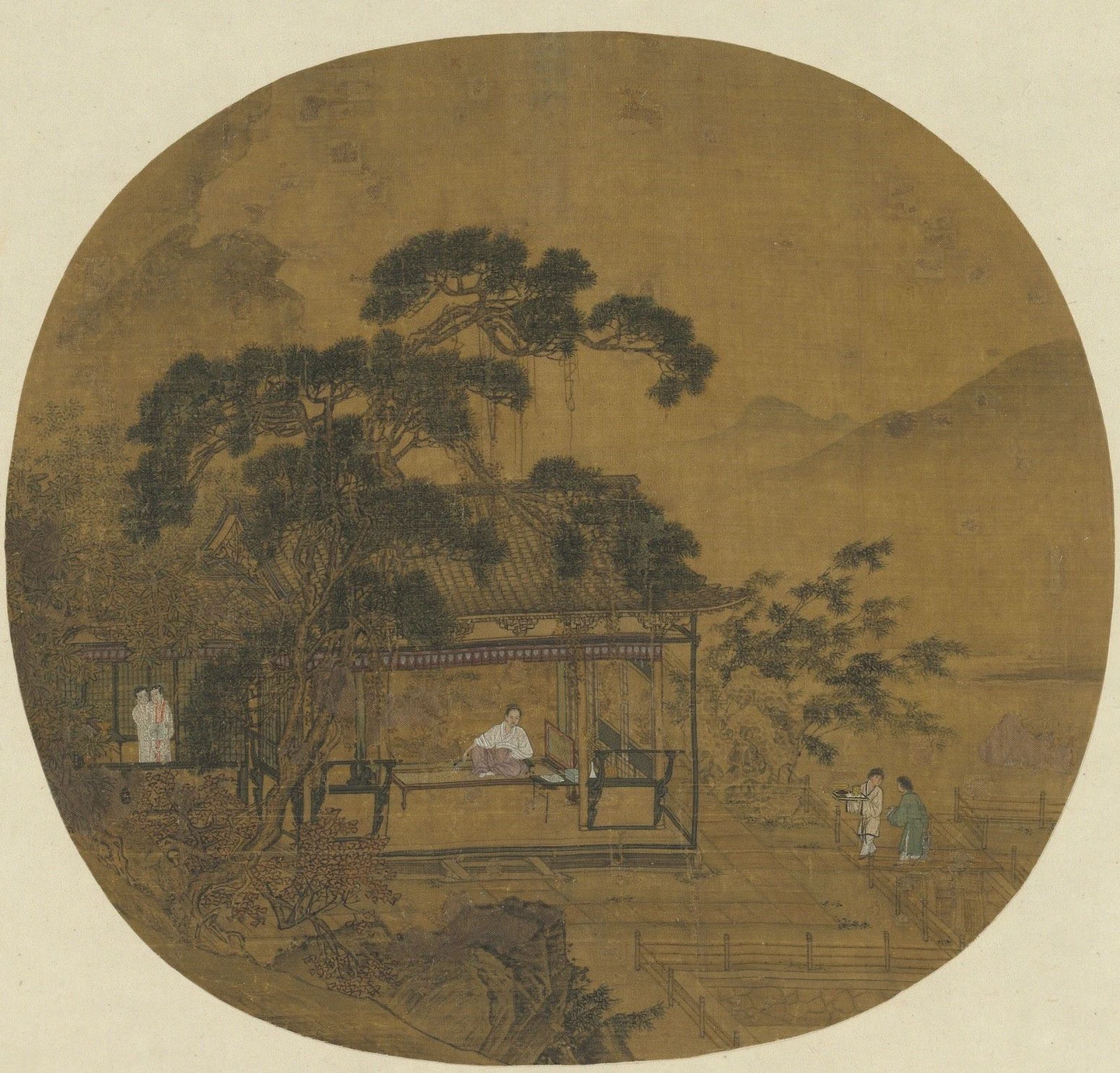
There’s a clear difference between the beds of the ancients and those of today. In the painting Reading by the Window, you can see a small folding screen placed at the head of the bed — what the ancients called a “painted screen,” “small screen,” or “pillow screen,” generally meant to block drafts. Ouyang Xiu’s “On a Plain Screen” likewise reflects the feeling he had for one such painted screen.

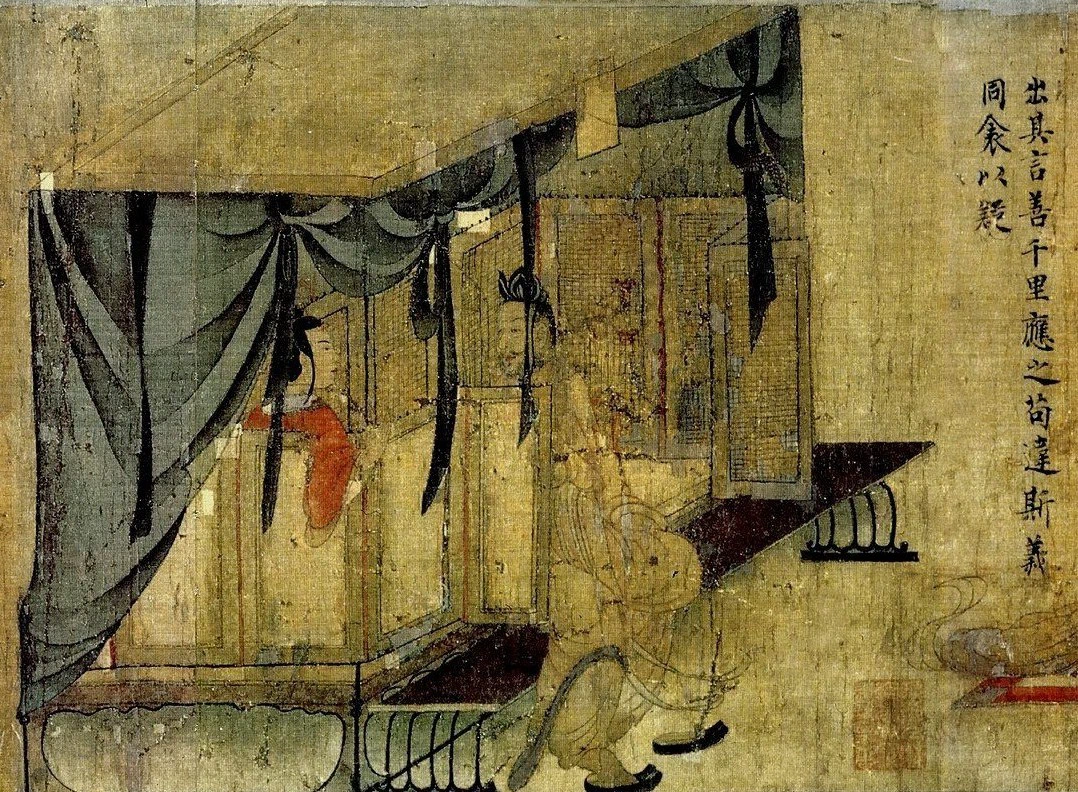
Before the Tang and Song dynasties, beds were more like the one shown in Admonitions of the Court Instructress by the Jin-dynasty painter Gu Kaizhi — typically designed with railings enclosing them, a structure that can later be seen in Japan as well. This kind of fixture always struck me as a bit stifling and rigid. Such beds were probably meant either to conceal certain private acts, or to keep children from rolling off while asleep.

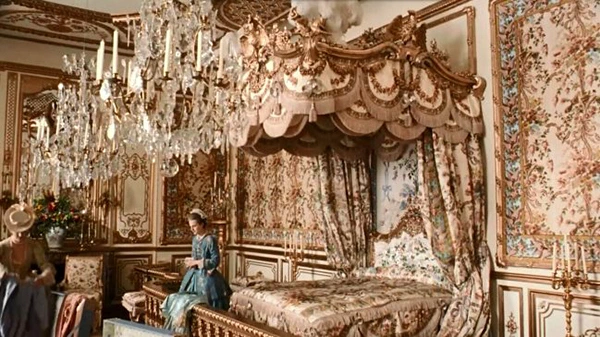
European beds show a different sensibility altogether. Take, for instance, the architecture and ornamentation seen in the film Marie Antoinette — the Rococo-style beds still carry forward the lavish extravagance of the Baroque period, and amid all that extreme opulence, you can already glimpse the first hints of the simplicity that would follow classical styles. As Neoclassicism, naturalism, and rationalism developed, later European architecture abandoned those wanton, eccentric, overly ornate lines. Setting aside architectural aesthetics, if you look closely at the beds in that film, you’ll notice a similarity to Jin-dynasty beds: both feature large bed curtains. What might this mean? Is it a tool for concealment used by people of high status? Or is it simply, like the painted screen, just a device to block drafts?

Of course, the gold-and-jade splendor of those European headboards is far less interesting to me than the Chinese painted screen. The landscape paintings and paintings of court ladies on a painted screen tell so many stories. Records of the Listener mentions someone who kept seeing a beautiful woman every time the lights went out, and who later discovered, upon taking the screen apart, the secret behind it: underneath the screen was an older painting, and the woman in that older painting had become a spirit.

I’ve been troubled by my bed lately. Last night I took some Unisom and slept without a single dream — “Drink one cup at dawn and sleep through a whole nap; what in this world is worth all the fuss?”

Gaming Notes - Black Myth: Wukong

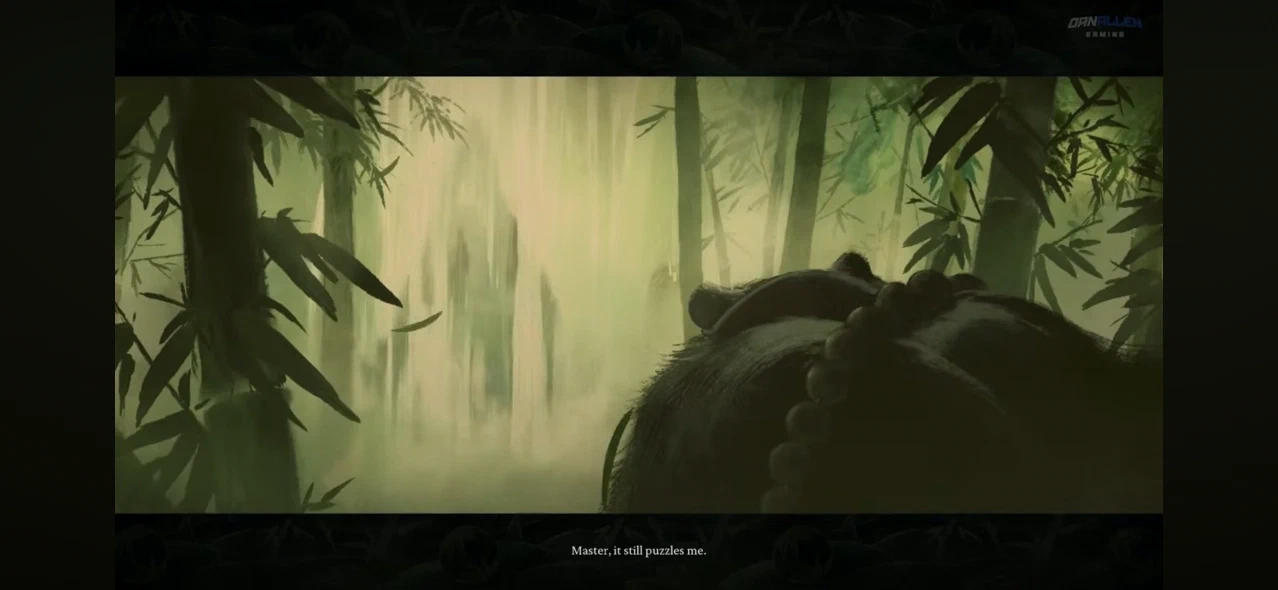
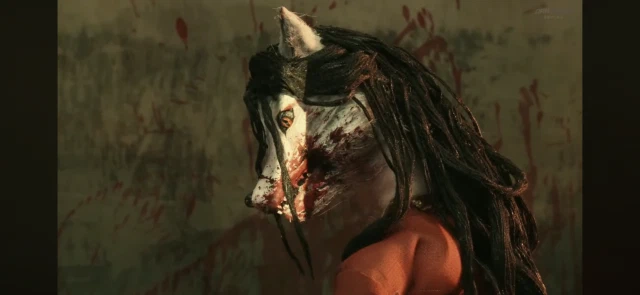
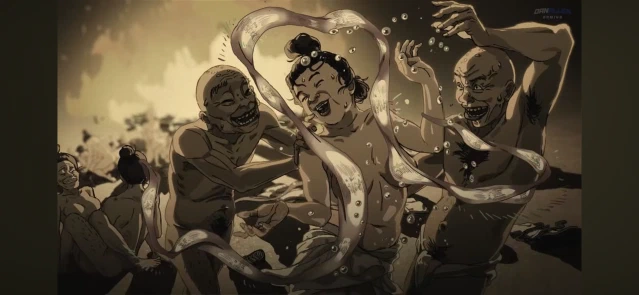
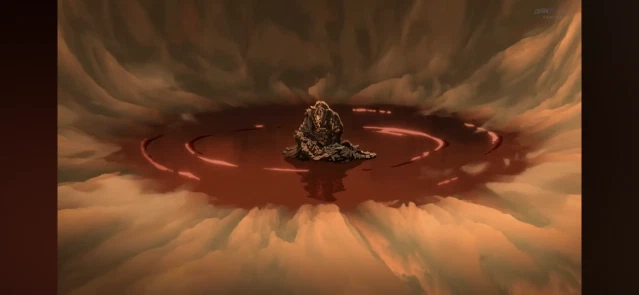
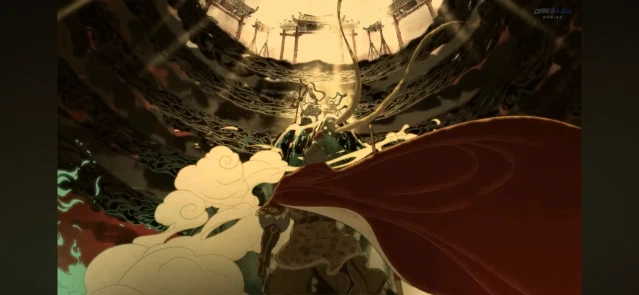
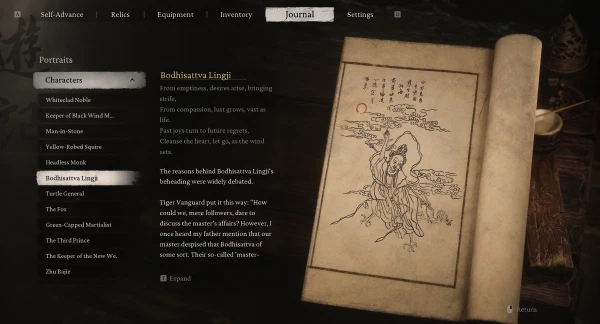
The recently popular game Black Myth: Wukong is built from a sense of uniqueness, subtlety, and an irreducible, lingering mystery that together form this virtual world. Somewhere between deliberate and accidental, the developers have left us many fascinating fragments. Without further ado, I’ll record them as I play.

One.

Black Myth: Wukong

A passage from The Compendium of the Five Lamps, Volume One.

Seeing an unusual aura about a Brahmin’s dwelling, the Patriarch made to enter it. The master of the house, Kumaralata, asked: “What sort of followers are these?” The Patriarch said: “Disciples of the Buddha.”… Luoduo said: “There is no one in this house.” The Patriarch said: “Then who is it that answers?” Hearing this, Luoduo knew he faced no ordinary man, and opened the gate to receive him…. When conditions do not obstruct one another, then birth itself is no-birth.

Two.

Black Myth: Wukong
I don't know where you are.
.
Meeting you
is as hard as meeting myself;
missing you
is as easy as missing myself.
.
The first time I saw you,
you were like a star, like the night, like a melody;
the next time I saw you,
you had already become one with it.

Three.

Black Myth: Wukong

The turtle, the villager, and the jewel merge into one, leaving the viewer unsettled. Beneath the vast yellow sky, the question of human nature is lifted into a meditation as old and ever-renewing as time itself.

Four.

Black Myth: Wukong

Now I understand the helplessness and the things people feel they have no choice about. I once thought such people had simply become slaves to society; now it seems that love, dreams, freedom… almost all of them are merely appendages of existence. Someone who hates randomness might end up spending the rest of their life as a statistician. What an absurd joke that is — and yet such a vivid, living portrait of reality.

Five.

Black Myth: Wukong

Works about Wukong always seem to end up linked to “Camp,” that aesthetic which demands a certain audacity. The world insists that thinness is beauty, yet John Waters took an aging man, Divine, and dressed him as a woman in pure camp defiance; the world insists that politicians be composed, or at least pretend to be, yet Trump burst onto the scene, camping that very expectation; King Zhou of Shang was tyrannical and refused to heed counsel, so Jizi feigned madness, camping the entire decadent, incompetent society — and Confucius praised this as “ren” (benevolence). It’s like that line from the film Jeux d’Enfants (Love Me If You Dare): “Dare you?”

Six.

Black Myth: Wukong

Qian Zhongshu once remarked that translators are good for nothing. The reasoning isn’t hard to grasp. A good translation must carry feeling and thought, must emerge from language yet rise above it. Otherwise, turning “car” into “jiaoche” (sedan car) or “bus” into “daba” (big bus) — how easy is that? Translation comes into being only where feeling and thought arrive together. Hence a translated text is itself evidence of feeling and thought. — In an age that prizes the instantly consumable above all else, translation may be the last surviving form of literary art.

A Compendium of Anxious Hearts

The purpose of this compendium (The Wiley Handbook of Anxiety Disorders, Paul Emmelkamp, Thomas Ehring) is to give clinicians a comprehensive overview of anxiety disorders. It comes in two volumes: the first draws broadly on theory and research, the second addresses treatment specific to each condition (excerpted and translated from here). The book’s content is thorough and detailed, an impressively comprehensive achievement. Readers can use it as a map to seek out remedies for themselves, or simply read it at leisure to broaden their knowledge. (Download).

Protests on the Rise

Lately I haven’t been able to avoid hearing, passively, a great deal about the death of Floyd. News reports show heavy security in major American cities, while the economic recovery shows no sign of improvement — apparently many small businesses are in dire straits. Burning American flags, massive banners, the chant of “Black Lives Matter” — these scenes show how high anti-racism sentiment has risen in America. Around the same time, another story I learned about passively was the opposite kind of protest — against stay-at-home orders, marching to demand a return to work. In terms of so-called weight or significance, the two may not be comparable; if you tried to elevate the latter to a matter of national character or politics, you might be accused of overreaching. And yet, if we look at both through the lens of repression, we can see that the behavioral motives on display among Americans are actually quite similar.

After the anti-lockdown protests broke out, Americans shouted: “I prefer dangerous freedom over peaceful slavery.” Similar language of “slavery” and “freedom” can also be found in the anti-racism movement. On one hand, this makes you marvel at how fast information spreads in the streaming media era; on the other, it reflects where mainstream society’s focus is concentrated. Looking at the motivational link: the former is concerned with humanitarian issues, the latter with violence.

The effectiveness of stay-at-home orders can’t be denied, and the public’s desire to return to work is easy to understand. But many news headlines use highly suggestive language to bait readers’ attention: opposing government bans, blaming the failure to control the pandemic. Lincoln’s famous speech declared that the American government is of the people, by the people, for the people. That’s the language of a revolutionary — but everything changes, so how could anything last forever? As civilization develops, repression keeps accumulating along with it; the more advanced the civilization, the more abundant the repression. Take, for instance, the repression of the individual built up over several thousand years of civilization in China — shaped further through the May Fourth Movement, the warlord era, the founding of the People’s Republic, and the Cultural Revolution — which ultimately erupted suddenly on a certain morning in April of ‘89. It’s worth noting that no single movement could ever fully “satisfy” a people. Nietzsche proposed the Apollonian and Dionysian forms of beauty, and in events like these, the two switch back and forth remarkably fast.

Now consider the violence-focused side. The U.S. Constitution guarantees citizens the right to assemble and protest, and Americans deeply embrace this. Every so often, you can see righteously indignant crowds marching on TV. And of course there are other forms too, like rallies and demonstrations in the city. I don’t go into the city often, so I imagine many of you have seen more of this than I have. As for the recent looting and vandalism across America, I might coin a name for this desire by analogy with “collective XX desire” — call it collective riot desire. The most direct way to satisfy this desire is through riot — uprising, rebellion, violent resistance — though it takes many other forms too, such as marching, mass suicide, or attending religious services.

The repression of collective activity naturally leads to the boiling-over of this collective riot desire. Such eruptions and surges are, for the most part, irrational and unrestrained. Today I saw someone suggest that anti-racism protesters should protest rationally — thinking it over, that’s simply not possible. Once a desire repressed for too long erupts, of course it can’t be reined in. Others believe this “resistance movement” can increase solidarity and integration between races; but solidarity can’t simply be willed into being on demand, and integration is even less attainable by mere wishing. I can easily picture those employees — already struggling because of the pandemic, their already meager incomes now further threatened by the destruction of the storefronts where they work. They’ve done nothing wrong; some of them are themselves minorities; they too are trying to earn their share of what society owes them through their own effort; some of them may not even know what’s happening.

— It’s still better for the stock market to keep climbing; having the mutton snatched right out of your mouth always leaves some people deeply dejected.

Taboo

National Geographic’s documentary series Taboo is excellent material that has broadened my horizons considerably. My first exposure to taboo culture came through Freud’s writing, which introduced me to many curious anthropological customs. Of course, times have changed, and many taboos are no longer confined to remote mountain villages — plenty exist right around us too.

Taboo is substantial in scope, with seven seasons in total, each containing a number of episodes. After only a few episodes, it already feels like a vast and impressive undertaking. I’ve read a number of anthropology and sociology books before, but content delivered through the sound and image of film appeals to me even more. This series has almost no boring stretches — both the hooks and the substance are there in full. Let me jot down notes on a few episodes worth remembering:

6.2 Societies differ, but gender categories converge in surprising ways. Most people believe there are only two genders, male and female, yet in India a man can become a “third gender” through castration, while Indonesia recognizes five social genders. In Albania, too, there are “sworn virgins” — women who become men, giving up their original gender and undergoing a complete transformation in voice and bearing. Even so, for most societies, the third gender remains taboo.

5.14 I’ve always believed that people who love sociology and anthropology cannot help but care deeply about life. This documentary aligns with that belief — for all the subcultures it touches on, simply having a hook would make it no more than a circus act, something to watch and forget. This episode, “Outsiders,” struck me hard. It tells the story of a leprosy village in Nepal, the “anti-consumerist” new generation of Sydney, and the rat-catching caste of Sulurghimi village in India, sketching out the lives of these marginal figures across cultures. Beyond simply learning about these subcultures, it also pushed me toward some reflection on this kind of taboo.

4.6 I’ve personally seen, in person, a people who wear bronze rings around their necks. The reason we find this strange is that, within our own culture, it’s taboo. And yet such taboos are increasingly crossing over from subculture into the mainstream. Split tongues, eyeball tattoos, artificial horns… will these various forms of body modification — momentarily painful to us now — become some kind of mainstream in the future?

p.s. As the pandemic spreads, Shuanghuanglian is flying off the shelves — I wonder when traditional Chinese medicine might itself become some kind of “taboo”? :)

End of 2019

A few days ago I had dental surgery and could only eat liquid food, so I made a lot of smoothies with the blender. Once it settled, it turned into a kind of paste — beneath that thick layer on top was a dense, viscous liquid. Drinking it, a cold sensation spread through my whole body. Come to think of it, it had been a long time since I’d paid attention to a sensation like that.

Now that the holiday season has arrived, I suddenly realize I’ve already been a working adult for a full year. The past year of work hasn’t transformed me into an entirely different person living a life of toil, indulgence, and numbness, but there has certainly been change. The most obvious one is the shift in the information I “consume” every day. At lunch, many of my coworkers kindly recommend apartments to me, telling me which areas are a good deal and worth buying into; others recommend insurance, funds, and other ways to manage my finances; still others teach me how to save money… Maybe I just haven’t been socialized to that point yet, but I keep feeling that things like houses, property, and cars — while necessary to have — aren’t things I particularly want or care about. Of course, people who do care about these things are making their own choice, and I have no right to project my own preferences onto judging others. Money is an external thing, but my concern for what’s “internal” to me has also been dwindling by the day.

What, then, counts as “internal”? The body is nothing more than blood, qi, meridians, and the five viscera and six bowels — beyond that, there’s really nothing else. Happiness, joy, delight — these may just be simple chemical reactions in the brain; thought, philosophy, consciousness are likewise nothing more than a smoothie blended from your actions plus your reading and reflection — thick, clumpy, leaving even you a little bewildered. In the end, what a person really has is just solitariness: a single, unique object consisting of a body accompanied by consciousness.

Honestly, life is both small and rarely meaningful — there really are few things worth doing. One’s personal pursuits and preferences are, at best, a sip of sweetness tasted from the smoothie; some people, perhaps, are simply carnivores at heart. In the vast ocean of society, there really are people who are entirely worldly, who go through the motions, who simply repeat whatever everyone else says. It makes you wonder: is the point of socialization to step outside the collective, or to erase one’s own individuality?

The content of my work leaves me muddled — every day I’m endlessly deconstructing protocols that, to my mind, are already falling apart. We’re all supposed to analyze clinical trial results objectively, but in practice everyone is quite subjective. Thinking it over carefully, though, maybe it doesn’t amount to much difference. We’re merely observing the subjective using a method that calls itself objective. Or perhaps the source of it all is, through and through, objective, and it’s people who hysterically “fabricate” all sorts of — “data.” About a hundred years ago, Freud, that madman of psychoanalysis, wrote a short essay, “On Transience.” After criticizing poets who weep over fallen flowers and changing seasons, he generously pointed out that flowers that wither will bloom again, and houses that collapse can be rebuilt. Clearly, this old man, too, had a thoroughly objective eye (of course, the evidence for that goes well beyond this one point — but glimpsing the man through a short essay fits Freud’s own style of “seeing the large in the small”).

Work is, after all, nothing more than a process of trading effort and intelligence for money — even the head of state does the same. There’s not a trace of self-consolation in saying this. I can fully empathize with the mindset of someone who fails, who suffers, who struggles — how could such a person possibly cling to professional pride? What use is so-called “ambition” or “aspiration”? So, speaking from an uneconomical, irrational, purely self-centered point of view, it’s simply that I haven’t gotten my mindset straight yet.

I’ve rambled on without much logic. For 2020, though, I hope to live a bit more consistently, to be someone who keeps things calm and settled. Today I happened to run into that line from the Old Testament — “For dust thou art, and unto dust shalt thou return.” Even though I’d read it before, even though it’s a famous line, it still gave me a small jolt — dust was once such a solemn thing!

What Is “Beauty”?

The one thing worth mentioning about this Thanksgiving is that I finally read Spring Snow. I won’t go into detail about Mishima Yukio’s aesthetics here, because whatever beauty it contains feels far too small next to the emotional impact of the experience of reading it. But on the concept of “beauty” itself, there is so much to think about and uncover. Its definitions alone are countless:

  • The most beautiful is also the most just. — so said the Delphic Oracle, when asked what judgment of beauty’s appreciation should be.
  • Looking upon beauty with the eye of the mind, what he produces is not the semblance of beauty but the truth, bringing forth and nurturing true virtue, becoming a friend of the gods and immortal. — Plato, Symposium
  • Since all things are beautiful, … all things must therefore possess numerical proportion. — Bonaventure, The Mind’s Road to God
  • Beauty consists in proportion, since the senses delight in things well-proportioned. — Aquinas, Summa Theologica
  • Natural beauty is a beautiful thing; artistic beauty is the beautiful representation of a thing. — Kant, Critique of Judgment
  • Wit is to the intellect what beauty is to the eye and harmony to the ear. — Gracián, The Art of Worldly Wisdom
  • The longer one contemplates any kind of beauty, the more inevitable it becomes to compare it with several other kinds and degrees of beauty, and to assess the proportions between them. — Hume, Of the Standard of Taste
  • Beauty is no quality in things themselves: it exists merely in the mind which contemplates them. — Hume, Of the Standard of Taste
  • In the sensory world, far from being the cause of beauty, perfection is, in women possessing the highest degree of beauty, almost always accompanied by an idea of weakness and imperfection. — Burke, A Philosophical Enquiry into the Origin of Our Ideas of the Sublime and Beautiful

So what exactly is “beauty”? Some believe beauty should be a combination of inner and outer beauty; others lean one way or another: “Among ten plain women, there’s still one who’ll find a partner; among ten beautiful women, nine will”; “So-and-so isn’t especially beautiful, but there’s a natural beauty radiating from within.” Such disagreements are no problem at all, because views on any single thing ought to be plural. Beauty, too, should come in many forms and colors.

The French artist Marcel Duchamp (1887–1968) exhibited a work in 1917 titled Fountain:

In December 2004, 500 experts from Britain’s art world voted Duchamp’s Fountain the most influential artwork of the 20th century. And yet, as we can plainly see, it’s nothing more than a urinal.

Art is plural, and so is our understanding of beauty. What is beauty? Everyone carries their own answer in their heart.

Dream

Berlioz attempted suicide at twenty-three over the agony of unrequited love, and survived to write the Symphonie Fantastique. I, on the other hand, had my sleep interrupted by a single dream.

I dreamed of some people, as if gathered in a classroom, sitting together watching a movie. Everyone’s face was stern and cold. I saw “myself” asleep, face down on the desk, yet I clearly knew that “I” was crying in the dream. I looked into her eyes — so close, and yet so unreal. We faced each other in silence. Perhaps I couldn’t bear the oppressive weight of that gathering any longer, and I woke up. A flood of words gathered at the bottom of my heart, and I didn’t know what to call any of it.

The past can be like this sometimes — interesting, able to take on any shape it pleases. It arrives without asking my permission, leaving me room to look back. I suppose it should be good to be able to look back — human instinct drives us to forget the unhappy things, so what we see when we look back tends to be the happy parts. But sometimes I find myself confused: is the dream an exit from reality, or is reality an exit from the dream?

I know that within that embrace in the dream, “I” was dreaming.

A Misunderstanding About the Ne Zha Adaptation

This weekend I watched Ne Zha, the animated film that’s been a huge hit lately. Its plot design is quite inventive. I recall a saying about innovation: suddenly taking a detour on a road you walk every day — that is innovation. Embedded in this interpretation are some preconditions for innovation: first, the road must be one you walk every day, a familiar, well-worn path; second, the detour must be sudden. If that road isn’t one you walk daily, but merely one of several optional routes, taking a detour isn’t innovation; and if the detour isn’t sudden but a habitual one, that isn’t innovation either. So innovation turns out to be a small trick built on top of familiarity and repetition. And director Yang Yu’s (Jiaozi’s) little tricks here genuinely deliver no small amount of delight.

Yesterday I was reading through some commentary on Ne Zha. One view holds that for a mythological story aimed at young audiences like this, the violent, gruesome details — “cutting flesh from bone to return it to one’s parents” — ought to be omitted, and that this new adaptation, by softening them, better fits “the spirit of the times” and is more beneficial for young people’s wellbeing. I can’t agree with this at all. It seems to suggest that adults are entitled to an endless range of emotions, while minors must live a life that is purely “happy and carefree.” But why must it be “happy and carefree”? Why impose such restrictions specifically on minors?

Society is often caught in an awkward position on this question. On one hand it restricts people’s desires; on the other, it’s powerless to actually enforce that restriction. We’ve all had the experience of seeing some “forbidden” content, in one way or another, before we came of age — can that really be called breaking the law? China’s Law on the Protection of Minors requires guardians to “protect” minors, but what about when minors seek such content out on their own? The law, in dealing with this kind of issue, resembles an emasculated husband who can’t control his own wife. Meanwhile, public opinion is constantly broadcasting what counts as good and what counts as evil. Yet in the end, the slightest bit of “out of line” speech on Weibo is enough to instantly scatter all that careful moral guidance. It’s clear that public opinion, too, is just a microphone held under the pressure of the state apparatus, forever skating along the edge between the forbidden and the acceptable.

I recall that our generation produced quite a few “teenage writers,” and adult critics, in discussing them, were always careful about the restrictive function of that adjective. “Teenage” can refer to the fact that the writer became famous early, was a prodigy — but it also carries an implication of being a notch below adult writers. The subtext of the phrase “teenage writer” is roughly: let’s view this “writer” objectively and with reservations. To me, this is a form of discrimination by adults against minors, and more broadly, a way the adult world rejects and looks down on whatever it sees as “other.”

Freud proposed a famous concept: the Oedipus complex, broadly the story of killing the father and marrying the mother. Adults’ extreme restrictiveness on this question seems to be an effort to keep that plot from ever playing out. The excuses given are all manner of strange — some say it’s because children’s physiological development isn’t suited to exposure to sexual culture. But was that culture itself born out of research into adult physiology?

The real reason adults restrict minors looks more like a primal complex: reproduction brings offspring, which is to say vitality and fighting strength, meaning the capacity to produce more goods or capture more prey. If children were allowed to possess this power too early, or to know its strength prematurely, patriarchal authority would be threatened. So what adults truly fear isn’t the acquisition of knowledge itself. But this world remains, through and through, a patriarchal world — in other words, a world run by old men. For a person operating purely at the level of “personal meaning,” if one truly wished to cast off all patriarchal interference, perhaps the only way would be suicide.

A Troubling Template

Olivier Meys’s 2017 film Bitter Flowers tells the story of Lina, a laid-off factory worker from China’s northeast in the late 1990s, who goes to France to work as a nanny in order to lift her family out of poverty and help her husband open a shop. Life in France turns out to be far harder than she imagined, and Lina is eventually forced into street prostitution. But paper can’t wrap fire forever — after she has saved up enough money to return home, her husband finds out anyway. In the end, he leaves the family, and Lina sets out on a path of reconciliation, seeking his forgiveness…

It’s said that the director spent a long time researching the lives of streetwalkers in Paris, which gives the film its understated, lived-in realism. Whenever Lina talks to her family on the phone, she’s evasive; when asked how she’s doing, she mumbles vague answers. This fear that comes with being a sex worker is something we can easily understand. Films on similar subjects, like Irina Palm and La Marcheuse, capture this same emotion. But setting aside Lina’s personal struggle, the film also prompts some other lines of thought.

A 2014 estimate put the economic activity generated by the sex trade in eight major U.S. cities at no less than four billion dollars a year. Judging by the substantial sums Lina earns, that figure may even be conservative. We can easily spot a recurring “social narrative” here — whenever someone is backed into a corner with no other options, a story is born about a good person forced into prostitution. What does the existence of such a vast economy, set against a “social narrative” that can’t possibly account for all of it, actually tell us? And it’s precisely because of these visceral, bloody stories that feminists convince themselves the sex trade degrades women’s dignity. One has to ask: in a market that large, is there really no one who enters the trade by choice? Is everyone really driven to it as a last resort?

That said, social pressure is of course real, and I imagine anyone entering the sex trade has to go through some process of overcoming it. In the end, very few could be as at ease as Maggie, the protagonist of Irina Palm, casually telling a friend that her occupational hazard is “Penis Elbow.”

Quaff

These days, the word “quaff” sounds both archaic and rather literary. To describe drinking a great deal of something — especially gulping it down in large quantities — you’d more likely reach for a modern word like drain, pound, or slug. If you’re a more refined sort of consumer, you might prefer sip, imbibe, or partake in your beverage of choice.

Quaff is far from the oldest word in this group: it first appears in the early 16th century, while sip dates back to the 14th. And yet, of all these words, it’s the only one whose etymology remains a true mystery!

From https://www.merriam-webster.com/dictionary/quaff

An Ordinary Mind, Part 3

Sexual orientation refers to which gender we’re drawn to and develop romantic feelings for. The word “homosexual” comes from the Greek root “homo,” meaning “the same,” rather than the Latin “homo,” meaning “man.” It refers to both gay men and lesbians. In general, “gay” (often referring specifically to “male homosexual”) and “lesbian” are more commonly used than “homosexual,” much as is the case in Chinese. In 1988, someone borrowed the term “tongzhi” (comrade) to translate “lesbian and gay,” and from then on “tongzhi” gradually became a near-synonym for “homosexual,” marking a milestone in the founding of the Chinese-speaking world’s “tongzhi” movement (Liu Dalin, Lu Longguang, 2005).

Looking closely, we find that “homosexual” and “heterosexual” are not especially old words — they were coined by Karl Maria Benkert in 1869 (see wiki). “Gay,” on the other hand, evolved more gradually: in the late 19th century, expressions like “the gay nineties” and “gay Paree” were associated with happiness and glamour; in 1895, after Oscar Wilde’s homosexuality became public, the word “gay” took on a sexual connotation for the first time; in the 1920s, gay people began using the word among themselves, since, compared to “homosexual,” it carried less negative baggage; by the 1960s and 70s, the word had become widespread as a term for the gay community.

English slang is full of terms related to homosexuality — “queer,” “dyke,” “fag,” and so on. There’s even a dedicated online dictionary of “gay slang” (A Brief Dictionary of Queer Slang and Culture), which is worth a read if you’re curious.

Let’s return to the origins of the word “homosexual.” In Plato’s Symposium (Συμπόσιου), there’s a striking passage:

… the original human nature was not like the present … The sexes were not two as they are now, but originally three in number ; there was man, woman, and the union of the two,… which had once a real existence, but is now lost, … “Androgynous” …

Here, Aristophanes (189c–193e) argues that humans originally came in three sexes — male (descended from the sun), female (descended from the earth), and androgynous (descended from the moon). The Symposium is regarded as the first work in the Western tradition to discuss homosexuality, because right after this passage, Aristophanes goes on to describe these original humans as round, with four hands and four feet, two identical faces on a single head, four ears, and two sets of genitals — until Zeus split them in two, and ever since, each half has gone looking for its other half.

It’s not hard to see how this account is saturated with homoerotic suggestion, and how different it is from our current categories of gender. The word “sex” derives from the Latin “secare,” meaning “to cut” or “to divide,” which has led some to argue that the division of humanity into two sexes represents some kind of ultimate truth for our species. I’d argue that this rigid, binary view of classification is exactly what fueled the rampant essentialism of the late 19th century when it came to homosexuality — rooted in scientism and a mechanistic reductionism. Intersex and androgynous figures have appeared throughout history in countless forms; to take just one example closer to home, the Ishinpō (医心方) records a passage on androgynous people. It claims that the ancient Chinese believed some women’s clitorises grew larger with the full moon, and that during the full moon such a woman had to have intercourse with a woman or she would die; during the new moon, she had to have intercourse with a man or face the same fate (R.H. van Gulik, 1990). Intersex figures appear widely across literature, conveniently satisfying readers’ appetite for the exotic.

The concept of the “intersex” gave rise to a whole series of “inventions” at the turn of the 19th and 20th centuries. With two wars and rapid economic change, people’s psychology began to fracture. Many insisted that the First World War was responsible for the collapse of young people’s sexual morals — which isn’t quite right, since there was already plenty of sexual upheaval before the war. As Ian Hacking put it, “a kind of person comes into being at the same time as the kind itself is invented. In some cases, our classifications and our own kinds emerge hand in hand, reinforcing one another” (Angus McLaren, 2007). What we can say with confidence is that, at the turn of the 19th and 20th centuries, people could no longer be satisfied with just two genders, and a number of new terms — “homosexual” among them — were born alongside concepts like masochism and sadism.

In that era, homosexuality was defined and explained in extraordinarily mistaken ways. Most sexologists at the time believed it stemmed from depravity and self-indulgence, and went looking for absurd physiological “proof” to back this up — A. Tardieu, for instance, told readers that “active” homosexuals had unusually thin, dog-like penises, while “passive” homosexuals had funnel-shaped anuses. Later scholars gradually came to understand that homosexuality, if it was a “disorder” at all, resided in the nervous system rather than the body… Given the dark history the word “homosexual” grew up alongside, it’s no wonder it never won much favor among gay people themselves.

Gallimaufry

If the word “gallimaufry” hasn’t made your mouth water yet, it might be because you don’t know its origins. In sixteenth-century Middle French, cooks made a stew called galimafree. It must have been a dish with an enormous variety of ingredients, because English speakers came to use the word to describe any kind of jumbled mixture.

If gallimaufry doesn’t suit your taste, you could also reach for one of its synonyms: hash (a mix of chopped meat and potatoes), hotchpotch (a stew or grand medley), or potpourri (yet another kind of meat-and-vegetable mishmash).

Pixar’s animated film Ratatouille takes its name from a dish: ratatouille, a Provençal vegetable stew, typically made with eggplant, tomatoes, zucchini, onions, and bell peppers, seasoned with herbs or garlic, and served either hot or cold.

From https://www.merriam-webster.com/dictionary/gallimaufry

An Ordinary Mind, Part 2

Throughout history, all sorts of “authorities” have tried to explain the origins of homosexuality as a subculture. Some supposedly authoritative experts once claimed, for instance, that sexual relationships between women were linked to masturbation, “masculine entertainment,” and an enlarged clitoris — a blatant act of vilification, if there ever was one. Setting aside the views of these self-styled “experts,” let’s look instead at some slightly more scientific theories of causation:

  1. The genetic theory. Kallmann argued that if one identical twin is gay, the other is gay with 100% certainty. A report published by an American cancer research team in Science in July 1993 revealed an unusually high rate of homosexuality among the male relatives of gay men, and that the pattern could always be traced back through the mother’s side. But subsequent researchers overturned this finding. A genome medicine research group under the Human Genome Project later proposed that homosexuality is linked to a recessive gene located in a particular region of a chromosome: when a man carries this recessive gene but his spouse does not, their children will not be gay, though they may be bisexual; if both partners carry the recessive gene, their children may be predisposed to homosexuality. Of course, this research has yet to be completed.

  2. The dysfunctional family theory. Bieber’s 1979 study found that the family pattern most common among gay men was a “domineering mother, weak father,” leading him to conclude that, as children, they came to identify with femininity and look down on masculinity, or developed an emotional fear of women. He also found that gay men tended to have spent at least some time in a rigid, restrictive environment, with little exposure to aggressive play. Some families even raised their sons explicitly as daughters — with predictable results.

  3. Brain and endocrine factors. Human sexual arousal and stimulation are mediated through the brain — stimuli from the sensory system trigger neural impulses, and producing the resulting impulse and desire requires the involvement of sex hormones, much the way anger requires adrenaline; without it, there would be no anger to speak of. The neuroscientist Simon LeVay dissected the brains of 41 male cadavers (19 of them gay) and found that the hypothalamus in gay men was smaller than in heterosexual men.

There are many other theories about the origins of homosexuality — birth order, for instance — but it bears emphasizing that none of them are conclusive. Historically, homosexuality was at one point brutally persecuted, before gradually being treated with more reason. Clinically, homosexuality has been divided into “true” homosexuality, bisexuality, and “false” homosexuality. To me, this kind of classification is meaningless — even those supposedly “false” homosexuals shaped by circumstance, such as certain individuals in prisons or the military, can hardly be said to be free of a genuinely homosexual inner nature.

Perhaps it’s precisely because of these blurry concepts that some gay people want, or are forced, to “cure” their sexual orientation — but what exactly does “cured” mean? Some might say “normal.” But that would be a serious mistake. When Alfred Kinsey once heard an assistant use the word “normal” during a survey, he flatly criticized it, insisting that there’s no such thing as normal or abnormal in sexuality. When we talk about “normal” versus “abnormal,” what we’re really using as a reference point is the common behavior of the majority — in other words, ethics and morality. Or we judge by statistical standards: when you don’t belong to the “majority,” you’re an outlier, abnormal. But that kind of judgment is simply the many bullying the few — it has nothing to do with science. Havelock Ellis, in Studies in the Psychology of Sex, also pointed out that everyone has their own mode of sexuality. Homosexuality, therefore, is not something inferior.

On another note, in 2014, China’s first conversion therapy lawsuit was decided by the courts, ruling that homosexuality “treatment” was entirely fraudulent. But then, what kind of homosexuality, if any, actually requires treatment? Before answering that, we should first talk about “harmony.” In psychotherapy, harmony refers to a congruence between body and mind — between what one thinks and what one does — without shame attached to it. In this heterosexual-dominated world, the relatively few who are gay differ from the mainstream, and if they themselves feel extreme distress and suffering because of it, then they are patients who need treatment. The third edition of China’s Chinese Classification and Diagnostic Criteria of Mental Disorders, published in 2001, classified homosexual behavior accompanied by anxiety, depression, or inner suffering as a mental disorder — while cases without these symptoms were, naturally, not considered pathological and required no treatment at all. From this we can see that those who genuinely need treatment are, first and foremost, people with a psychological condition. Their identity is first that of a patient, and only secondarily that of a homosexual. It’s a bit like a wealthy man with a mental illness being committed to a psychiatric hospital — we can only say that he, specifically, is unwell; it tells us nothing about other wealthy people.

As for the broader history of persecution against homosexuals, and the various absurd behaviorist “treatments” of the past, I’ll leave those aside for now.

An Ordinary Mind

I once heard a saying: “You’re more likely to see what you believe than to believe what you see.”

Tonight I watched a 2014 film, The Normal Heart, about AIDS and homosexuality. The story is set in 1981, when a disease related to the immune system began appearing in New York’s gay community. A gay writer, Ned, watches his friends die one after another while the government does nothing. So he founds a gay health organization, calling on the public and the government to take the issue seriously. The film portrays society’s reaction at the time with striking honesty. As the infection and death toll climbed, panic spread — the association drawn between “homosexuality” and “AIDS” produced prejudice and discrimination across society; gay men who had already come out began to question the hard-won sexual liberation they’d achieved, while those still halfway in the closet grew even more terrified, even less able to face their true selves.

Setting the film aside, you can still find, in plenty of reports, a certain loaded phrase: “the homosexual infection rate” — yet at no point in history have the number of gay AIDS patients ever come close to the number of heterosexual AIDS patients. So if you’re looking for where most AIDS patients actually are, you should really be looking among “heterosexual patients” (in the film, when Ned, who has spent his energy advocating for the gay community and seeking treatment for AIDS, is asked by a White House official about the number of infected heterosexuals, he has no data and is left speechless). The rumor linking homosexuality to AIDS gave rise to the so-called “gay plague.” It was later confirmed that America’s first case actually predated this period by quite a margin. Later still, a medical researcher coined the term “Gay-Related Immune Deficiency” (GRID). Though these fallacies were eventually abandoned, they reveal how, the moment AIDS quietly arrived, both public opinion and the scientific community rushed, without exception, to slap on labels. Even some gay men themselves began to waver, believing AIDS was a punishment for their own sin — a fear that conveniently aligned with the doctrines of certain religions. In 1997, even amid the news of the famous gay designer Versace’s shooting, this same lingering fear persisted — the media speculated that Versace had been killed by a vengeful male prostitute infected with AIDS…

On the other side of this blind panic, things gradually grew more rational. In 1988, public support for gay men in France kept rising. U.S. President George H.W. Bush signed the Federal Hate Crime Statistics Act, and “safe sex” quickly became a buzzword. After that, Europe and America took a far more pragmatic approach to public education and outreach — note, not education aimed at condemning sexual orientation, but education on how to prevent disease.

Looking back over a relatively short span of history, this kind of mistaken conditioned reflex eventually dissipated like a foul smell in more advanced nations. And national-level measures — laws, meaningful education — are indispensable to that process. Certain matters of personal life, like downloading adult films at home, sexual orientation, or religious belief, lie beyond the reach of any government. Should any regime try to meddle in such matters, it would amount to trying to alter human nature itself, and the effort would ultimately prove futile. The film keeps emphasizing “self-acceptance,” yet within the larger “family” that is society, if the parents won’t speak up, who would dare accept themselves freely and openly?

The “safe sex” era under George H.W. Bush left me with a great deal to reflect on, and it brought to mind Maslow’s hierarchy of needs — physiological needs, safety needs, love and belonging, esteem, self-actualization — rising from the bottom up, each level only attainable once the one before it is met. By that logic, the need for sex sits at the very bottom, among the most basic “physiological needs.” And yet, under certain societal norms, from body to soul, it is made to feel anything but safe. Sex outside of marriage is treated as something illicit, wicked, shameless; sex within marriage comes burdened with the heavy responsibility of reproduction and child-rearing — a difficult road either way.

Fade Away

Flower (2017) is a film about adolescence. Its young protagonists are sunlit and full of restless energy — equal parts unrestrained freedom and matching bewilderment. The film’s protagonist, Erica, and her chaotic family and search for identity, echo things we’ve already seen elsewhere in novels and film. Mishima Yukio’s unrestrained outpouring of his adolescent self in Confessions of a Mask comes to mind as a similar example, and they’re not rare; even the final flight to Mexico recalls a similar scene in Thelma & Louise (1991)… and yet films like this still manage to charm us, because the longing for a reckless youth belongs to nearly everyone. Still, the brightest spring scenery always ends up darkened by some stain of color.

This song, “Fade Away” (Susanne Sundfør), is achingly lovely, though the desolation and melancholy in it are even more pronounced than in another track from the soundtrack, “Unfuck the World” (Angel Olsen). If you know the film well, listening to it will bring the relevant scenes right back to mind. youtube link

Doubts About Education

I remember sitting in on an educational psychology class as an undergraduate, where the instructor screened Les Choristes (The Chorus). That kind of gentle, transformative teaching is bound to leave any viewer in awe of the gardener-like artistry of the teacher in the film. In fact, education has long been a recurring theme in cinema. Among films portraying ordinary teacher-student relationships, Dead Poets Society is perhaps the most famous; among those depicting more unusual subject matter, there’s the well-known The Blue Lesson (教室别恋); and films that tie education to human nature together have their classic in The 400 Blows.

Compared to these tightly plotted, fast-paced films, The Class (Entre les murs) is inevitably a duller watch — two hours that consist of nothing but trivial classroom incidents, faculty meetings, and parent conferences. And yet, precisely because of this, it feels real. Real almost to the point of being a documentary. This distinctly European style of filmmaking comes across as pure and unadorned, as if it were never made to move anyone in the first place.

The students in the film are thirteen or fourteen years old. I’ve never worked directly with kids that age, but having spent four years as a teaching assistant in college, I’ve encountered all kinds of students. Because of that, I can appreciate all the more the particular tolerance and warmth this teacher extends to certain students. I dislike punishment just as much as he does, but I don’t fully believe that education is, at its core, built on love. Just as with the student expelled in the film, there really are troublemakers in real life. When it comes to dealing with them, an education rooted in love seems to fail — but should we instead turn to something like the reform school in The 400 Blows?

This line of thinking has led me to doubt education itself. How much power, how much meaning, does education really have? Does it enlighten people, or corrupt them? These past two days I’ve watched a number of interviews with Amy Chua, and I find myself wondering: is education an accomplice to humanity’s will to dominate?

Treasures from a Sea of Romance - Part One

Adaptations of wuxia novels are notoriously hard to please everyone with — much like how “a thousand readers will picture a thousand different Lin Daiyus,” or how “liking” something is never simple, stirring up a tangle of complicated reactions both psychological and physical. The 1997 series The Romance of the Condor Heroes (雪花神剑) is a rare gem among them. Yang Gongru’s portrayal of Mei Jiangxue, in particular, carries a flavor strikingly close to the opening lines of Wang Daoqian’s translation of Duras’s The Lover: “I am already old. One day, in the lobby of a public place, a man came up to me…”

What left the deepest impression on me, though, was Nie Xiaofeng. What kind of woman was she, really? I keep coming back to this question.

Her family fell into ruin, yet she remained innocent at heart; she could be ruthless and decisive, yet she loved deeply; she was betrayed again and again, yet she never stopped trying. This is Nie Xiaofeng — a sovereign of her own corner of the martial world, quick to settle scores, and yet also a woman undone by her own infatuation, adrift and heartbroken. I feel for her deeply. Everyone pushed her away — the martial world, her own master, even her own daughter. But even the most wretched among us usually has a few loyal “supporters,” doesn’t she? Tian Xiang was utterly devoted to her, wishing only for an innocent love between childhood companions, but her particular brand of obsession had to play its cruel trick — splitting the one she loved from the one who loved her into two different people. The man she loved chose to leave her; the man who loved her, she let slip away, again and again. Unifying the martial world may have been her last dream, but it also wounded her more deeply than anything else. And that same obsession lured her back to Mount Ailao — a sweet, heartbroken place. Of course, that dream, too, went unfulfilled.

She believed her two children would be the continuation of her love, a bargaining chip to hold someone back — a notion both traditional and, frankly, pathological, yet another form of the “obsession” that gripped Nie Xiaofeng for so long. Her whole life was an obsession with love, an obsession with kin, an obsession with martial arts. Her eventual self-destruction, too, was a death born of obsession. You could say her entire life dissolved into that single word: obsession. As the sutras say, “Green bamboo, dense and verdant, is itself the Dharma body. Yellow chrysanthemums in profusion are nothing but prajna.” The rise and fall of Mount Ailao seems to have begun in obsession, and ended in obsession too.

@Filed under “Sea of Romance” —» “Treasures from a Sea of Romance

The River

If life were a gift you could inspect before accepting it, I imagine most people would politely decline. In Sartre’s No Exit, three people are locked in a single room, tormenting each other, each one hell for the others. No wonder Sophocles, Byron, and others believed that never being born at all is the best way out. Schopenhauer said life is like a landscape painting — passable from a distance, but unbearable up close. So what, then, could possibly count as happiness? In truth, happiness in life is an illusion; there is only suffering, and the absence of suffering. Writing this, I seem to be sliding into extreme pessimism, and yet that’s exactly how it is. Faced with these inexplicable moods, we’re better off being pessimistic than being calmly rational about them. Life is this empty, and this absurd, and on top of that absurdity there are always vast numbers of people speaking, acting, and punishing others without the faintest idea what they’re doing. This absurdity isn’t human nature — it’s the nature of nothingness itself: we fear that everything we do will turn out meaningless, and we fear that our goals will dissolve into nothing. And as for what we call “things outside ourselves” — what are they, really? Nothingness, probably, as well.

This track, “The River,” is hazy, ghostly, almost haunted by a grievance that won’t rest. It can’t help but make you wonder: who, exactly, would ever ask for a “gift” like life? (youtube link)

Thus Spoke the Bacteria

I have lived in seclusion for days, weighed down by a vast shame

I cannot face the world I once tore apart

The painkiller cannot wipe away the blood it left behind

The antibiotic cannot cleanse the stain etched into it

My share, of sinful entropy

As a certain doctor once said, pain is merely a symptom — its true nature is rarely as simple as the sensation of pain itself…

Please Don’t Ask About Loneliness

Whenever someone asks me if I’m lonely, I never know what they expect me to say. The question embarrasses me, because I can’t give a vivid, easily digestible answer that I myself, let alone anyone else, would find satisfying. From one angle, life is a solitary, bitter journey — lonely through and through. But shift the angle slightly, and you might catch sight of all the color along that solitary road, and find yourself marveling at how beautiful life can be. Solitude is a state; loneliness is a state of mind. In theory, a person should be able to adjust their mindset, turn it positive and hopeful. And yet the aloneness we’re born into guarantees a loneliness that never quite washes off. This, I think, is where my deep sympathy with Air Doll comes from — it’s also what we, flesh and blood, share with the plastic body of an air doll: an emptiness at the core.

Let’s suppose, for argument’s sake, that life is meant to be lived joyfully, that every day should be bright and brilliant. This optimism sounds like something off a cheap advertisement, and it falls apart under the slightest scrutiny. Forget every day — we can’t even guarantee that every minute within a single hour is bright and brilliant. Maybe some people really can think this way, like islanders on some remote isle who feel content as long as they’re fed and warm. But does that mean they’re free of loneliness? Quite the opposite, in my view. The islanders’ devotion to carrying on the family line, to keeping the ancestral fire burning, is itself a strenuous effort to fend off loneliness — whether in the process or in the result. Zoom out further, and the entire history of humankind looks like a history of killing time. We raise sheep in order to slaughter them; we slaughter them in order to eat them; eating mutton speeds up the body’s decay; decay leads, eventually, to death — and only then does an individual’s loneliness finally come to rest.

In the banned film Salò, or the 120 Days of Sodom, there’s a scene where the rulers force the boys and girls to eat their own excrement. I believe that in a sufficiently primitive society, such a thing could really happen. But once taboos around waste emerged, things grew complicated. As I see it, the means by which humans fend off loneliness run counter to simplicity and directness. Looked at this way, feces might actually be the most efficient source of nutrition — but to keep loneliness at bay, humanity still had to build an entire elaborate edifice of nutritional science, and from there, animal husbandry and everything that followed.

Loneliness may be humanity’s last taboo — something none of us are allowed to dwell on. Most people’s strategy is to avoid it, resist it, despise it; some, on the other hand, treasure it, even love it. The former strive desperately to find meaning; the latter strive just as desperately to pursue meaninglessness. But the starting point, either way, is loneliness — because it’s only once we’re lonely that we start to wonder whether anything means anything at all.

An Awkward Art-House Film

It’s been a few days since I watched Forever Young (无问东西), and I’ve kept feeling there’s not much point writing about a film like this. Beyond its fairly handsome cinematography, its nostalgia card, and its star-studded cast, I don’t think there’s anything especially remarkable about it. And yet, the endless stream of commentary that followed has only made the film seem more substantial than it is — some reviews even go so far overboard as to label it “the most … film of [whatever].” This flood of varied opinions has gotten me thinking.

First there’s the wave of overwhelmingly positive reviews — from major websites to social media feeds, and now even Douban shows a high rating for this film. I jumped on this bandwagon myself and went to watch it. But it felt, as someone put it, like “meeting in person doesn’t live up to hearing about it.” Some analysts say its steadily climbing box office is the result of word-of-mouth, pyramid-style promotion; others say it’s the product of deliberately engineered media hype.

Then there’s a very different camp, which holds that the film is simply bad — its narrative is disorganized, overly sentimental. Plenty of viewers left confused, walking out before it ended. There are also accusations that parts of the film aren’t handled with proper seriousness, suspected of deliberately glossing things over. Someone even asked on a forum what connection the film actually has to the real history of Tsinghua University.

All the various opinions essentially boil down to these two camps. The first urges the second to look at it from a different angle, to see its sincerity and the century of Tsinghua’s history behind it; the second harshly attacks the first’s earnest emotional appeals… I won’t take sides here. What I find interesting instead is the official stance. The film wrapped production in 2012 but wasn’t released until 2018. Given the Cultural Revolution tragedy depicted within it — one death, one injury — I doubt any politician would feel comfortable with that content. The only solution was to position it as an “art-house film,” a “youth film.”

I’ve said this before: art-house films are nothing more than a small, awkwardly-positioned collection of movies. When people find themselves caught between a rock and a hard place with no other way out, humanity tends to rationalize by setting a new precedent.

Deeper Than the Deep Blue Sea

Hirokazu Kore-eda’s 2016 film After the Storm (海よりもまだ深く, “Deeper Than the Sea”) is exactly this kind of film. For a viewer used to blockbusters, the first hour or so of slow, everyday scenes might feel unbearably dull, but the unhurried unfolding of the ending left me deeply moved. I love seeing the small house where the mother lives, and her lingering attachment to the people and things that once filled her life there. At the end, after the rain clears, she waves goodbye on the balcony with a face full of smiles at her son’s “family” — radiating a warmth and tenderness that lingers.

As the film nears its end, the pleasant sound of whistling and the air after the typhoon has passed will only bring to mind those mundane, fragmentary scenes from the first half: the mother making ice cups, Ryota snooping around everywhere… A film this delicately observed is a rare thing.

Tucked away in a corner of that small house, you might feel a brief moment of warmth — but peel back the layers of that tenderness, and a far more sobering reality emerges: Ryota’s career is a mess, he’s extorting money from a high-schooler, selling off his late father’s belongings; his ex-wife, in the name of “planning her life,” is seeing a wealthy man, though there’s no real feeling between them; even his innocent young son flatly declares he doesn’t want to grow up to be like his father.

It’s hard not to sit with the question — why are we all rushing through life like this? A scene from The Three Burials of Melquiades Estrada is worth thinking about here. In it, an old cowboy, after his friend is wrongfully killed, faithfully honors his friend’s last wish: he drags the killer along on a journey into Mexico to bury his already-decaying corpse at a particular spot. In the end, it turns out that the address — and the wife he claimed to have — were entirely made up.

Rushing in, rushing out — where exactly are we all headed?

On the Impossibility of Motion

Zeno (450 B.C.), a disciple of Parmenides, was an ancient Greek philosopher who proposed the following arguments for the impossibility of motion (no motion).

First argument: motion is impossible, says Zeno. A moving object must first reach the midpoint of whatever distance remains, and this repeats endlessly, without end. Suppose an object travels from 0 to 1; after n moves, its position is 1 - 1/2^n. We can never find an n for which this equals 1 exactly, and therefore the object never truly moves.

Modern physics introduces the concept of “infinity” to resolve this: like Zeno, it still assumes a continuously changing process, but holds that the object passes through infinitely many midpoints — that is, there’s no 1 - 1/2^n through which the object fails to pass. Zeno denied infinity, and so he denied motion.

Second argument: Achilles races a tortoise. Achilles starts behind but moves twice as fast. Suppose the starting points are 0 and 1, and the finish line is 2. For any integer n, when Achilles reaches 2 - 1/2^n, the tortoise is already at 2 - 1/2^(n+1). Therefore, Achilles can never catch up to the tortoise.

From the standpoint of modern physics, an object’s motion across an interval of time is made up of infinitely many positions across infinitely many moments. If you deny the existence of infinity, motion becomes discontinuous.

Third argument: the flying arrow does not move. At every single instant, the arrow’s position is fixed, and therefore the arrow never moves.

That the arrow doesn’t move at any single instant doesn’t mean it doesn’t move across an interval made up of infinitely many instants. In calculus, for instance, it’s easy to find examples where 0 × infinity = 1.

Fourth argument: there are three rows — row A stands still, while rows B and C move toward each other, each at top speed. Then B’s speed relative to C would be twice the top speed — which is impossible (it exceeds the maximum speed), and therefore motion cannot occur.

The general formula for the no-motion argument: deny infinity + other conditions = no motion. Its equivalent form: (accept) motion + other conditions = accept infinity.

Freely translated from Mathematics: A Concise History and Philosophyclick here for the original text

An Unacceptable Translation

Francis L.K. Hsu’s Americans and Chinese (Huaxia Publishing House, 1989) has a number of genuine merits:

  • Tight structure. The author’s framework lays out Chinese-American differences thoroughly — from personal needs like the art of living and relationships between the sexes, to intricate social activities, to the weaknesses of each nation’s culture.

  • Individual life as the throughline. The author avoids the trap of organizing the book chronologically. Doing so would implicitly assume that differences are subordinate to time — but as we know, many customs don’t change with the times at all.

  • Broad sourcing for its arguments. The author draws material from both historical anecdotes and current affairs.

  • No blind deference. The author has his own views on the work of those who came before him, and offers deep reflection on social activity. The book is full of genuinely insightful observations.

However, this particular edition’s translation is a real disaster. Careful readers on Douban have already compiled quite a few errors (see here); I’ll just add a few of my own here:

  • “Yousenmaite National Park” (p. 95) — now commonly known as Yosemite.

  • “For the first thirty years, one admires the father and tends to the children; for the last thirty years, one admires the son and respects the father” (p. 111). The common saying is actually: “for the first thirty years, look to the father and respect the son; for the last thirty years, look to the son and respect the father.”

  • Life Is Worth Living” (p. 118, rendered in Chinese) — an odd translation; the original title is “Life Is Worth Living.”

  • “锲而不舍” misspelled as “楔而不舍” (p. 128) — simply a typo.

  • “OB Cooper” (p. 169) — should be “D.B. Cooper.”

If these transliteration issues could be chalked up to the limited access to information at the time, the logical confusion elsewhere is much harder to excuse. For instance, on page 98:

Many Chinese people today, myself included, are surprised to learn that Genghis Khan and his successors viewed China merely as one province of their vast empire — surprising because Chinese history books simply present Mongol rule as the Yuan dynasty.

This sentence has neither a coherent causal relationship nor anything genuinely surprising about it (by the translator’s own logic). So what does the original English actually say?

It is something of a surprise for many a present day Chinese, including myself, to learn that Genghis Khan and his successors considered China only as a province of his much vaster empire, since the Mongol rule was presented in Chinese books simply as a dynasty (3rd edition, University of Hawaii Press, page 103)

You can see that a much better rendering would be: “Many Chinese people would be quite surprised to learn that Genghis Khan and his successors regarded China as merely a ‘province’ of the Mongol Empire, since history books simply classify their rule as the Yuan dynasty.”

There are many more lapses in logic like this throughout the translation. On top of that, many of the book’s citations don’t appear properly in the body text — given how differently things are translated today, you can’t easily search for these books, whereas the original edition’s notes and index are perfectly clear. Granted, this translation is nearly 30 years old now, so some of this dated quality is to be expected. A retranslated edition was published this month (Nov. 2017) by Zhejiang People’s Publishing House — hopefully these issues have been addressed.

03-Having

Life, broadly speaking, has two recurring movements: intake and output. Intake is material; output is expression and feeling. The album is called Hide-and-Seek (迷藏), and as I understand it, that’s exactly the meaning split across the two characters — 迷 (lost): lost in intake; 藏 (hidden): output hidden away. These days, are people just endlessly taking things in, while neglecting to put anything out? Maybe the relentless pursuit of “worldly success” really does come from a lack of security — but eat too much and your stomach swells, you throw up, you don’t want to move, and eventually you have to find some outlet to relieve it all. (youtube link)

Childhood Is Every Person’s Cannon Fodder for Growing Up

Scarecrow (Чучело, 1984)

Even before watching the film, I already sensed it wasn’t simply a film about children. Having finished it, I find myself deeply moved: a child shoulders so much blame, accusation, and attack that was never hers to begin with — what kind of feeling must she have carried through it all?

It’s 1983, and the Soviet Union has not yet collapsed. Even the red scarf on the chest of the lovable children in the film hints faintly at a spirit of collectivism. At an age meant for love, she chooses to protect the heroic image of the boy she loves; as a member of a collective, she accepts being branded a “traitor”; and as the granddaughter of an old man well versed in the art of letting go, she also embraces the nickname “Scarecrow.” Add to that her achingly pure face, and calling her a “saint” wouldn’t be an exaggeration. And yet, in the furnace of that great collective, even a saint becomes a shameless scarecrow, cast out as other.

That tightly organized little clique is worth dwelling on. What struck me most were the shrewd “Iron Nail” and the dim-witted, short girl. Both of them get along just fine. Iron Nail is the leader, basking in supreme political power; the dim girl stands apart from it all, cracking the occasional joke, playing the clown. The roles each of them symbolizes within the group are unmistakable.

Perhaps the girl admitted to being a “traitor” purely out of love, but the way this collective treats outsiders without any concern for right or wrong is truly terrifying.

The “scarecrow” facing the collective

Confucius said: “攻乎异端,斯害也已” — often interpreted as “attack incorrect views, and the harm will be eliminated.” But I believe the final character “已” here functions as a sentence-final particle of exclamation. Read this way, the whole line means: “Attack views that differ from your own — that itself is the harm!”

Within a vast collective, the individual is always small, easily overlooked, easily suppressed — just one of countless fragments making up the whole. In the same way, childhood, within the larger arc of a person’s growth, is merely cannon fodder for that growth — like the tiger that borrows the pig: it never gives it back.

(youtube link)

The Right to Atone

Tonight I rewatched Kon Ichikawa’s masterpiece The Burmese Harp (ビルマの竪琴, 1956). Let me say upfront: this is a very good film. Its strength lies in its delicate portrayal of human nature, its faithful capture of local customs, and the abyss of reflection it leaves the viewer to sit with. I once read The Chrysanthemum and the Sword, which reflects on the character of the Japanese nation and the domestic situation during the war. Watching this film afterward complements that reading well, and gave me a deeper understanding of how the Japanese, both inside and outside the country, thought about the war at the time.

The Burmese Harp unfolds through the inner transformation of an ordinary Japanese soldier, Mizushima, and the story is compellingly told. Mizushima’s unit has already surrendered, and he’s ordered by his captain to persuade another besieged Japanese unit to give up their pointless resistance rather than die in vain. He fails. When he wakes on a battlefield strewn with corpses, on his way to find his comrades, he sees the devastated land of Burma littered with mounds of Japanese dead… In the end, Mizushima gives up returning home, choosing instead to stay and walk across every inch of Burma.

Under Ichikawa’s direction, this drastic transformation never feels forced or abrupt. I remember one scene where Mizushima, inside a pagoda, can’t help but pick up his harp and play along with his comrades’ singing. By the time the others realize and rush to the door looking for him, he stands just on the other side, listening to their voices, quietly murmuring each of their names. The pain in his heart — both longing for them and unwilling to face them — comes through vividly. There are many details like this throughout the film.

A still from The Burmese Harp, Mizushima playing the harp

Why does Mizushima do what he does? This question has almost been elevated into one of politics and national stance. Some viewers believe the director intended to whitewash Japan’s wartime history, and that even this act of atonement is being framed as “paying tribute to the Yamato race.” Japan’s wartime army undoubtedly committed terrible crimes and caused great harm to the Chinese people. But do they truly have no right to atone? Even after atoning, must they still face endless condemnation and suspicion?

At least to my eyes, Ichikawa’s depiction of the Burmese people comes from real feeling. A director without genuine feeling could never have seen that lovable old woman, the mountains and rivers, the devout and simple people everywhere in the film. I see no need to maliciously assume he had some “hidden agenda.” As for those who don’t believe Mizushima’s repentance is sincere, I suspect they’d also struggle to understand the lifelong torment endured by the heroine of Atonement (2008).

People are equal when it comes to atonement. Everyone has the right to feel that what they did was wrong, that it hurt others — that’s a form of moral cultivation, of conscience. Likewise, being able to perceive the atonement of someone who has hurt you is also a form of cultivation and conscience. In The Reader (2008), the survivor is offered money from the Nazi perpetrator, and she refuses it. When asked what to do with it instead, she simply says: As you think fit.

Our conscience, in the end, is always interrogating whether something is truly “fit” — and that’s why I believe a soldier like Mizushima could exist.

(youtube link)

A History of the Bible

A few days ago I came across an e-book copy of A History of the Bible (Central Compilation & Translation Press, Nov. 2013). By every measure, it’s a good book — provided the reader has an interest in this particular kind of history. It’s not about the history or stories told within the Bible, but about the story of how the Bible itself was written, transmitted, and translated. You could say it’s a history of a history.

The book lists in detail the various popular Bible translations, and answered many of my questions about biblical denominations. On page 714, it says:

  • There are many English translations of the Bible — upwards of a hundred — and more keep appearing. Each translation has its own particular leanings and purpose; many have a clear theological bent, aimed at evangelical Protestants, Catholics, Eastern Orthodox believers, or Jewish readers. Some translations target readers of different levels: scholars, general readers, children, and adults learning English as a new language. Others are translated for English speakers in different regions of the world, using the vocabulary distinctive to that region — Britain, America, Australia, and so on.

Most Bibles share at least one common goal — to keep pace with the changes in the English language. Words that were common a generation ago have since fallen out of use, or taken on entirely different meanings, while new words keep emerging. Because of this, many popular (English) translations are updated on a regular basis. Yet I suspect Chinese-language Bibles can’t really evolve in the same way — otherwise they wouldn’t read as awkwardly as they do :)

Beyond the dense, complex history and textual scholarship, the book also has some lighter material — for instance, the “Bible Trivia and Curiosities” section (page 936) mentions:

  • At a normal speaking pace, a person can read the entire Bible aloud in about 100 hours, or a bit less.

  • The word “Bible” doesn’t actually appear in the Bible itself. It comes from the Greek word biblos, named after the Phoenician city of Byblos, an important source of the papyrus used to make books. At the time, biblos simply meant “book” — so the Bible was simply called, well, “the Book.”

If you’re interested too, you can download the epub preview edition to sample it.

A New Blog

I spent an entire afternoon tidying up my old stuff and preserving as much of it as possible here. Unfortunately, since Blogbus shut down its log-export feature, my old comments couldn’t be carried over. A few notes:

  • This is already my seventh blog, so I’ve named it “Fox’s Seventh Studio”;

  • I’m using the static site generator hexo, with the apollo theme, hosted on github;

  • The sign-in methods provided by disqus are all blocked in China, so I’ve disabled comments;

  • The Blogbus link in the menu is there purely for “nostalgia”;

  • Some links in old posts are already dead; fixing them would take too much time and effort, so I’ve left them as is;

  • The order of posts from 2010-2015 has been thoroughly scrambled by me — if you spot a “paradox,” just have a laugh about it.

A Glimpse at a Woodblock Edition of the Classic of Mountains and Seas

Another idle weekend, probably. I came across online a Wanli-era (Ming dynasty) printed edition of the Classic of Mountains and Seas (山海经), its printing exquisite and its calligraphy elegant. As a child I couldn’t yet read the original text, so the first version I encountered was a picture-book collection of its stories. As Yuan Ke praised it, “Among our country’s ancient texts, none is as magnificent and strange as the Classic of Mountains and Seas.” Plants, animals, medicine, minerals, deities — everything is contained within it. It encompasses all things.

Precisely because it leaves so much room for the imagination, illustrated editions of the Classic of Mountains and Seas have always been popular. The Ming-dynasty edition’s illustrations were drawn by Jiang Yinghao; the commonly seen annotated edition by Yuan Ke mostly adopts the illustrations from Wu Renchen’s Expanded Annotations to the Classic of Mountains and Seas, though Wu’s edition is only one strand among many illustrated versions of the ancient text. Ma Changyi’s 2001 edition, Illustrated Discussions of the Ancient Editions of the Classic of Mountains and Seas (reprinted in 2007), incorporates illustrations from many other editions, and is the most complete illustrated edition I’ve come across so far.

Whether illustrated or text-only, editions of the Classic of Mountains and Seas run into an unsightly problem: many of its “strange characters” simply don’t exist in computer font libraries. I’ve heard that Yuan Ke’s traditional-character edition handles this well, with hardly any awkward improvised characters. But other editions I’ve seen are downright unsightly — some characters that couldn’t be typeset were simply handwritten in, and worse, some publishers just substituted other monster names that happened to be easy to input (the version on the App Store, for instance, is riddled with such errors). Even some editions published in recent years still suffer from this. To fix the problem, I think at least two things need to happen:

  1. Publish in traditional Chinese. Simplified Chinese is ill-suited to ancient texts, and can even cause ambiguity. Take radical substitution as an example: the simplified “鱼” radical replaces “魚,” and by the same logic “鯨” becomes “鲸,” and so on — but some characters in the font library were never given a simplified “鱼”-radical form to begin with, like “鱻,” which has no version with three “鱼” stacked together in simplified form. This kind of inconsistency shows up constantly in simplified editions of the Classic of Mountains and Seas: sometimes the “魚” radical appears, sometimes “鱼”; sometimes “鸟,” sometimes “鳥”; sometimes “钅,” sometimes “釒”…

  2. Use or build large character sets. For example, the six-legged, three-winged bird “(尚鸟)(付鸟)” mentioned in the “Classic of the Southern Mountains” (as pictured) doesn’t exist in standard Song or Ming typefaces — you need to load supplementary character sets just to see it rendered properly.

It strikes me that the survival of the Classic of Mountains and Seas across the centuries was no easy feat. Ancient printing methods were utterly different from today’s — every single character had to pass through a woodblock carver’s hands. Compared to modern technology, the sheer scale of that labor is hard to imagine — and it’s proof, too, of the truth that fine work takes time.

02-Lonely Boy

I love the way Yu Dafu piles up his words. Reading his “Sinking” (沉沦) before, I was struck by the melancholy that rippled through his prose. In truth, everyone’s life, piled up out of trivial “plot,” can’t help but eventually reveal an unbearable melancholy and helplessness. Suddenly, I’m reminded of the very first line of “Sinking”: lately he’s felt pitifully cold and alone. This song, Lonely Boy, stirred something in me, so I’ve rendered a free translation of it here.

Alone, this man, his soul adrift, his form withered. Mired in gloom, dwelling apart, he wanders at will, lost in himself. Food and clothing he lacks not, yet in his distraction he gazes toward the void, forever longing for spring, to dissolve his sorrow and sighs.

01-The House That Built Me

youtube link

The song seems to tell an ordinary but slightly sad story. Is there a house in your heart? Maybe it’s the house you grew up in, or one tucked away in a dense metropolis, or one facing a sea washed clean and blue, or one standing alone in an endless field. Someone lives inside it, always hoping to keep you there with simple, warm words, but the result is invariably the opposite of what was hoped for — what’s left in the end is always that same hollow emptiness described in <Air Doll>. And yet, what it brings is a quiet, watered-down calm. Is this what they call the nervousness of returning home?

@On Categorizing I remember Cheer Chen once sang: greatest-hits albums always mislead us, correctly, about where we’re headed, scrambling the implied order of things — really, listening through from the beginning is still the shortcut that gets you lost. I never understood what that line meant, not until I tried to become a “collector” myself, and only then did I gradually grasp some of its meaning. Sometimes you hear a lovely bit of background music, but pulled out of its context it’s no longer as beautiful, no longer as pleasing to the ear. That’s it, isn’t it — excessive polishing or curation costs you the wholeness of the thing. So I’ve named this “Sleepless,” to keep a record.

Portland Street Blues… Lost Love

This afternoon heavy snow started falling, and on the way home I spun out, so I didn’t dare drive out again afterward. On this dull evening, I remembered seeing a report a few days ago mentioning that Daniel Wu’s first film was Portland Street Blues… Lost Love (美少年之恋), so I went and watched it on Youku.

Although I’ve seen plenty of films in this genre, in all sorts of varieties and styles, a pure, beautifully innocent love story like this always makes me watch on with longing and a sense of romance. The Love of Siam is like that, Get Real is like that, Summer Storm is like that, Beautiful Thing is like that, Starcrossed is like that… these are the kinds of works that touch some still-unformed nerve in us. The film I watched today, Portland Street Blues… Lost Love, belongs to that same category.

The film carries a fairly rich amount of content, and is said to portray certain aspects of the gay community fairly realistically. Many viewers who’ve seen this film tend to focus on the handsome leads, but I’d rather take a calmer approach and analyze the inner psychological world of the character Sam (played by Daniel Wu).

Sam is, first and foremost, an obedient, sensible boy next door — as his mother says, good grades, strong body, very well-behaved. After work he happily cooks for his parents at home, and keeps everything tidy and in order. Compared to MB Ah Jet and the big star K.S., Sam is unquestionably the more “exemplary” kind of gay man. Yet there’s another side to Sam that’s rather cold and calculating. He treats Ah Qing, who loves him deeply, with utter heartlessness — even later, running into him on the street, he pretends not to know him at all. This kind of character makes me feel that, at the end of the film, Sam’s suicide note comes across as somewhat affected — I even find myself doubting whether he ever truly loved Jet at all!

Because his father discovers his sexual orientation, Sam chooses suicide to escape the person he loves most — judgment and condemnation from his family (though in truth, this judgment and condemnation is largely something he imposed on himself). This act reflects just how long he had been suppressing himself. Looking closely: when he was with Ah Qing, suppressed by a sense of obligation toward love, he never told him the truth — that the love between them was already over; when he was with Jet, he never told him that he actually cared for him, only letting Jet find out after his death. I’d like to borrow the title of a book by Li Yinhe to say to him: you needed comfort so badly.

Sam’s death is worth dwelling on. He, Jet, and K.S. each represent a different type of handsome gay man: the diligent, responsible type; the carefree, dissolute, youthfully wild type; and the dazzlingly charismatic type who keeps reinventing himself by attaching to whoever holds power. The first type is somewhat perfect, the second somewhat decadent, the third looks beautiful on the surface. They all wear a shining exterior, yet live very different lives underneath. Is this meant to prove that the harder someone tries to love, the more wholeheartedly they try to live, the more they end up rejected by life itself?

In short, Sam’s case is, on one hand, a casualty of mainstream social culture, and on the other, an inevitable product of his own personality.

You never left

<You never left>by YN

Love requires seizing power, requires building something, requires being led into opposing factions, even requires revolution. People who can truly carry a career through to the end are admirable — but people who can carry a revolution in love all the way through, while still feeling fresh excitement every single day, are almost nonexistent. Perhaps it would be far better for a person to spend their whole life hidden away in a small room, or aboard some broken-down boat.

P.S. I Love You

It would be impossible to say I wasn’t moved. Faced with love entangled with death, I still can’t tell, as ever, whether it’s death that brings the sorrow or love that brings the tears. P.S. I Love You is exactly that kind of film. It’s true — we can never really gain anything from love, yet we always end up learning so much from it. Love arrives suddenly, and leaves just as suddenly. You can hold onto one love, or wait for the next one, you can wait for someone far away, or let time slip away beneath your changing face… After all the ups and downs, you’ll always return to the ordinary — classes, study sessions, sleep… otherwise, once time has washed over you, you’re left as nothing but a lonely old person. The whole of love is just like the changing of the seasons.

Betty Blue

Pure love is like a bad fever: it defies definition, yet still leaves you completely drained. The plot of the novel is simple enough — a fiery, passionate woman barges into an ordinary man’s life, and they fall in love. One day the woman discovers a manuscript the man wrote long ago, and becomes obsessed with getting it published, only to be rejected again and again. Stubborn, volatile, extreme by nature, she keeps stirring up trouble around herself. In the end she goes mad, gouges out one of her own eyes, and the man ends her life, then returns alone to his old existence — writing, running his shop… Philippe Djian’s prose is as plain as a baptism, leaving you unable to grasp the danger hidden within it. The man and woman love each other with total abandon, careless of life, death, or reputation. A line the man says right before he kills her has stuck with me: like two fingers on the same hand, no matter what happens, this will never change. In truth, they’re more like two solitary islands connected beneath a vast ocean — too scorched by the sun to ever really be looked at directly. Thirty-seven point two degrees is said to be the temperature of passionate love, and that temperature never wavers even after the woman dies — and yet you can never quite explain why, just like a fever, with an entire cluster of clinical symptoms that defy any clean definition. While reading, I kept thinking of scenes from the film version interspersed in my mind — the little house in the desert, the woman’s breasts and her moaning, the carousel, the white cat… Too bad the author himself disliked that film adaptation; I haven’t bothered looking into the interviews and reasons behind that either.

Funny enough, today as I was nearly finished with the book, I was on my way to driving school, and the girl sitting next to me mentioned she’d read it too, and kept talking to me about it. She said that the feeling toward someone you don’t know well is just like a book: you want to read it for a long time, it’s fascinating while you’re reading it, but you finish it quickly, and then maybe you toss it aside or sell it to someone else. Embarrassed, all I could say was — you really do have too many books on your Douban list…

“Sexy Beijing” Is Quite Sexy Indeed

A friend recommended I watch Sexy Beijing, but since I’d heard the whole show was basically a knockoff of Sex and the City, I put off actually watching it for quite a long time.

The director and writer, Su Fei — whose name happens to match a certain Chinese sanitary napkin brand — documents ordinary Chinese people episode by episode, armed with her wonderfully witty takes. Although it resembles Sex and the City in form, its ability to see through the lives of ordinary Chinese people is every bit as sharp. I watched a few episodes this evening, and they were all quite good. Take the episode “Finding a Partner,” for instance — it clearly reflects the absence of real marriage and sexual fulfillment among Chinese people, whether among the older generation’s arranged, parent-dictated unions, or the younger generation’s seemingly unrestrained yet still hollow sex lives. There’s also a bit where a foreign guy reveals that Chinese women outperform American girls in bed. At the end, Su Fei compares village chicken to village-style simple love, and finds that both are things people want but don’t actually want to put in the work for.

In my view, for any audience on the Chinese mainland, Sexy Beijing is a light, easy introduction to sex — letting the descendants of the Yellow Emperor, caught between merely living and truly being alive, pause for a moment to think about love and sex.

Watch online: https://www.sexybeijing.tv/

A Fun Drawing Website

“Corners of the mouth turned up — who cares what kind of light is really flickering in your eyes. If others think you’re happy, then naturally you’ll think you’re happy too. If someone asks whether you’re happy, you must smile and tell them, yes, I’m very happy.”

Last night Yeliu recommended a drawing website (link) — I played around with it for a bit and found it pretty fun, though I’m too lazy and have no inspiration for drawing myself. I’m posting a few of her “masterpieces” here, and giving her a thumbs up.

Two Reunions

Strange to say, lately I’ve developed a preference for old films, and I rewatched A Romance of Blood and Passion and Con Air, and found I still enjoyed them quite a bit. To be honest, one’s a TV drama and the other an action film — they don’t have much in common, at most a shared sense of nostalgia on my part. But I love the plain, understated, lingering moments in both, and the ordinary way each story winds down between two people. I’m drawn to understated narratives (though the latter is hardly understated by any means), and even when a story unfolds gradually, it never lacks for humanity and spirit. Once a character has presence, they shine all the brighter on screen. What I want to talk about here is the reunion in each.

Zhong Yuemin in A Romance of Blood and Passion is a deeply complicated man. Restless by nature, bold enough to take risks, yet genuinely capable. As the show itself puts it, he’s no ordinary fellow — given the chance, he could accomplish great things. He goes to the countryside in northern Shaanxi as a “rusticated youth,” and falls in love with Qin Ling, a fellow Beijing transplant who sings folk songs. But reality doesn’t let love stay: he returns to the army, while she remains in Shaanxi. Many years later, after Zhong Yuemin is discharged from the military, he hears news of Qin Ling through a roundabout path, and goes to the theater to hear her perform, where they reunite backstage in the dressing room. He tells her he’s been searching for her all along, that he’s loved her the whole time. The years of separation seem not to have dimmed the feeling between them at all — but sadly, too much has happened by then, and in the end they still don’t end up together.

The reunion in Con Air is far simpler. Cage’s character, having injured someone while protecting his wife, ends up serving time in prison. After waiting seven years, the day of his parole finally arrives — only for the plane home to be hijacked by inmates. After a string of action sequences, Cage subdues the hijackers, and the plane makes an emergency landing in Las Vegas. Amid the night, the lights, the ambulances, he and his wife exchange what feels like an almost formal greeting — and that is their reunion.

The reunion in A Romance of Blood and Passion is far more complicated than the one in Con Air — after all, the latter is just a small interlude within a tough-guy action film. I’ve always felt that no matter who Zhong Yuemin ends up with in the end, Qin Ling is his one true love. No matter what, he will never forget that girl in the worn-out padded jacket on the hillside across from him, singing folk duets back and forth. The nature of these two reunions is very different. Zhong Yuemin’s reunion looks happy on the surface, but is in fact riddled with uncertainty. Qin Ling was never a woman he could fully hold onto, which is exactly why he didn’t try to keep her — or perhaps he simply lacked the ability to, given everything going on. Their reunion points toward the shattering of an illusion, while what Cage faces is brimming with boundless hope. He spent so many days in prison consumed by longing, and I understand that process must have been agonizing: trapped in a small room he couldn’t leave, all he had to hold onto were a handful of happy memories from before. And yet, both of these reunions dramatically changed the protagonists’ lives.

I used to often wonder: is there really such a thing as someone who likes reunions? The protagonists of these two films certainly aren’t — for them, reunion is born more out of helplessness than desire. So what would someone who genuinely likes reunions be like? Surely someone for whom fantasy outweighs reality, surprise outweighs the mundane, and longing outweighs actually living it out. As for me, I think it’s best not to have reunions at all — that way I avoid the overthinking, and avoid the remembering too. Maybe some reunions really are “lucky,” but luck like that only happens when you’ve engineered the reunion yourself. There’s a lyric that puts it well: the time between saying goodbye to one and reuniting with another is nothing more than the new year replacing the old.

Not Even As Good As a Dog?

This was Jia Zonglin’s status update yesterday.

I remember learning from the book Dog Stories that Freud had quite a bit of history with dogs. For instance, when conducting psychotherapy sessions, he always kept a dog by his side, and the dog’s barking would mark the end of a session. Bringing a small dog into sessions also gave a measure of psychological comfort to shy patients who struggled to express themselves. Later, when Freud was old and gravely ill, his body gave off a smell of decay so strong that even the dog he loved refused to come near him. This pained him deeply. Why did Freud love dogs so much? Not just for their usefulness in his sessions, but for their utterly straightforward emotions — love or hate, nothing in between. Humans, by contrast, often can’t manage that at all. He once lamented over this: why can’t human beings love and hate the way dogs do? We’re never able to love or hate completely — love always comes wrapped in a bit of hate, and hate, at times, mixed with a bit of love.

So then — are humans really not even as good as dogs?

Song of Apollo

Song of Apollo is a work by Osamu Tezuka, Japan’s “god of manga” and “king of manga,” completed around 1967. Everyone knows what kind of era that was — full of youthful, hot blood. It was likely precisely the vigorous energy bursting out of the student movements of that time that inspired this famous manga.

The protagonist is a young man utterly lacking in stability — Shogo Chikaishi — who acts on impulse without regard for consequences. When he’s sent to a psychiatric hospital, the case report describes him as a dangerous figure with “severe sadistic tendencies.” His mother’s promiscuity left him with a deeply negative view of love, and so the psychiatrist’s treatment goal is simply to teach him how to love. Yet his fate twists and turns endlessly: because he doesn’t believe in love, no matter how many times he is reincarnated, something always goes wrong right when he falls for a woman, ending things and leaving him “forever tormented by love.”

A friend recommended this to me. He thought it was a youthful, coming-of-age manga that might liven up my brain a little. Having finished it, it certainly did liven things up — but I’d argue this isn’t simply a youth manga at all, but rather a manga about the worship of procreation.

The prologue (“Union of the Gods”) contains an explicit depiction of sexual union: sperm racing in droves toward the egg. In the second chapter (“Paradise”), Shogo learns the broader biological meaning of sex by observing animals mating on the island. Afterward, his mutual affection with Naomi Watanabe, and the clone queen’s vow of love unto death, deepen this worship of procreation into the realm of emotion and thought.

The author’s line of thinking isn’t hard to trace: physiological → psychological; procreation → love. Whoever steps outside this framework gets punished. Some commentary calls this a work about adolescence — I don’t think that’s right. Shogo Chikaishi has someone he loves but cannot have; he doesn’t want to love, yet is forced into it; he despises mating, yet is eventually seduced into it successfully… is all of this really just adolescent business?

Schopenhauer, in The Metaphysics of the Love of the Sexes, wrote that the reason humans mate “lies within the essence of the object itself, beyond the reach of our own deliberation”; a man’s burning desire to sleep with a woman “is, in fact, not so different from sleeping with any other woman — nothing beyond physical union and reproduction is gained.” People who hold this view of love or procreation surely aren’t many — if they were, humanity would probably have gone extinct long ago. But that’s exactly how the protagonist was before his “cure.” And he was indeed “cured.”

I keep hearing a supposedly progressive view on sex education, which holds that when teaching adolescents about sex, more emphasis should be placed on sexual morality, sexual responsibility, sexual civility. But these are merely artificial facets imposed on sex from outside — once sexual pleasure itself is stripped away, sex education becomes a propaganda tool for a certain kind of discourse, and sex itself is reduced to a mere assembly-line lifestyle marching under that discourse’s iron heel — marriage, offspring, family, reproduction once more.

Taking it a step further, beyond the worship of procreation, this manga also carries a worship of the phallus. First, the protagonist is male, and the entire exploration of sex and reproduction unfolds from a male point of view. Second, the side that believes or disbelieves in love is also male — clearly, women have no right to choose love at all: even the clone queen, exalted as she is, still has her life controlled by another male clone. Third, the myth embedded within the story is itself steeped in patriarchy. The all-powerful, handsome, virile Apollo falls in love with Daphne, who has no right whatsoever to choose love or sex for herself, and is left with no option but to turn into a laurel tree, becoming the eternal object of male Apollo’s love.

For a manga, I’ve probably thought about this far too much. What a manga really calls for is simply: charge forward, for the queen! — Ha, that’s still nothing more than the rallying cry of some hairless biped.

Let Me In

You're in the box beside my hand
quiet
like a sleeping kitten
.
Maybe one day
we can hold hands
like two children
walking down a snowy road

Sisters in Sin

Qian Zhongshu, writing on Aesop’s Fables, observed that small children always manage to win the adults’ affection, while conflict always seems to exist between the older child and the younger one. A ravishing young girl will always attract the jealousy of girls her own age, while an older woman, lamenting how quickly youth slips away, lectures these young girls on knowing their place. As in the example I mentioned before from “The Long Song,” the scene suddenly swings from beautiful imagery to grim reality, and in teaching people to cherish their time, it also seems to conjure up a rather terrifying image: an elder telling a child at play, “you’re about to die, so enjoy yourself while you can.” In short, culture’s attitude toward “the lesser one” is deeply conflicted: it must extol the virtue of cherishing the young, while also resisting the instinct to fear being overtaken by them. The contradiction runs roughly along those lines.

In the film Sisters in Sin, the older sister is beautiful and captivating, while the younger one is heavyset and unwieldy, drifting monotonously between eating and sexual fantasy. Does the older sister really hate her sister? I don’t think so. If she did, she wouldn’t pull her sister aside to share rather private details about that man, nor would she say such sisterly, intimate things to the mirror. Even if there is a sliver of dislike, it’s driven by nothing more than conventional ideas of beauty. Meanwhile, the younger sister, upon overhearing her sister having sex, clenches her fists and lets a look of pure venom cross her face. She is the black cat lurking in the night, watching for something. And what exactly is that “something”? It’s love — love built entirely on imagination.

Anyone who has been touched by love, even imagined love, can hardly avoid jealousy. In ancient times, a certain Persian king’s wife had every woman who’d had an affair with the king brutally “remade” — subjecting various parts of their bodies to mutilation: hands, feet, tongues, breasts, and so on. But where does jealousy actually come from? Nothing but love — it is precisely the love the younger sister imagines for herself that makes her so envious of her sister losing her virginity, and so indifferent to her sister and mother’s deaths.

Indeed, anyone who clings so tightly to love is already somewhat sick. The younger sister’s jealousy isn’t innate — it is entirely provoked by comparison. Even though the younger sister poses no threat whatsoever to her, the older sister never stops commenting on her figure and eating habits. If we could really let go of certain attitudes toward “the lesser one,” then even if everything else still happened exactly the same way, there would have been no film to make.

Some people weep openly while reading The Sorrows of Young Werther, and some even feel a kind of helpless, baffled tenderness toward it. Werther, who falls ill from jealous love and suffers from heartbreak after heartbreak — is it Goethe elevating a pathological mental state into something noble, or is it our era that has cheapened what was once a noble feeling? I honestly can no longer tell.

For us ordinary people, jealousy is jealousy, but life still has to march forward, step by step — as dull as the film’s opening line about going from ten o’clock to six, and then from six o’clock back to ten. Jealousy spreads, tediously, through the tedium of everyday life. Or maybe jealousy is simply a byproduct of boredom? It’s precisely because every day is so insufferably dull that there’s room to endlessly play out love and hatred. We should be like Schopenhauer, firmly believing that existence is empty, that life — and even existence itself — has no meaning. At that point, the thing humanity fears most quietly creeps up beside us: nothingness. Sartre, for his part, would say that fearing nothingness, fearing that love, hatred, and death are all meaningless, all of it is simply nauseating.

Thinking about it, the love between two people really is like an assembly line — sampling, screening, mass production — nothing more than a void manufactured in the intermissions of boredom.

Made Over

This afternoon I watched Made Over, a documentary that lays bare all manner of cosmetic surgeries in exhaustive detail: liposuction, double-eyelid surgery, all kinds of reshaping. Maybe because I’m so far removed from the culture of people who remake their bodies this way, even someone like me who enjoys gory, violent films found this one fairly jarring to watch.

Some of the questions the film raises: is cosmetic surgery really “fixing” the body, or “destroying” it? How should the law treat it (after all, it could be seen as a form of injury)? Does it run against certain beliefs? Made Over’s approach to these questions is direct and unadorned — interviewing the people involved and the doctors themselves, without any so-called experts or authorities stepping forward to weigh in. Maybe precisely because of this, some viewers feel the film offers nothing particularly novel. I’d say it’s precisely because cosmetic surgery is such an awkward subject that the film struggles to go very deep, and so it turns instead to another angle (including some rather taboo footage, which is also why I didn’t take any screenshots).

It reminds me of a story from Mandalas in Thangka Paintings: Tibetan Buddhist monks, after painstakingly painting an elaborate mandala, destroy it without the slightest hesitation, letting it vanish completely. But what about our bodies? Are they flawless mandalas, complete in themselves — or scattered, unfinished materials still waiting to be assembled?

Decay

On my way back to the dorm tonight, I passed the fruit shop, thinking I might buy a banana. But everywhere I looked was fruit gone rotten — spoiled pieces tossed into a box off to the side, days of rising temperature turning them yellow and rancid, like pastries dusted with white powder, reeking of decay.

The banana is one of my favorite fruits, because its shape so closely resembles a plump male member. Peeling back the yellow skin with your hand is a gesture every boy seems to make at some point. Gently running your tongue across the tip, you can feel a thousand thoughts stirred up by the soft, slick texture of the outer layer; bite down hard enough and you might just squeeze out a bit of banana juice right onto the tip of your tongue. Though if you bite too hard, it might slip right out the side of your mouth — and even so, it never quite escapes that phallic shape.

Mr. A says Mr. B is foolish; Mr. B fires back that Mr. A is full of himself. It’s as if the two of them are squeezing the member inside themselves, each trying to provoke the other’s worship of it — but no matter how hard they squeeze, that thing will never produce fruit. Decay, meanwhile, has taken root in the heart. From the surface inward, from the inside out — even every drop of fresh, raw semen reeks of decay.

Or perhaps my own life is decaying too. Like fruit abandoned in summer.

6.18

I’ve heard people say that overpopulation ruined life, and that sky-high housing prices ruined love. But really, population and housing prices are no more than a form of economic “conquest” — much like a colonizer’s conquest of a colonized people. Yet as the conquered, the local people still retain certain things that conquest cannot touch: ideals, convictions, traditions and customs. The real fallacy in saying that overpopulation ruined life and housing prices ruined love is this — as the conquered subjects of housing prices and population, Chinese people were not conquered by economics at all, but precisely by their own so-called ideals, convictions, and traditions.

The Quiet Girl

In middle school we read one of the so-called love poems from the Book of Songs, “The Quiet Girl” (静女). It contains the lines: “From the pasture she brings me white grass, truly lovely and rare. It is not the grass that is beautiful — it is beautiful because a beauty gave it to me.” These lines have surely been explained countless times already: they depict someone deeply infatuated who, even without the “beauty” actually showing up, can still long for the person through the object she once gave. The German existentialist Martin Buber once said: “In love, we see things as people, tending to them with utmost care; out of love, we see people as things, merely using them.” This reveals not just an I-Thou relation, or some particular sentiment of the poet, but more broadly the emotional pattern of ordinary people.

People very easily develop feelings toward objects — what we often call “familiarity breeds affection” is a perfect example. A strong dependence on an object, to the point where it becomes a substitute for sexual gratification, becomes what’s known as a fetish; taken further, even necrophilia falls into this category. But affection and pathology are two clearly distinct things. In life, people often keep the belongings of departed friends and family as a way of mourning them. Many works of literature and film thread an entire plot through a single object to achieve a deeply moving effect. So “it is not the grass that is beautiful, but beautiful because a beauty gave it” is an evaluative framework we can understand quite well, and one we often use ourselves. There’s another saying for it too: “love me, love my dog.” Cupid — bow in hand, winged, blindfolded — is blind: first he blindly turns someone into a great beauty, then blindly makes us love everything connected to them, treasuring all of it. When will we wake from this drunken stupor? A Frenchman put it well: “A marriage truly begins the moment you stop loving your wife.”

Psychoanalysts have a term for this too — transference (a word we use often enough ourselves). Fromm called it one of the chief sources of error and impulsive behavior once people start weighing reality (from Fromm’s The Art of Loving). He gives the example of a couple who are “truly in love”: six months later, both discover that the person they married is not at all the person they fell for in the heat of passion — a completely different person. What they loved was an impression, the target of their own transference. So think about it: the “white grass” in “The Quiet Girl” may eventually turn out not to be so lovely; “love me, love my dog” may eventually run up against something that simply can’t be loved — and this whole shift can be perfectly described by Martin Buber’s “I-Thou” framework of emotional connection.

So let’s return again to Buber’s words: when affection fades, the person we once saw becomes nothing more than a thing. This too is a common phenomenon, evident in how curse words work across cultures — when cursing someone, we always transform the object of our hatred into whatever is taboo within our culture, like excrement or genitals. And this transformation, too, is centered entirely on “I-Thou.”

When someone pleases me, even their farts smell sweet; when someone displeases me, even if they’re stunning enough to topple kingdoms, they’re worth less than garbage. Amid humanity’s tangled web of emotions, what strange and improbable thing could possibly not happen?

Virtual Infidelity

In A Pig That Wants to Be Eaten, there’s a scene like this: Mr. A has been married to his wife for many years, and waves of boredom keep washing over him. He wants to cheat, but he knows deep down that he loves his wife and his family. One day, Mr. A learns of a company that offers a “virtual infidelity” service. This kind of company can provide a fully simulated affair — falling in love, the heat of romance, going to bed… an experience that can even feel better than the real thing! And all of it happens purely inside a computer simulation, with no actual third party involved.

If a married person never grumbles about their marriage, something must be off with their IQ or EQ. The philosopher Montaigne once said: “A good marriage is one between a blind wife and a deaf husband.” This is exactly why a happy marriage so often belongs to the “numb” — those who, when they marry badly, tell themselves heaven is testing them; who, when they fight, explain it away as lovers’ quarrels that end in the same bed; who, when a third party intrudes, write it off as simply human nature’s flaw.

I suspect that for many people, some things just aren’t so easy to let go of. In a family where a third party has intruded, one side has to endure the heartbreak of sharing a partner, while the other is torn between two boats — how could that not be painful? The assumption that one side (usually the man) always comes out ahead is probably why society despises “the other woman” so much.

Of course there are many reasons a third party intrudes — practically speaking: psychological, economic, social factors and so on; more fancifully, even climate (hotter places see more infidelity than colder ones) and terrain (less of it happens at high altitude). But to those who appear to be the wounded party, an affair has everything to do with emotional fidelity — it is simply unforgivable under heaven. This reminds me of how our news always says some country’s such-and-such action has “damaged the friendship between the two nations.” Is there some hidden, drip-fed connection between these two kinds of “hurt feelings”? I can’t say. But setting aside the causes, does dwelling endlessly on the emotional drama actually comfort either side?

Getting off track — back to the original question. Buried in it is a much bigger social issue: betrayal within marriage. Most countries in the world legally practice monogamy (there’s a village in the U.S. that practices polygamy, where one old man apparently has over a hundred grandchildren — astonishing). Of course, we all understand that law is only a constraint for the majority. Under a monogamous system, there often exist plenty of de facto polygamous or polyandrous arrangements. Setting those special cases aside, if a third party intrudes into an ordinary couple’s marriage, then in defense of monogamy, public opinion, law, and morality alike must come down hard on it.

But wait — there’s something worth noting. The infidelity company Mr. A learned about is entirely virtual! Meaning no physical third party ever appears. So does that perfectly resolve the contradiction between cheating and not betraying one’s family? Clearly not. According to sociological surveys, even married women who merely discover that their spouse masturbates feel a sense of shame — so wouldn’t this kind of virtual infidelity be seen by them as an even greater disgrace?!

At what point does something actually count as “cheating”? Purely physical, purely mental, or both physical and mental boundaries crossed at once? Or does mental infidelity only count once the body follows through and acts on it? — Perhaps years from now there will be some kind of “consciousness monitor” that visualizes emotion, and at that point even fantasizing alone will count as cheating.

Some Dead Things

Photo Robert Mapplethorpe

Many people like to collect old things — myself included. I’ve never gone out of my way to collect anything, but my family has a lot of very old books that I love dearly. The ones whose pages release a faint must when you open them, whose paper has yellowed to the point where flakes crumble off — they really do seem to hold something like a soul inside, and every time I leaf through them I feel as if I’m reading across time itself.

An issue of City Pictorial once introduced Dominguez’s The Paper House, in which there’s a character obsessed with books, who believes that old books should only be read by candlelight, since they were born before electric lighting existed. That image gave me a long, wistful daydream, and I envied it for quite a while — though books like that are genuinely hard to find today. Thinking back, the only time I ever used a candle was when I was very small, and it had nothing to do with books or words.

I also remember, lying under the covers, masturbating by the light of my phone, the pale glow slipping between my fingers and across my thighs, watching the flesh slowly redden. Under that kind of light, the whole body looks different — a feeling quite unlike any other.

Think about it: for most readers it’s genuinely hard to tell whether they’re captivated by the book itself, or by the atmosphere surrounding it. Reading with “a house of gold” and “a face like jade” in mind is probably the real goal of us ordinary mortals. It’s the same logic as someone falling in love in order to strip away the other person’s modesty, or a worshipper rushing to the temple only when disaster strikes.

What I want to say is this: once everything we once called “the ordinary” turns into a fragment of lost brilliance, what could possibly remain to forever wrap it in its old splendor?

Introducing Myself

I’m a fairly lazy person. I’ve moved my blog so many times, and every time I’ve been too lazy to write a proper introduction. But quite a few people have told me I give off a “mysterious” vibe, and that what I write feels a bit “unapproachably highbrow.” That’s really not my true nature, nor is it the impression I want to give off. So, I really do need to introduce myself.

Speaking of “introducing myself,” let me stall for a moment first. From childhood on, whenever I had to fill in the “hobbies” or “talents” box on some form, I always found it hard — my mind would fill with questions like: how much do I have to love something for it to count as a hobby? How long does something have to last to count as a talent? Might what I love now stop being loved later?… I hate all certificates and credentials, but in moments like these, my mind would still conjure up those stiff, lifeless photos pasted into bright red booklets, along with the standardized, mass-printed fonts deliberately spaced out with extra line and letter spacing to produce “testimonials” — this could probably all be summed up simply, in the astrologer’s terms, as Libra’s notorious indecisiveness.

That’s right, I’m a Libra — though I don’t actually believe in astrology. I could easily list countless counterexamples to disprove any one-to-one correspondence between star signs and actual personality. And yet, sometimes, other people’s view of what a star sign means gets accepted and absorbed by me — the word becomes flesh, so to speak, and so I become a Libra. There’s an old saying that goes: you cannot choose your own identity, but skillfully performing the identity heaven has assigned you is a kind of mission of your own.

So it follows that everyone inevitably carries some of that Libra indecisiveness: on one hand, you cannot decline the role assigned to you; on the other, you must still retain some individuality, to show that you are you, and not just any other Libra.

I’ve heard that once a person reaches a certain spiritual sensitivity, they can walk with their eyes closed and everything they imagine becomes real — and this isn’t self-deception. When it comes to the attitude of self-knowledge, what we’re really pursuing is exactly that state of speaking with eyes closed, and this, too, is not self-deception. Don’t most people’s self-introductions hope to present themselves in a way that others can relate to and recognize? But within this kind of “self introduced through the eyes of others,” where exactly is the “self”? Aren’t the very tools used to construct it — words, music — themselves borrowed from others too?

Seen this way, the very existence of self-introduction is something worth turning over and savoring: if you like flirtatious, I’ll act a little flirtatious; if you like the strong and well-built, I’ll show off a bit; if you like a pretentious, scholarly air, I’ll casually drop the names of a few books I’ve never actually read, a few obscure films I’ve never actually seen; if you like the fresh and understated, I’ll write you a little poem, post a photo radiating worldly detachment. Through any self-introduction, the “me” you see, the “me” you come to understand, might just be someone you once knew, living again in your mind.

To put it plainly, I love everyone, because I love myself. (A voice in my ear says: that line is still as arrogant as ever.)

To Drink Milk or Not?

Today I saw online the latest revised edition of the Dietary Guidelines for Chinese Residents (Tibet People’s Publishing House, 2010-12-01), billed as “the book that can add 5 to 10 years to a Chinese person’s life.” I’m not sure whether it’s just riding some new wave of rhetoric or not.

This reminds me of a few years ago, when I first came across this book and the milk powder scandal was raging. Anxious parents rushed their children in for all kinds of medical checks, while many voices kept demanding answers — did the regulators fail to regulate? If there was a problem, what exactly was the problem? In the end, all you might get is an empty, vague statement that something was “seriously wrong.” Can resignations alone really settle issues like these? Shouldn’t the culture of rewards without punishment be reformed — perhaps that’s one of the great distinguishing features of China’s officialdom. Of course, what I want to talk about today is something else, about milk itself. Do we actually need to drink milk?

The very first page of the Dietary Guidelines for Chinese Residents is the Chinese Residents’ Food Pyramid (see image above). It states that one should drink 300g of dairy products every day. The book later spends a dozen-odd pages describing the value of milk. But is milk really so wonderful? Does it really need to be checked off daily like attendance at school? Actually, ever since childhood, in the (mainstream) nutrition books and periodicals we’ve come across, milk has been treated almost as a synonym for a cure-all. So does the universal principle that nothing is purely beneficial without any drawback simply not apply to milk?

Clearly it does apply. T. Colin Campbell, tenured professor at Cornell University, led a study spanning 24 provinces and 65 counties in China (later expanded to 69 counties) involving more than 6,500 people, examining the relationships between diet, lifestyle, and disease — the China Health Survey. Campbell, hailed as “the Einstein of the nutrition science world,” pointed out that casein, which makes up 87% of milk protein, can promote cancer — in other words, milk may be carcinogenic — and he advised people to eat more fresh vegetables instead. The survey further concluded that people who consume the most animal-based foods also suffer the most chronic diseases (including various tumors), while the healthiest populations are those whose diets are primarily plant-based. (See The China Study, 2006, and Southern Weekly’s article “On Diet, China Should Not Repeat America’s Mistakes”)

This kind of heretical claim seems to be rebutted in the Dietary Guidelines for Chinese Residents. The book states: Recently, some popular science articles, based on the results of foreign animal experiments or survey data from a small number of people, have promoted the view that drinking milk causes cancer, which has had a significant impact on our country’s residents. In reality, this view lacks scientific basis and does not align with our country’s actual circumstances.

This passage reads like a piece of writing heavily flavored with political damage control, and its evidence is far from sufficient. It makes only two points:

  • Humans and animals are different (a smokescreen, denying the similarities between humans and animals)

  • Chinese people drink less milk (another smokescreen — does drinking more make you somehow no longer Chinese?)

Dismissing every “heretical” claim out of hand is hardly a way to genuinely care about public health; it only leads us to speculate about what benefits certain statements from the nutrition association might bring. If this kind of attitude persists, then the appearance of toxic milk powder could likewise be dismissed as something affecting only a “small number of people,” lacking “scientific basis,” and “inconsistent with our country’s circumstances.” Must we really make this developing nation of 1.3 billion people take a great gamble, have the entire population serve as test subjects, sacrificing flesh and blood, just to trade it in for one truth?

Whether milk truly has value, from a purely nutritional standpoint, remains to be examined. But once it becomes a tool for a small number of people to profit from, every single drop of it becomes poisonous. And for an authoritative Chinese association responsible for the health of the entire nation to keep forcefully denying new viewpoints, rejecting new research, and revising a book that seems both worth consulting and not worth consulting — playing it safe, seeking no credit but avoiding all blame, clinging rigidly to convention — isn’t that, in itself, a kind of poison too?

The Falling of the Leaves — Yeats

Autumn is over the long leaves that love us,
And over the mice in the barley sheaves;
Yellow the leaves of the rowan above us,
And yellow the wet wild-strawberry leaves.

The hour of the waning of love has beset us,
And weary and worn are our sad souls now;
Let us part,ere the season of passion forget us,
With a kiss and a tear on thy drooping brow.

Autumn spreads over the long leaves that love us,
swirling past the mice among the barley sheaves;
it has yellowed the rowan leaves above our heads,
and yellowed too the wet wild-strawberry leaves.

The hour when love wanes has settled around us,
our sorrowful souls now weary and worn;
let us part, before the season of passion forgets us,
with a kiss, a tear,
— a farewell upon your lowered brow.

Our Daily Bread

I just watched Our Daily Bread (documentary, 2005), and its blunt, unembellished footage left me with something to think about. This “something” isn’t quite surprise, and certainly not shock. Below are a few screenshots.

Chicks on the assembly line
Chicken meat
Chicken meat
Pork
Pork
A worker trimming pigs' feet
A worker trimming pigs’ feet
Milking cows
Milking cows
Chickens being sucked into a machine
A fish being 'automatically dissected'
A fish being ‘automatically dissected’

I’m not a vegetarian; but I do care about life — to be precise, about the meaning of life. Looking at these images above, what comes to your mind?

In fact, the entire film has no music, no narration — it simply documents, plainly, the production process of the modern agricultural assembly line: animals from infancy to death, plants from sprouting to withering. Some shots might even strike you as overly bloody, yet in reality this all permeates every corner of your life, my life, everyone’s life. I find myself wondering about this question (which is also what many people take away from the film): for the workers living under such an assembly line, what is the meaning of their work? Beyond efficiency, what does this rather science-fiction-like, highly mechanized production actually bring to people?

Probably just food, after all.

Holiday

You come

and the capital is just the same

You don’t come

and the capital is just the same too

.

You wear an innocent, light smile

and a soft look in your eyes

watching me

and somehow this still doesn’t feel like love

.

What Is It That You Believe?

They all insist that “seeing is believing” — in other words, hundreds upon hundreds of medical research findings that haven’t been personally witnessed don’t measure up to one piece of firsthand observation. A good quantitative thinker would demand that numbers be used to make the case, but for some reason, the author’s parents proved the value of the research on Tamiflu using the Groucho Marx method instead: “Who are you going to believe, me or your own lying eyes?” — Derek Niedermann and David Boyum, What the Numbers Say, Chapter 1, Shanghai Century Publishing, 2006

When people judge whether some unknown event is true or false, they always use experience as their point of reference. We make subjective judgments based on certain properties of things, and from there judge truth or falsehood. This way of thinking — from object to mind, from outside to inside, “the mind itself has no origin, it arises only through circumstance” — is the one true method by which materialists view the world. But there are also those who believe the entire world is nothing more than a product projected outward by human subjectivity.

When the author was young, he received treatment with a certain medicine and quickly recovered. But later research showed that this medicine actually had little effect on that illness. Still, the author and his parents refused to believe the research findings, dismissing them as “nonsense.” This really is a very real problem — much like how atheists don’t believe in ghosts or spirits, don’t believe in aliens… So how could the author, who never witnessed the experimental results himself, possibly believe them?

Think about it: quite a lot of our ideas are produced through experience, and we tend to file away anything that exceeds the bounds of experience into the category of the impossible, the fictional. There’s that old saying: “hearing is empty, seeing is believing.” Yet in high school politics class, the teacher would give an example — “something is false simply because you’ve never seen it” is a wrong statement, because it falls into the trap of idealism. We’ve never seen a real blue whale — does that mean blue whales don’t exist?

Going one layer deeper, that line attributed to Marx isn’t actually quite right, because sometimes we don’t trust our eyes either — what we trust instead is whatever it is we already “believe.” The “belief” produced through extensive practical experience can end up contradicting what our own eyes show us. Seen this way, the relationship between experience and belief is so ambiguous!

If I told you there are unknown microorganisms deep in the sea, would you believe me?

If I told you this world has been visited by aliens, would you believe me?

If I told you there are places on Earth where the laws of physics are violated, would you believe me?

These questions aren’t simple true-or-false items you can mark with an absolute check or cross — they interrogate your experience, and ask you, point blank: do you believe them?

Trivial Notes Recorded for Mr. S

Mr. S:

I can no longer quite remember what year it was that I met you. The two of us should now be called a man and a woman who have just barely grown up; but back when we first met, we were really just two big kids. Actually, we’re not all that old even now — we’ve simply been put back into our own separate worlds, each living through different, fuller measures of joy and pain. But I still believe you love me, and I love you too, even though I know your name was just something randomly assembled for me out of the 2,000 most common Chinese characters.

Love is the only bridge sustaining the relationship between you and me now, crossing over the obstacles of geography and the friction of incompatible ideas. To many people this would seem astonishing, and to science students it would seem unbelievable too, but we just go on quietly doing it anyway. Although at times it looks like a kite with a snapped string, exchanging messages of feeling only sporadically, irregularly, that thin thread-like feeling might just be exactly the mutual need between you and me.

I’ve done a great many things behind your back with other people. I’ve never regretted it, and I will never let you know. Because no matter how time flows on, no matter the spring departing and the autumn arriving, what my heart turns toward is you and only you. Maybe it’s a kind of letting things drift, but we reached some abstract, unspoken agreement about the imbalance in our feelings, a tacit understanding we could simply keep living by — which, given that we’re both Libras, counts as something of a miracle. I don’t feel I’ve wronged you, because we love each other deeply; I’m selfish enough to believe you’ll always forgive all my faults and shortcomings. And indeed, you always have.

I remember the first night you and I were together, you were so good to me. I told you my father died when I was little, and my mother raised me alone, through great hardship. You went quiet, then said you’d be good to me. After you finished with me, I sucked at your abs, firm like a date cake, and stroked your now-softened penis, which still carried a faint fishy scent. Teasingly, I asked how many women you’d slept with over the years, and whether they too had stained the sheets red for you the way I had. You answered me again with silence. I didn’t push you on it, because that night alone was worth a lifetime of remembering.

Later, one day, you told me you’d discovered you were gay. I wasn’t all that surprised. In the slow-warming affection that had built up between us over a long time, what kind of people you were drawn to, what organs you favored — none of that mattered so much anymore. Or perhaps, after a long period of abstraction and axiomatization, my understanding of you had already risen to a theoretical, conceptual level, so that no matter what your true nature turned out to be once stripped bare, I would love you regardless. Yes — some “bugs” once let into your life don’t leave again once dawn breaks. It’s just that you no longer wound yourself up like clockwork to be with me the way you used to.

Still later, on the day you left Chengdu, you suddenly told me you’d been forced into a blind date, and that it was causing you great pain. I didn’t know what role, what identity, I should speak from — friend, or just someone you knew online? Neither the patrilineal talk of carrying on the family line, nor the matriarchal notion of sheltering and embracing, was enough to express my helplessness. When you said you hated the people in your family, hated their orders, that you would absolutely never find a girlfriend and so on, I honestly couldn’t tell whether that was a young man’s unrestrained fervor, or a young woman’s shy retreat from the world. You really are a boy with a fragile heart hidden under a tough exterior!

These are just some extra words, set down for the sake of certain things that once were. If they seem a little disordered, without much structure, it’s only because these are simply the marginal, fragmentary language that once flickered through my mind at some point in time. I don’t want to say these things directly to you, or to anyone. In that half-asleep, half-awake state, I feel that our relationship has been getting better and better. I can understand the way you love — steeped in longing, refusing to follow convention, insisting on rational thought. You do love me; sometimes you’re my teacher, sometimes my older brother, sometimes my husband, and sometimes you even feel like a wife. I am deeply sunk into this ambiguous, in-between state. It’s really quite wonderful.

Ugh, I’ve said so much because of you, you annoying gay man — I must be out of my mind. Still, it’s left me feeling rather inspired.

A History of Experience

A couple days ago, a friend from a forum interrogated me like this: how many people have you slept with?

This question didn’t strike me as sudden or strange at all. Once two naive minds reach a certain stage of development, the “innocent” one always ends up asking this kind of question. It’s a bit like certain eras in our country’s past, when the Party told the people to speak freely, only to settle accounts after autumn once the bold criticism had been voiced. Heh, that’s exactly the kind of “interesting” this is.

Some people say they won’t be foolish enough to use their youth to test for some “one true love for life” nonsense, preferring instead to search for a “favorite” within a large statistical sample. I don’t know what age, gender, occupation, star sign, blood type, or nationality their “favorite” is supposed to have… but I think one human life, one tiny insignificant life, really can’t withstand so many bizarre experiments. Some people have hastily tried a few, dozens, even hundreds of partners, and still end up knowing nothing at all. It does absolutely nothing to help resolve this messy, chaotic question.

For me, this somewhat symbol-driven exercise holds zero interest. And yet there are always people oddly fixated on this fabricated “experimental history” of mine, as if hoping I’d submit a detailed lab report, laying out the purpose, method, and conclusion of every single “experiment.” Some people are especially interested in the details — particularly the bedroom matters.

I really can’t figure out what these people are thinking. Hearing about parts of my sexual history — is that like watching porn for them? Even more amusing: when you ask back, “Do you really care that much?” they’ll casually say, “Not really, just curious.” But I can tell quite clearly — they’re not actually interested in who I’ve been with, they’re asking, “How many people have you slept with?”

Heh, sex and love are both, in the end, draped over humanity’s self-styled superior rationality. I think it’s best to just quietly go about my own business, and let other people keep asking — maybe that way I can feel a little more at ease, a little more comfortable.

Geili Culture

In the process of acquiring a language, plenty of “passive vocabulary” tends to crop up. By “passive vocabulary” here, I don’t mean words that are positive or negative in tone or register — I mean words you hear often, and might even use yourself, yet rarely understand the actual meaning of. For a long stretch of time, the word “geili” (给力, roughly “awesome” / “powerful”) was exactly this kind of passive vocabulary for me. Thanks to the great Baidu Baike, I finally learned what it means: helpful, effective, flattering/face-giving.

Sites like Douban and Xiaonei all have a “friends’ recent activity” feature, usually placed right on the homepage. Once you log in, everything your friends have said, read, and taken an interest in is laid out in front of you. If the network is slow and the refresh isn’t fast enough, it often feels overwhelming just looking at it. Ever since I joined these social networks, I kept discovering more and more “geili” activities and journal posts… refreshing my various homepages over and over.

When I had nothing to do, I’d click around and look — this stuff really did seem geili. There were howls of rage after failed pickup attempts, personality quizzes categorizing people’s “interest” in sex, sexy celebrity photos designed to catch the public eye, and maybe, at the very end, you’d even spot some sharer’s parting line: “It’s all just floating clouds anyway.”

I’m not exactly slow to pick up trending slang, nor am I particularly numb to things, but the racket of geili-ness really doesn’t suit me, so I simply cut down on the kinds of “recent activity” I follow, sticking to books, films, and music, clicking into people’s pages just to enjoy their interests and opinions. But after doing this for a while, I noticed a rather “geili” problem of my own. A lot of so-called geili content is really just taking some piece of content to an extreme, then delivering it in popular, easily digestible rhetoric to draw attention to what is, underneath it all, a perfectly ordinary truth.

This geili culture is like the vulgar, fast-food culture of the forum-photo era — pile after pile of exclamation marks, paragraph after paragraph of blank space, as if no amount of it could ever fill in the poster’s emptiness and loneliness. During National Day, there was that whole Xiaoyueyue forum thread — I started reading it happily enough, but honestly found it super boring. First, that was someone else’s private life (or possibly fake); second, that something like that could attract such intense attention felt, to me, really not geili at all.

There’s another puzzle I find interesting too. I haven’t watched TV in I don’t know how many years, not wanting to be infected by the one-size-fits-all rhetoric television pushes — but under the various geili-fications of social networking sites, am I not just being infiltrated by some other kind of collective online unconscious? I remember someone once wrote about a similar issue: the media are all desperately showing themselves off through their headlines, and the result is distorted reporting. This overly geili culture is probably the same.

Internet, You Know Too Much

I suddenly remembered the old days of chatting in chat rooms. No purpose, just plain simple text, pure friend-making — I really miss it.

Two complete strangers, through their IDs in a virtual world, starting from a timid “hello, where are you from,” and moving on to ramble about hobbies, interests, life ambitions. Back then, you never cared about someone’s background or character, let alone presumed to judge them through the narrow lens of your own experience. So whatever you said, that’s what you were. Interestingly, wasn’t being listened to so attentively exactly what I was after back then? People are always forgetting, and always rediscovering.

But the development of online social networking seems to be moving in the opposite direction from this unconditional kind of interaction. On sites like Douban and Renren, there are columns for introducing your own hobbies and interests. Especially on Douban, mutual understanding can be broken down all the way to ratings for every single film, every book, every album. This abundance of varied information is, no doubt, an earnest attempt to answer the somewhat philosophical question of “who are you” — but the medium is nothing more than information reduced to “symbols.” Two people who both love The Moon and Sixpence might have nothing to say to each other; two people who both rate Afternoon Dream Return a 1 might understand the film in completely different ways… even two people who both like wuxia novels might fail to become friends.

The virtual existence of the internet is excessively shaping and interpreting every user — and doing so by means of symbols riddled with ambiguity. After consulting this information, individuals stack and reassemble symbols about the other person in their minds, ultimately constructing another “person.” This sort of quasi-quantitative-analysis “research” happens ceaselessly, every day, inside the minds of countless internet users. After “reading” enough people this way, one might even sort these symbols into categories — what star sign you are, where you were born, what your blood type is, and so on.

We seem to have grown so busy that we’ve forgotten the most basic way of getting to know and understand another person. In the end, all that’s left is using one’s pretty little face, pretty body, pretty mind on some online platform, to attract those “semioticians” who love quantification. So, internet — you know too much.

Eunuchs

The Ming dynasty’s eunuch agency was called the Eastern Depot (Dongchang). It was invented by the Yongle Emperor, Zhu Di. Its characteristics were:

Its scope of surveillance was extremely broad: whenever the court held joint trials of major cases, or the Embroidered Uniform Guard’s Northern Bureau interrogated serious criminals, the Eastern Depot would send people to listen in on the proceedings; every government office had Eastern Depot personnel stationed within it, monitoring officials’ every move; important documents from key offices — such as the Ministry of War’s border reports and dispatches — were all inspected by Eastern Depot agents; even the daily lives of ordinary commoners, down to the prices of firewood, rice, oil, and salt, fell within its scope of surveillance. Intelligence gathered by the Eastern Depot could be reported directly to the emperor.

At first the Eastern Depot was only responsible for surveillance and arrests, with no authority to interrogate prisoners — suspects it caught had to be handed over to the Embroidered Uniform Guard’s Northern Bureau for trial. But by the late Ming, the Eastern Depot had its own prison as well. (Baidu Baike)

From the reign of Zhu Yuanzhang onward, every Ming dynasty made heavy use of eunuchs. Agencies wielding the power of life and death — the Eastern Depot, the Western Depot, the Directorate of Ceremonial — were all controlled by eunuchs. What did this lead to? The number of eunuchs swelled enormously, and most of them had castrated themselves. In 1424, Zhu Di issued an edict declaring that anyone who castrated himself would be charged with the crime of unfiliality. Later emperors repeatedly reiterated that self-castration was forbidden, but such prohibitions were essentially useless. At the same time, employing all these self-castrated men created an enormous fiscal burden. According to historical records (New Sayings of the Glorious Dynasty, vol. 4), when Li Zicheng’s forces breached Beijing in 1644 (the seventeenth year of the Chongzhen reign), the total number of eunuchs was no fewer than 100,000. What an enormous number this is… It also gives some sense of just how anxious life was for the common people of the Ming.

Regardless of what mindset led these castrated men to mutilate themselves, or to be subjected to castration, they were all incomplete — one could even call them deformed. Setting aside historical reasons, their physiology differed from normal people’s: they had no genitals, and so could not have a normal sex life, yet on the other hand they desperately longed to become “normal” again — for instance, it was often said that some eunuchs kept their own beautiful young concubines. And the court relied heavily on these very men, having them make arrests, conduct surveillance, and carry out interrogations. Shen Defu’s Unofficial Gleanings from the Wanli Era, volume six, “Debauchery Among the Palace Eunuchs,” records that when Ming eunuchs were castrated before entering the palace, only their testicles were removed. One eunuch, in the midst of having intercourse with a young opera performer, forced his unable-to-fully-rise penis into the boy’s anus — only to find he couldn’t pull it back out, and his penis kept swelling larger and larger inside. The boy eventually died from the pain, and the eunuch was sentenced to death. I have no way of knowing whether this particular account is true, but it reflects the author’s disgust toward eunuchs — disgust strong enough to devote an entire column to condemning them.

There’s a witty remark perfectly suited to eunuchs: “I pity you, yet I also find you shameless; I find you shameless, yet I also pity you.” You look at the world, you scrutinize the world, with incomplete bodies and deformed minds — and that is disgusting. The ancient Greek philosophers placed great weight on linguistics and rhetoric, seeing them as the path to truth; thousands of years later, Dominique Laporte likewise discovered that “language only becomes language once it has been castrated” (History of Shit) — which also explains why the French word for “language” (langue) is feminine, and which in turn seems to offer a “rational” basis for the literary inquisitions of the successive Ming reigns. So perhaps it’s still best to follow the old saying: “Be sparing in speech, diligent in action.”

Telling You

I want to tell you,

that really, I’m just like you,

I too carry a Golden Pavilion in my heart,

and when there’s no other way,

I will burn it down too.

Sora Aoi

Sora Aoi (あおい そら), born November 11, 1983 (Scorpio) in Tokyo, Japan. AV actress and television performer. The reason I’m introducing her in this “Sea of Romance” series is that I recently discovered (well, it was actually the month before last) that every one of her films has something to it.

That film is Sora Aoi: Little Princess. Looking back, it’s still an extremely classic AV: a warm atmosphere, gentle movements, a tight plot. Even more heart-stirring is how Sora Aoi looks in this film. Her face still carries a trace of childishness (see the image above), but once you see her body, no one would call her “childish.” There’s a poem in The Precious Mirror for Judging Flowers that describes Yuan Baozhu like this:

Her dancing sleeves are light, too frail to bear themselves; even moonlit water cannot match her clarity. Ever since she took the name Pearl, her radiance has grown a hundredfold. Her slender waist is so very pitiable; her whole life’s grace came naturally from heaven. Her romantic charm has a soul-stealing place all its own; only then do you believe an immortal walks among men.

The first time I saw Sora Aoi, I felt this was exactly what Yuan Baozhu must have looked like, only with heavier makeup. Visually speaking, I think Sora Aoi is utterly perfect. If AV actresses were ranked into tiers, she would certainly belong to the very top tier (and honestly, even without any ranking system, she still would). Her bright, innocent face, her hair black and glossy, her slender fingers, and her just-right figure paired with her ample breasts (described as “baby face, big breasts, slim legs”!). And then there are her supple, ever-changing positions, and the greedy look on her face as she licks and swallows semen… For an actress in this line of work, what could matter more than that?

In Sora Aoi Collection 1 (a compilation of many clips), there’s a segment where she performs with a male actor in a way that feels remarkably like “real boyfriend and girlfriend.” Snow-white, she playfully props her foot on his back one moment, then sweetly takes him in little bites from top to bottom the next… And in Sora Aoi: Little Princess too, dressed in a princess costume, she’s not yet so forward, her movements still slightly stiff — a classmate told me that was one of her early works…

By age, Sora Aoi is much older than me, so I can’t quite bring myself to think of her as some kind of older or younger sister (laughs). Besides her AV work, I also know about her Weibo, her films, her charitable donations — but I know of no scandals involving her; even if there were any, they probably wouldn’t reach my ears. Maybe in the future I’ll keep an eye on whether she makes more films. The unfortunate part is, there’s no way for me to buy the genuine release to support her!

Gay bear

In the picture above, two middle-aged-looking men stand calmly by the seaside, watching the setting sun as the seabirds fly home. This couple are characters from the work of Echigoya Tatsunoshin, a Japanese gay male illustrator.

I used to find it hard to understand why some people are drawn to these plump, so-called “bear” middle-aged men. But Echigoya Tatsunoshin’s illustrations seem to offer me a clue. This love for “bears” is just as ordinary as falling in love with a man or a woman. Love is not an image, not a fantasy — it’s simply that he is there, that he is the one, and so you fall in love, that’s all.

Perhaps this is just what we call nature. The best love is never something God hands to a chosen few — it’s something ordinary people kindle for themselves.

Why I Love The Rainbow Retirement Home

In the world of sexuality, there should be no such thing as “normal” at all. Normal or abnormal is only ever a reference to how the majority behaves — that is, to the ethics and morals that constrain us. Statistically speaking, homosexuals, who differ from the heterosexual majority, are the “other,” the “abnormal” — but this criterion is anything but scientific; it is simply the many bullying the few. Homosexuals are not inferior. Havelock Ellis already said in his Psychology of Sex that every person has their own way of being sexual.

The film’s protagonist, Mieko, also once looked at the group of gay elderly men in the Rainbow Retirement Home with disgust. Seeing an old man in a long dress must have given her quite a jolt. In her place, suddenly thrust into a space where gender felt slightly scrambled, I too would have felt uneasy. But after spending time with them, she gradually comes to belong among these lovable old men, becoming a member of this warm, rainbow-colored home. Homosexuality is in no way pathological. If there’s nothing wrong with love itself, how can it be wrong who one falls in love with?

The group of old gay men in the film are innocent, idealistic, even a little stubborn. Under the pressures of life in the retirement home, they can still laugh and trade easy, unselfconscious sexual jokes with the young; in the face of a real world corrupted by filthy, debased morality, they dream of their own fairy-tale kingdom. Loving stubbornly, guarding that love stubbornly, their inner world feels like that of sixteen- or seventeen-year-olds running and shouting after a dream. Seen this way, I can’t help but find them magnificent.

I think their world is not of this earth, but should exist within the rainbow — that place where heaven is built inside a dream.

Choosing a Mate

In mainstream culture, men who are handsome, sunny, healthy, and wealthy are the most popular — everyone knows this. Many people, worn down by the passage of time, wait for someone to appear, but really this is just obedience to mainstream culture, a choice made within its terms. “I searched for her among the crowd, a thousand, a hundred times” — and “crowd” means many. So accumulating as many mainstream-approved values as possible is the only sure way to raise your own value in the great army of mate-seekers.

Lately I’ve heard many people’s stories from the process of choosing a partner — stories about choices that left them deeply stuck, unable to climb out. And these choices turned what once counted as “added value” into useless scrap under a different kind of logic.

To put it simply: A has feelings for you, B has money. People often find it hard to choose — cultivate feelings with A, or build wealth with B? The dilemma this binary choice creates is like the philosophers’ endless, fruitless debate over matter and consciousness — vexing and inconclusive. The latter is often seen as worldly, materialistic, tasteless, without aspirations; the former, starting from nothing, is often daunting. With the latter you can slowly cultivate feelings on a material foundation; but no one can say for certain how much money it takes to buy love. Certain chemical reactions in the latter case can be regulated through cognition; the former seems to arrive as if by nature itself…

Heil Hitler! - A WWII German Army Uniform Fetishist’s Appreciation

In pornography, there’s a whole category tailor-made for “uniform fetishists.” Performers can wear all sorts of uniforms — military, police, suits, white socks… it seems anything that signifies a certain identity is enough to send uniform fetishists into a frenzy. And generally, the more formal and solemn the uniform, the better the effect. Actresses wear princess outfits, nurse uniforms, stewardess outfits, police uniforms; actors mostly wear military or police uniforms, doctor’s coats, sailor outfits — and the S&M undertones embedded in all this are plain to see. In some erotic photo sets, there’s even an explicit category for “military/police uniforms” (like this photo of a soldier undergoing inspection). Of course, the evolution of the human species deserves some credit too — some uniform fetishists have shifted their worship of these cold-weapon-era symbols and developed into suit fetishists instead. The countless AVs filmed in office settings cater precisely to the tastes of suit fetishists.

This seemingly abnormal predilection has actually been studied quite extensively. Even the word “uniform” carries philosophical weight, symbolizing constraint, boundary, and authority. Without going too far afield, let’s just appreciate the WWII German Army uniform from the perspective of an ordinary uniform fetishist.

When it comes to the WWII German army, one can’t avoid mentioning their boss, Hitler. The man was a killer, but he was also an artist. He and the rest of the Nazi top brass had no small amount of artistic taste — they were mad for ancient Greece and Rome, mad for the masters of the Renaissance. With such discerning eyes vetting the German army’s uniforms, how could they not turn out well? On the left is the WWII German army uniform — just look at the feel of it: brimming with heroic spirit, commanding and imposing, radiating sheer virile force. It’s an essential prop for sexual flirtation and S&M role-play! Even the designers at Dior or Versace today couldn’t necessarily come up with something like it.

It makes me wonder — if Comrade Hitler hadn’t been corrupted by power, hadn’t ascended to that “throne,” would he have created a Hitler clothing brand? The British artist duo the Chapman Brothers had the creative idea of buying several of Hitler’s sketches at a high price, painting over them in vivid watercolors, and selling them for an astronomical sum. Their imagined Hitler was a hippie (If Hitler Had Been a Hippy How Happy Would We Be).

As the old saying goes, history allows no hypotheticals; but history can accommodate countless flights of fancy. Let’s set aside history’s bloodshed for a moment and dream our way back to World War II.

All images above are from German.Army.Uniforms.of.the.Heer.1933-45

Death by a Thousand Cuts: Torture and Liberation

Above is an old photograph of a late-Qing execution by torture that I came across today. This form of punishment is called lingchi — death by slow slicing. The person being executed was a “licentious woman.”

Xunzi once said: “A bank three feet high, an empty cart cannot climb; a mountain of a hundred ren, a laden cart can ascend. Why is that? Because of the gentle slope” (Xunzi, “The Right to Sit”). Originally the term meant “a slope that rises gradually,” but it later came to name a form of execution meaning “to die slowly.” I find myself wondering what force, what mindset, drove humanity to invent such a punishment — one that lets the executioner watch the condemned’s life ebb away slowly amid acute agony.

The woman in the photograph is just a “licentious woman” — a woman who stood up for the liberation of sex and love. But do you see it? She holds her head high to the very end (perhaps from the pain, but I’d rather not think that!), and her disdain, her transcendence, are more than enough to ward off the dread that the very word “lingchi” inspires.

Anyone who endures such torture is a great warrior. When the dark side of human nature lays itself bare through so cruel a method, when the crowd looks on coldly, when the body is dismembered piece by piece — by then you have already been liberated, and that is more than death, because the “you” being destroyed is no longer merely physical. You have transcended everything and become the person Plato spent his whole life searching for in his ideal realm.

This torture, lingchi, liberated humanity.

One Year of Hu Zhai

Today marks exactly one year since I made my home on Bus (BSP). In between, for various reasons, I changed addresses once, and Hu Zhi Wu Zhai became Hu Lu Zhai. I can say that this year is the first time since I started blogging that I’ve kept a record this faithfully for this long. So many people have come and gone online, and I’ve met many interesting, strange, and lovely… net friends, who have brought no small amount of surprise to my life — that’s one of the reasons I keep writing. There’s a line in Eason Chan’s song “Today, Next Year”: to meet you in this lifetime, I’d gladly spend all my luck — I’ll dedicate that line to all of you lovely people on Bus.

Straight Boy

Photo by Steven Klein

Right now, I don’t know what that straight boy is doing. In my not-so-big head, there are still a few scenes of him left:

  1. He’s watching TV, telling me about soccer stars in some match that I know absolutely nothing about, looking so cute while he does it. When a goal goes in he gets excited, grabs me, and shouts. He’ll also stare intently at the news, caring about everything happening on the planet, and will explain to me in detail exactly where the capital of Norway is. When I get tired and don’t want to listen anymore, he just goes back to watching TV by himself.

  2. He had a basketball game the next day, and the night before he called me, asking me to go eat with his classmates the following evening. I sat quietly in a corner of the court, surrounded by other girls screaming and swooning. Holding the long pants he’d changed out of in my arms, I knew I would unconsciously bring them to my face and smell them. He surely never noticed that little gesture of mine; what he hoped for was a knowing glance from me after he scored. The game ended, we sat for a while, the court emptied out, leaving just the two of us — a couple that wasn’t a couple. Only then could I openly stare at his Adam’s apple bobbing up and down as he drank water.

  3. He got into a fight, like a little kid, face flushed red. He fought with real passion, but I hurried away — I didn’t want to see him bleed.

  4. I asked him: “Do you like me? Why do you always stay with me?” He hesitated a little and said: “Maybe in my next life, when I’m normal.” My head went fuzzy, and I could only force out a smile and let it pass. I knew then: the greatest distance in the world is the one between a bent straight boy and the girl who loves him deeply.

  5. On the last day of senior year, I stayed very late, because I wanted so badly to hold onto the taste of that moment. I’d brought a little bottle, and filled it with chalk dust — from class, and from the bulletin boards I used to draw. When I was about to leave, I noticed he hadn’t left yet either. We looked at each other for a moment; he stood up to break the awkwardness, and then I found myself being held by him, my nose filled with a scent that was almost a man’s — mingled with tobacco, sport cologne, and the spray he used when he coughed.

  6. Years later, I saw him standing at a bus stop with some other guys, leering and rating the girls passing by.

Darling, I miss you. Tell me — how far apart are we, how many light-years? Heh, if you were beside me, you’d surely help me work out the answer.

I’m Not a Murderer

I finally finished watching I’ve Loved You So Long, which I’d downloaded an entire vacation ago, and I feel I should write something down. This seemingly quiet, understated film deeply struck some of my most sensitive nerves. Its subject matter is very similar to I’m Not a Murderer, which I watched last semester — both can be considered moral meditations on euthanasia. What the characters do is, by moral standards, considered an unforgivably evil act of murder — something I once wanted to do but never dared. Perhaps that counts as one of the film’s effects on me, too.

In the film, the mother says her son’s whole body was wracked with pain and convulsions, until he suffocated. Watching her own son tormented by illness with no relief in sight — what must that mother’s state of mind have been? I can only partly understand it. I remember a friend once told me he had stood at the bedside of a relative who was critically ill. The patient’s body was full of tubes — inserted wherever there was already an opening, and where there wasn’t one, cut open by hand. Looking at his dim gray eyes and sallow, sickly face, my friend said he truly wanted to rip out all those beeping machines attached to him.

The hopeless outcome had already become clear by then. I honestly don’t understand — were people in that moment waiting for a miracle, or simply waiting a little longer before having to look death in the face? In that state, does a person still have consciousness? Probably not. Or maybe they do, only they can no longer express it in their own words (which would be the truest suffering of all). Something that happened afterward taught me that for a person to be conscious, to want to die, and yet be powerless to end their own life — that might be the most unbearable thing in the world.

Was it my friend’s story mixed in that struck a chord in me, or did the story itself resonate with me on its own? I don’t know. But the mother in the film, who “loved” her son so deeply, moved me. Her resolve was the same as Mizushima’s resolve in The Burmese Harp, when he parts ways with his fellow soldiers — both defend some unwavering core of humanity, heedless of others’ persuasion, obstruction, anything at all. Driven by the demand of atonement, Mizushima firmly gives up his chance to return home, and quietly departs with his harp. Driven by the demand of love, the mother firmly kills her son.

Will she repent? Maybe. But the judgment of the law, the demands of ethics — on this particular question, they absolutely have no business weighing in. Whether it is right or wrong to end a patient’s suffering through euthanasia is not something I dare comment on, nor something I’m entitled to comment on. You could say love clouded her judgment — but does she really need to atone for it? And if so, to whom? To the bewildered family members? Or to the child who was killed, yet also delivered? “Death has no excuse,” the mother says in the film. But to my mind, the iron bars erected by this so-called civilized society aren’t fit to hold this kind of “criminal.”

There’s a moment in the film worth mentioning. The protagonist’s sister discovers the medical report on her nephew’s condition from fifteen years ago, and asks her doctor friend to look into the details. When that doctor makes the phone call, we never hear what’s said on the other end — but the sister’s tears, which she cannot hold back, tell us enough. Filling that “gap” is the voice of the sister’s daughter reading a fairy tale aloud… The truth lies hidden beneath an innocent, pure reason: love.

Some people kill with their own hands, and yet are not murderers. The truly tragic ones, though, are those who never lay a hand on anyone, yet kill countless people all the same.

On ‘Threesomes’

Today, in some group chat full of younger students, I got asked a question about “3P.” It seems we’re all still rather awkward about discussing sex or anything related to it. Since I’m hiding behind the medium of the internet, let me say a few words (you can also check the wiki).

“3P” is slang for threesome, commonly used to refer to sex involving three people. Of course, the configurations are varied: one man and two women, two men and one woman, three men, three women. In English there are other terms for it (some borrowed from French): flesh sandwich, séance à trois, three-hole activities (this one seems a bit off), three-layer cake, ménage à trois, and so on. Compared to Chinese, these expressions are quite interesting. Heh, too bad I haven’t tried it yet.

The image above is an erotic painting depicting a threesome, from The Secret Manual of Mandarin Ducks. Look at it: the man in the long robe gives the woman a flirtatious smile, “inviting” her to join in the clouds and rain together. The other woman lies languidly resting on the bed — perhaps savoring the passion just past, or perhaps waiting for an even more spectacular battle of three! There are actually many such erotic paintings. I think people in ancient times handled sex, in some ways, far more appropriately than we do now — with more “refinement,” and more delicacy.

Which makes me genuinely curious: what did the ancient Chinese call this kind of bound, three-person lovemaking? Surely they didn’t call it “3P” too?

Filed under: Everyone lives within this “sea of romance,” forever surrounded by sound and color. Everyone’s understanding of it differs, so I’ll timidly try to find something interesting within it (heh).

This Was the Kind of Mother She Was

What remains in my mind of Rimbaud now are just scattered, fragmentary memories. Either bits of poems, or stories of his unrestrained, dissolute life, or photographs from the first few pages of a biography of Rimbaud. After death, of course, everything dissolves into nothingness—all the more so for a poet from a century ago. Rimbaud wished for so many things to die (I think), and he himself truly does linger, like a mist, in my memory. After the modeling competition ended, I skimmed once again through The Complete Works of Rimbaud (translated by Wang Yipei, 2000), and unexpectedly found myself thinking instead of Rimbaud’s mother.

She was probably not poor, but that her life was a bitter one is beyond doubt. Raising several children alone, she also had to constantly deal with all the trouble Rimbaud brought her, and in the end had to face his strange “decrees” (such as the reading lists he later drew up). She must have been a woman of very strong character—one can almost faintly sense the severity and coldness she showed Rimbaud. He may once have been her pride, but the defiance that grew with his age must surely have robbed her of sleep and appetite. And yet it isn’t hard to see that she still carried heavy hopes for him. Rimbaud’s elder brother was clumsy and inept, his beloved little sister died young, and another sibling was a devout religious follower. To this poor mother, Rimbaud was singular, yet precious. What more is there to say of her?

When the ink of China, a pleasant fragrance, spreads black perfumed powder gently over my night—I lower the lamplight, leap onto the bed, and turning sharply round, see you there in the darkness, my girls! My queens! —Rimbaud, A Season in Hell

You Say Innocence Is Hard

That year we were still so innocent, walking hand in hand through the bustling crowd. I held your hand tightly, as if afraid you’d be swallowed by the crowd. On our hands, fresh from stealing a taste of ice cream, a sticky residue of cream lingered, gluing our hands firmly together. You walked ahead of me, your short hair dancing strand by strand at the back of your head. In that vast sea of people, there were only the two of us, two young children. Today I came back to that same road, and there is nothing left but the crowd. Tears slide down, scattering in every direction in the air after the rain.

I am a beggar, a tiny, ridiculously stirring beggar. I have lost the girl I loved most.

My Second Half of the Night

Photo - Joel-Peter Witkin

I am Princess Ziwei.

There’s a “Princess Ziwei” on television, a “Princess Ziwei” in Qiong Yao’s novels, and a “Princess Ziwei” in history too. I believe everyone carries their own private “Princess Ziwei” somewhere in their heart. I won’t bother getting to the bottom of my own identity here—that’s a job for postmodernist writers. But because I have appeared, all the other Princess Ziweis must step aside—no matter how delicate and lovely they are, how poetic, how radiantly noble, or how low and vulgar. I, the narrating I, am Princess Ziwei—at least here, at this moment.

Some of you probably already know certain things about me—for instance, that I’m the offspring of Qianlong and a woman from the south of the Yangtze, a woman you might also know by the name Xia Yuhe. This illegitimate identity cost me no small amount of youth and energy to come to terms with. Who wouldn’t want to be of dragon’s blood? Especially when I am, goddammit, the offspring of that lecherous old man Qianlong—I am his seed! Written into my DNA! Oh right, nobody knew about DNA back then.

In the early days at the palace I lived through hell on earth. The Empress, a woman whose own sex life clearly wasn’t working out, could never stand the sight of me, always calling me little vixen, little slut. You might say I had a bit of love in my life—pah, a man like Erkang, aside from his decent birth, I couldn’t care less about him. So many times I was already sick with his sentimentality, and he’d only pour more oil on the fire, more hemp onto the hemp, until my whole body felt wrong. What kind of line is “Ziwei, I love you so much it hurts; when you hurt, I hurt too; when you hurt, I hurt even more”? The man couldn’t even tell top from bottom! His younger brother Ertai was far more capable than him—able to give me several orgasms in one night. I remember the night before he was to leave with the Tibetan woman, he kissed my feet softly and asked, “Do you like me better, or Erkang?” I hated answering questions like that; not a single drop of blood in me wanted to hear such a foolish question. As a child of the dragon, what right did I have to enjoy love at all? I couldn’t help a bitter laugh, pulled my foot back, and slapped him hard.

Actually, the one I loved was Granny Rong.

That night, she stood behind the Empress, together with a pack of other grannies, as they stormed into the Shufang Studio. The Empress’s phoenix cape was beautiful, but to my eyes, Granny Rong stole all of its splendor. Just as the first time I ever saw her, she never so much as cracked a smile, like a stern mother. Her sharply defined eye sockets and her perpetually knit brow—yes, it looked so much like my mother’s face whenever I’d done something wrong as a child. The Empress, leading the group, came to a stop, and the eunuch’s pale yellow lantern fell squarely on Granny Rong. On her ashen face there appeared traces of tenderness; in that whole frozen atmosphere of the Shufang Studio, her expression was just like my mother’s gentle face by lamplight in her final hours. I suddenly wanted to cry, because I thought of my dead mother—as if she were standing right there under the lamp, beckoning to me, “Come, Ziwei, come sit by your mother.”

Lost in thought, I wandered, dazed, into the courtyard. Caixia grabbed me in alarm and said, “Ziwei, are you really going? That’s the Palace of Earthly Tranquility! So many maids who made mistakes simply vanished there—like a meat dumpling thrown to a dog, gone without return!”

Damn it, I admit I was a little out of it, but I still had a mind of my own. I was, after all, a woman of some literary talent—why would I need a little maid like her lecturing me! Still, hearing the words “made a mistake,” something stirred in me. I had indeed made so many mistakes—my very existence was a mistake, and also a riddle. My identity, that identity as a dragon-born princess, was itself still unverified, and yet I had so dramatically turned a working girl from the south into a “princess”… The more I thought about it, the more foolish my mother seemed to me, and the more I felt I had wronged her—she’d been fucked by that man, and then spent her whole life waiting for that cock, hating for a lifetime, longing for a lifetime, resenting for a lifetime!

Thinking of this, I lowered my head and said to Caixia in my most delicate voice, “What the eunuch says is right—how could lowly maids like us defy the Empress’s decree?” With that, I set off toward the Palace of Earthly Tranquility. The small flutters of surprise and tension I used to feel before punishment as a child quietly surged up in my heart again; as a girl I always used to wonder, would it be a wooden rod today, or a long whip… How I longed for freedom, and freedom was exactly what the soul gained in the midst of punishment!

As for what happened once I entered that dark chamber—heh, I won’t repeat it; I imagine plenty of people have already told that story at length.

Time slipped into the second half of the night, or more precisely, from the moment the Empress left. My body felt as if it were waking up; cuts both large and small had opened all over it, breathing quietly there in the dim chamber. I will never forget the air in that room—the smell of blood mixed with sweat, and with the Empress’s spit. They blended strangely together in that small room, like a strong man soothing my disordered thoughts. Mother, whatever wrongs, whatever faults I owe you, give them all to me at once. Come and punish me now!

Granny Rong grew tired; her aging body simply couldn’t keep up such physical labor for so long. The filial son of the Han dynasty, Han Boyu, wept upon sensing his mother no longer had the strength to beat him—and now my own tears fell without my willing it. Granny Rong stepped slowly over, propped my face up with her foot, and said, “Little slut, crying already over this much pain? The Empress has gone soft and didn’t want to frighten her—I haven’t even gotten serious yet.”

I wanted very much to speak, but my body, already drained, had no strength left for words, and could only let out a few whimpers. Hearing this excited Granny Rong; she stripped off some of her clothing until she wore only a pair of underpants and a bellyband, and came toward me holding a long, soft whip. In my heart I cried out countless times, “Mother, I won’t do it again, I was wrong.” But strangely, in the midst of this beating I had no power to resist, I felt a sense of redemption like nothing I’d ever known. What I feared most now was that the whipping might suddenly stop—how then could I go on dragging this body laden with sin through the world?

After so much crying out, my throat grew dry and raw, and my whimpers gradually turned into a hoarse rasp. Granny Gui, standing to one side, stopped Granny Rong, saying, “I think she’s thirsty—let’s give her something to drink.” With that, the two of them broke into lewd laughter. I watched as Granny Rong straddled my body, lifted her underpants right above my face, and slowly squatted down; her thick pubic hair tickled me. She pressed her opening directly to my mouth, and a stream of hot urine shot into it. I had never imagined what such a thing would taste like, but the flow was too much, and before I could really savor it, it had hurried down into my stomach.

After a short rest, Granny Gui took her turn. She said, “You filthy whore, now that you’ve drunk our nectar, you can speak, can’t you.”

I loved being called a whore, because I damn well was one. I had used my body, my organs, to think through so many questions—like how to please men. So I answered with a soft “mm-hm.”

Granny Gui went on, “Since you admit you’re a whore, then keep saying it—say you’re a whore, a whore through and through. You’re not a woman, you’re not delicate little Ziwei, you’re a whore. A filthy whore, a rotten whore, a whore coveting power, a whore eyeing money, a whore flaunting her charms to seduce men. You’re a thoroughly rotten piece of goods.”

Granny Rong walked over with a strange grin on her face, hiked up her pants, and spat hard right onto my face. Turning to Granny Gui, she said, “A whore like her is good at talking, with two mouths working at once. The upper mouth uses sweet words to seduce, the lower one uses that act to seduce. Why bother saying all this to her? She’s a born whore.” She picked up her covered teacup, took a sip, then gave my belly another kick, gritting her teeth: “I’ll kick this cheap slut’s womb to death!” By that point I felt nothing at all, really—body and language alike had stopped giving me any sensation.

They grew tired and sat down to rest. Granny Gui said, “Tell me, we’re both women too—why aren’t we whores?”

Granny Rong laughed, lowered her face, then lifted it again and said, “We’ve got two mouths too, so we’re whores as well. Just old whores, that’s all.” With that, she and Granny Gui burst out laughing together. I wanted to laugh too, because there was a sense of shared guilt in it. But what I was enjoying was entirely a happiness born of losing sensation altogether—even laughter could only flicker through my mind. Inside, I was crying out again, “I’m a whore! I’m a whore! My mother was a whore too! Ha, anyone with two mouths is a whore!”

Granny Gui slipped her hand into Granny Rong’s bellyband, pinched her breast, and sighed, “Ah, an old whore now, no good anymore, even the tits have gone flat. A couple more years and you won’t even be able to piss.”

Granny Rong suddenly grew worked up: “Isn’t that the truth! A man can grow old and still play with little whores, but a woman spends her whole life waiting on that one damn man. All that talk of ‘rushes tough as silk, boulders that never shift,’ all that ’though seas run dry and stones decay, to the very ends of the earth.’ Some whores are rotten right down to the bottom of their hearts!” I knew my mother often said that line, that she loved that old bastard Qianlong with unwavering devotion—but in this moment, I gave in. In the dim light of that dark chamber, in that space steeped in the mingled smell of sweat and blood, Granny Rong seemed like a deity, whipping me, instructing me, enlightening me. The sum of most of the first half of my life didn’t add up to this brief second half of one night.

I knew then that I had fallen in love with her.

That fool Erkang poked his head up at the window and glanced at me; in fact I saw him too, I just couldn’t be bothered to acknowledge him. I never wanted to be delicate little Ziwei again—I wanted to be a whore unlike any other. Granny Rong and the others finished their work too early, leaving me alone in the dark, dim chamber. This is fate: my whole life, born of a whore, to die a whore, never to be changed back again.

This was my second half of the night. Perhaps you’ll find that afterward I went on being just the same as before. But do you know? I have spent the rest of my life cherishing the memory of that whipping and that torment from that one night.

The Open Splash

A word is dead. When it is said, Some say. I say it just. Begins to live. That day. –Emily Dickinson, 1830-1886

The poem carries none of the worldly (some say) anxiety, fear, and anguish about death; instead it views death from the angle of rebirth, a starting point. For the poet, contemplating life, death, and love is like a woman’s lifelong pursuit of slimming and whitening her skin—it never ends. For most people, the span between life and death is nothing more than a straight line segment, with “birth” at one end and “death” at the other. But under such a view, the deeper meaning of death is often obscured. Life should in fact be a straight line, and what extends from both ends is precisely “death”—the very thing human civilization has so often treated as taboo.

Still from Kissed, 1999

The 1999 film Kissed, directed by Lynne Stopkewich, interprets certain deeper meanings of death and desire from the perspective of a necrophiliac woman.

The protagonist, Sandra, loved burying small animals as a child, performing special rites for them before they went into the ground. Her only friend was frightened away by these rituals and by the menstrual blood she shed. After that she returned to a state of solitude. As an adult, Sandra found work at a funeral home, which became the place where she continually released her desire onto the dead.

This naturally brings to mind Nekromantik (1996), but compared to that film, Kissed replaces bloody imagery with the inner desire of its character. Sandra’s desire is genuinely strange—intense, luminous, even carrying a faint whiff of the sacred when underscored by the music. In our own words, this treatment is very literary, very poetic. (Compared with the raw, unflinching realism of Nekromantik, I can’t really say which approach is the more accomplished one.)

On another front, Sandra falls in love with her classmate Matt at school. When Matt learns of her necrophilia, far from objecting or being shocked, he treats it with great respect. Yet he can never quite reach harmony with her in the act of sex. He wants to help turn her desire toward the living. But despite the enormous effort both of them put in, it ends in failure—Matt submits to Sandra’s way of expressing love, turning himself into a corpse.

I think Sandra’s desire resembles what the Greek philosopher Anaxagoras called “nous”—a force that, under any circumstance, points back toward itself, occupying a position of mastery unconstrained by anything else, and through this the spirit is set free. As the film puts it: looking at a bright light without being blinded. Indeed, neither Sandra nor Matt acted out of mere sexual desire; if they had, they could easily have satisfied each other. What no one expected was that genuine desire should prove so hard to attain.

Splash
Splash

When desire gets entangled with death, many people find it strange, at most dismissing it as the fantasy of poets or the confession of misanthropes. But as said above, both the starting point and the endpoint of life ought to be death. In aesthetic terms, death is open—an eternal work left behind by biological evolution for humankind. What it gives us is never something prescriptive, but something expandable: the cry of birth cannot prove that you have lived; only death proclaims to the world that you once “lived.”

David Hockney’s painting A Bigger Splash is a work full of tension—the form of the splash contrasts sharply with the flat, straight lines of its surroundings. Its shape sets the mind wandering: some think of diving, others of a waterfall… It carries on an exchange of creation with the viewer, but you will never know what exactly caused the splash—only by diving in yourself could you find out. Isn’t death exactly like this?

I’m reminded of another line of Dickinson’s:

Until moss has reached our lips, and obliterated half our name.

I love lines like this—beautiful because of death, dead because of beauty.

Idly Tapping Chess Pieces as the Lamp-Flowers Fall

Listening to these old Hacken Lee songs is like reading poetry — you shouldn’t read too much of it at once, and not a single piece should be rushed through; it needs to be savored slowly. Some need a leisurely afternoon, some a quiet, bitter night, some a long stretch of love-struck, dust-bound life.

“A Lifetime Unchanged” has been sung at every one of Hacken Lee’s concerts, and the version from the 2002 Qingqing Tata concert is my favorite. It might as well be a poem — one worth chewing over and savoring again and again. Lee’s clean voice, accompanied by the piano, comes across so composed and gentle, the lyrics flowing slowly, washing away the murk and decay within one’s feelings, like trickling clear water, or pure white milk.

That year, in 2002, Lee handled the tempo just right — not too fast, not too slow. He sang it again later, but the tempo had slowed to the point of impatience. Or perhaps, for a song like “A Lifetime Unchanged,” slowing down doesn’t carry the same significance as when Jacky Cheung made “Big Events in a Small Town” entirely his own — but it left a deep impression on me all the same. I feel I’ve come to understand what “slow” means: born slowly, growing up slowly, maturing slowly, declining slowly, dying slowly.

A screenshot from La Belle, found on Douban (not from the opening, but this scene is both wild and tender!)

A scene from the opening of La Belle (2001) suddenly flashed through my mind. A very clean, lingering moment — against a pure white background, one motion in, one motion out, its rhythm as natural and gentle as breathing, like gusts of cool wind. At the very start of Slowness, Milan Kundera writes that “speed is the form of ecstasy that the technical revolution has bestowed on man.” Set the machines aside — what, then, is our own pure, unmechanized speed?

In the Song dynasty, a man arranged to meet his male friend for a game of chess and conversation during the plum-rain season. But his friend never showed. Frogs croaked away in the green-grassed pond, and he felt a bit downcast, so he began playing chess alone. By midnight, he noticed the world outside his window had gone pitch black, and the table was scattered with fallen lamp-wick ash. The scene must have been quite beautiful, and yet someone went and called it “anxious waiting.” Was Zhao Shixiu really so desperate? What a way to ruin the mood!

Anxiety is far too postmodern an emotion. But ask yourself — in today’s world, who could possibly sit calm and unhurried enough to feel the “slowness” of idly tapping chess pieces as the lamp-flowers fall?

Aching Neck, Spinning Head

The past two days I’ve been doing everything in a muddle, my neck trouble leaving me a little rattled, so I’ve taken to pretending I’m some great hero out of a wuxia novel, pressing acupoints to dissolve the pain. At my age my thoughts have grown rather tangled, and it seems this is the only way I can accept the “pleasure” of pain that heaven has given me. Love and hatred are probably the same — long since no longer things this numbed-out self of mine can possess, and pressing acupoints won’t help with those either. To borrow Duras’s words, the Stendhalian, the Balzacian, even the Proustian kind of love story — all of that has already become the past.

But I keep thinking: a person without feeling is really as strange as a pair of boys’ underwear missing the smell it ought to have. Everything I’ve been going through lately has brought the word “dream” to mind — I haven’t mentioned it in so many years, haven’t even thought it through carefully. I used to write essays about things like this, and they were all fake — what does it matter if you dreamed it, if you imagined it? After all, this reality where dream and truth can’t be told apart is just that objective — even a turd has to be pulled out through your own body.

My earliest, truest dream was to be someone who travels everywhere, wandering more of our earth, and then dying once I’d grown too old to walk further. Accomplishing nothing wouldn’t drag anyone else down with me — I think if a person has successfully sorted out eating, drinking, and sex, then they qualify as an adult. What I hate most is any collective, institution, or authority presuming to judge or define whether a person counts as a success or a failure. Still, thinking it over and over, there’s some ambition left in my heart after all, and some things I can’t help being tied to.

Maybe it really is just a coincidence, but several old friends have lately been telling me about opening their own little shops. How nice, to have a little shop — it would seem to be your entire world. This has tugged at my own fantasies too — what if I had a little shop someday… It would be a conceptual kind of storefront, the kind that makes you feel at home, or maybe the shop’s name would simply be “feel like home.” Warm colors, fashionable décor — I’d sell things by day and sleep in the shop at night. Let’s say it’s in Chengdu, where it drizzles a little bit every day.

(several hundred words omitted here..)

Ah, wasn’t I talking about ideals? How did my consciousness drift off into fantasy again — am I really unable to escape stream of consciousness? After all, fantasy can’t help me actually live, unless I become a writer and write books? Right, write books. If that were real, I suppose I’d have to go down that path of mixed praise and blame, even more blame than praise… and later a reader would show up, supporting me against the pressure of convention, and I’d be so moved, and later we’d commit suicide together, bringing my legendary life to its end.

Ha ha ha, has pain really become some kind of hallucinogen? Oh right, what should my little shop sell? I’ll just set out a cabinet with a hundred eyes, each holding some flavor of human feeling — one eye, one taste, each utterly different from the next. Dear customer, do you carry some secret ache from your youth? Come on in.

Notes on the Body

One.

When I took the beaded bracelet off my wrist today, I saw the shape of each little bead printed onto my skin — it was quite charming, so, narcissistically, I took a photo of it.

How could such a small string of beads carry such force, leaving a trace pressed into my body like that? When I take it off, will my arm feel sad? I wanted very much to keep that mark, but common sense about life tells me that’s futile. Surely I’m not the only one who has had such thoughts. Han Wo’s poem “Written When My Messenger Returned, Bringing a Silk Handkerchief as a Gift, Hence This Poem” contains a similar moment — though he was reluctant to part with the print of a red lip, while I can’t stop thinking about the trace of beads.

A few minutes later, the “印 etched into the flesh” recorded on my skin dissolved away, and my arm returned quietly to calm.

Two.

Life is only chance

Happiness and pain are the same

Let fate’s lines go to hell

In an instant —

The needle pierces the skin

Three.

I took a photograph of my own male member, and found, looking it over, something like a sense of “admiring one’s own reflection.”

The erect cock, the tousled pubic hair, the slightly swollen scrotum. Everything turns understated between black and white, taking on its own particular scenery. Like a mountain, like a shore, like an island, with an ancient pagoda standing among them and the night unhurriedly rising up behind.

A “filthy” thing, given a few extra strokes, becomes a small piece of work.

Four.

I remember once hearing it said that men generally like the hollow between a woman’s collarbones — that kissing there means a deep kind of love. But I can’t manage anything so lovely. What I love is here (picture).

Its location is really a poor one — almost no one pays it any particular attention; the alluring calf and the well-built thigh eclipse its light. If the leg bends even slightly, your hand sliding down the thigh will most likely skip right past it entirely. Standing straight, it becomes a small, taut bulge of muscle; the leg folded, it retreats lonesomely back into its hollow, pulled taut by the hard tendons on either side, like Christ on the cross.

Suddenly, I notice wrinkles have appeared there — two faint lines, faintly etched between thigh and calf. I salute you, the unnamed part of my body — subjective, never to be named, forever.

How Much “Love” Counts as Love?

Throughout history, there has been very little that could truly be called love. Of course there’s no shortage of people who speak of “love,” but I suspect what they’re talking about is rarely love at all. Sometimes I envy those who are capable of loving — envy the earth-shattering, the die-for-you, the everlasting, the sea-drying-up-and-rocks-rotting kind of love. I think about their love too, turning it over and over in my mind, turning it over and over — but in the end love is just love. It can’t be deconstructed, can’t be analyzed, and can’t be redone.

Li Longji loved Yang Yuhuan — he fell in love with incest. Zhuo Wenjun loved Sima Xiangru — she fell in love with rebellion. Rose loved Jack — she fell in love with his wildness… There are too many love scripts to count, exhausting to recount, and few people really understand them. But we can find one rule running through all of them: love always comes with an added condition. Perhaps incest wasn’t the sole reason Li Longji fell for Yang Yuhuan, but it was undeniably present — you can’t say incest had nothing to do with why he loved her.

Put simply: suppose there are two events, A and B, and they’re highly correlated. What can we conclude? Does A cause B? Does B cause A? Or do A and B simply happen to occur together, with no real relationship between them?

The process of falling in love is this: person A falls in love with person B by way of some added condition X. X can stand for many things — money, status, looks, star sign, blood type, personality… It might be a single factor, but more often it’s a composite of several. What’s certain is that X always exists. Person A might claim, in good conscience, that God made them fall in love with B — but that’s just a verbal sleight of hand, skipping over the existence of X. It’s like someone who refuses to touch money asking someone else to go shopping for them, just to preserve the appearance of never having sullied their hands.

This model of love isn’t a new idea — it simply illustrates that love requires conditions. Zhang Xiaoxian wrote an essay called “Love Is Always Conditional,” which interpreted this same model from an emotional angle. Setting aside the thick warmth and tenderness, if we examine the relationship between condition X and love, it’s not hard to see they’re highly correlated — we might even say it’s X that produces the love in A, not B herself. Between any two lovers there are always gaps and trenches that need filling in, and clever Huang Rong and honest, simple Guo Jing filled in each other’s gaps together — and so they fell in love.

Love may be a sublimated form of the barter system of primitive society. There has never been, in love, any single true destined other proclaimed by mystics — only the principle of matching supply to demand and the evaluation of a value curve. Person A and person B are nothing more than two parties who happened to meet in the long river of love and successfully traded goods. The loading scenes in so many films are interesting in this regard — and lovers are just like that too, bundled up together and loaded onto a truck, bound for the road of marriage, the road of reproduction, the road of aging, the road of death.

So: I love you — really, it has nothing to do with you.

The Works of Francesca Woodman

Against a backdrop of mottled, crumbling walls, the dirty (I can’t find a better word for it) female body on display departs sharply from the usual conventions of refinement and delicacy, and in doing so reveals “woman” in a far more truthful light. Most of her works are self-portraits, and this one is no exception.

In some of her works, you find a recurring fishbone-shaped pattern — or rather, actual fishbones — which can’t help but remind me of the fish-and-human-face pottery basins of China’s Banpo culture. I’m not sure whether this counts as a kind of return to the primitive, or perhaps an even deeper impulse to return to the womb.

Francesca Woodman, master of feminine photography click here for more information

Romance Without Confusion

I have always longed to sleep wrapped in your arms, holding your body, kissing your face

Though you have no heartbeat, no breath, I can still see your smile

text “from 2010-04-14 — K’s Journal”

I once heard someone say that when she loves a person, she wants to kill them and eat them, to possess them entirely. I can understand that much, because it’s still rooted in love for a “living body” — but back then I couldn’t make sense of necrophilia, that strange, eerie feeling. At the very least, I’d find it nearly impossible to fall for a corpse I’d never even known when it was alive — I mean, really, with so many living bodies available, why would anyone want to make love to the dead? But looking at it now, necrophilia, as a way of channeling sexual pressure and sexual impulse, isn’t actually such a bad outlet.

Besides that, this film also lets us glimpse some exploration of the meaning of “eternity.” Since childhood, society has fed us a certain message — that having children lets love continue, lets life continue. But honestly, what the hell does my offspring have to do with my love? Confused romance, as confusing and nauseating as it may look, is still at least more honest than some of the high-sounding rhetoric out there. If you really love me, would you still treat my corpse that way after I die?

Am I a Cat?

I am a cat
this label will follow me from birth to old age

Pigs have their pens, birds have their nests
I have the bustle of the city

Look, I glance back with a smile
that seems almost like spring blossom
sending up little puffs of white fur

The eaves are my kingdom
hung all over with humanity’s bras
some large, some small —
yet not one of them fit to touch my fur

Look at my long flowing coat
brighter even than moonlight
even if I transformed into an immortal
people would still just call me a cat demon

Am I a cat?

The Psychology Trap

photo/john john jesse

Evolutionary psychology is one of the most controversial schools of thought of the past several decades. Those who firmly believe in this theory hold that every aspect of human behavior can ultimately be explained by the selective advantages our ancestors retained in their struggle for survival. This claim looks, on the surface, like it puts rationalization first, but if you go around recklessly applying it to explain human behavior, you’ll end up with some pretty big jokes. Look at the examples the book uses — just wearing a baseball cap backward is enough to spin out a whole pile of theory. (See A Pig That Wants to Be Eaten, p.92 — that’s really all there is to it.)

This kind of thing really does come up often in psychology. In positive psychology, for instance, researchers often try to examine how subjectively happy a person feels, but just like with those random human behaviors, how could someone else possibly detect or observe another person’s subjective views and feelings? Of course, psychology naturally tends to use scales to measure such things, but these scales are all built on top of certain theoretical assumptions — for instance, the assumption that subjective well-being is made up of a certain set of factors. Any proper quantitative analysis is, without exception, built on a foundation of various assumptions!

Talking about this, I wonder if you’ve noticed — certain subjective psychological and behavioral matters, under the scale of certain kinds of research, can seem to be analyzed, can seem to be compared… just like what one philosopher once said: man is a machine with a soul. We are governed and manipulated by a kind of vulgar consensus, a kind of prejudice that runs through psychology, and under this bias, faith reduces a person to nothing more than a simulated machine. Communism can, in this sense, dictate what counts as happiness and what counts as correct; so too can capitalism; so too can Taoism, Buddhism, and Islam.

To put a fresher spin on something I often say: our behavior and psychology may well just be a bunch of clichéd viewpoints — when it comes to things that can be reduced to symbolic operations, like the conduct of the masses or social etiquette, analysis genuinely works. But what about human beings themselves? It’s entirely possible that human beings really are complex machines, too difficult to fully grasp, because we are, always and forever, irreducibly ourselves.

The Gay Hero

A couple of days ago I shared an article on the campus network about how to confirm one’s identity as gay, and a friend wrote back saying the social pressure was too much, that she wasn’t going to be a “T” anymore, that she felt it wasn’t sustainable. It reminded me of a case that went the opposite way — a video that circulated online a few years back, in which a sixteen-year-old boy said he’d realized he was gay at age eleven, and that it was precisely this identity that had made him stronger, more attentive to others, and through it he’d found “the brilliance of life.”

Some historians agree that history doesn’t allow for hypotheticals; in the same way, sexual orientation cannot be hypothesized either (though, that said, sexual orientation is a deeply subjective matter — in other words, you can become whatever type you want to become). So, whether it’s my friend’s words or the words in that video, to me, neither carries enough persuasive force. We cannot use the fixed perspective that comes with one identity to guess at or speculate about other identities. Plenty of people think gay men are sissies or gay women are tomboys — and this absurd mistake comes precisely from peering at homosexuality through the lens of a heterosexual identity!

A little over a year ago, after If You Are the One came out, Li Yinhe published an essay reflecting on it. In it, she pointed out that homosexual characters could be cast as the protagonist — the “hero” — in films with otherwise general subject matter. This looks, on the surface, like a positive social model, one that could change how the public views homosexuality, but to my mind there are still some problems with it.

There certainly are “heroes” among gay people (quite a few brilliant designers and photographers fall into this category), but in certain senses society manages to sidestep this entirely. The public, for instance, always seems to associate gay people with AIDS. Someone’s otherwise “special” gay identity gets dragged into public view only because it’s been linked to a disease. The identity of being gay is so often presented in a way that tilts toward death — truly an unspeakable sorrow!

What’s more, pinning the arduous task of reversing public consciousness on film and television isn’t a particularly reliable approach — any character, however formed, goes through “countless” rounds of polishing and revision, and this is true not just for the great and famous, but for minor figures as well. An overly polished, overly dressed-up image of homosexuality might end up draining away even our most basic compassion and sympathy.

So in what way should the identity of being gay actually be represented? That’s not a question I’m in a position to answer. But plenty of people in everyday life offer us inspiration — like the deaf-mute performers of the Thousand-Hand Guanyin dance on the Spring Festival Gala years ago, who moved everyone through their grueling training. In the same way, as a group that mainstream society tends to sidestep, gay people should come to understand, respect, and continually perfect themselves. Yes — the man-made Jesus isn’t going to save you. Only self-salvation will.

Does Time Steal Everything in the End?

Poster for Echoes of the Rainbow, 2010

“Echoes of the Rainbow” — even just hearing the Chinese title, “Time, the Divine Thief,” sounds like such a melancholy phrase. And indeed, the film Echoes of the Rainbow really is a film filled with quiet sorrow, its sepia tones beautifully rendered, like a carefully arranged little vignette of time passing. It doesn’t actually do anything to help anyone’s own sense of time, but it still gives me a sliver of hope — that time can let everything slip away, even though that, too, has nothing to do with me now.

The film shows us the texture of life for Hong Kong people of that era, and for viewers and nostalgic types alike, it offers a kind of comfort. The family endures the “baptism” of one storm after another — the lover emigrates to America, the family fortune declines, the older brother dies of leukemia, and in the end even the father, the pillar of the household, passes away too. After everything, the mother and the younger son finally find peace, and looking at a rainbow on the horizon, remark that the older brother was always “a big talker.” You could also say this is a film that teaches people how to forget sorrow.

I’ve heard a lot of phrases built around “carrying something through to the end” — Mao Zedong said the revolution must be carried through to the end, and some TV drama wants to carry love through to the end too. I used to just take note of the phrase without ever really thinking about what “the end” actually meant, because no one can really say what “the end” is.

In primary school, watching the animated Twenty Thousand Leagues Under the Sea, I used to wonder what the bottom of the sea was. Pass through the water, peel back the mud and sand and rock, and isn’t that the bottom? But later, in geography class, I learned about the structure of the earth, and learned that the earth is wrapped in thick layers all the way through — even if you could keep digging down, you’d never reach a “bottom,” you’d just come out the other side of the planet.

Once upon a time, some marvelous piece of software on the computer would have me utterly absorbed, though never for too long; street racing is every boy’s dream, and I too once played Need for Speed obsessively, though I’ve stopped now… There’s a method people use to teach themselves to forget — write down the people you once cared about in a diary, and after some time, look back and find everything has changed, the people are gone. I’ve done this myself, and got the same result. Later, even the notebook itself went missing. That’s when I understood: I’m someone who can’t stay focused on one thing for long.

Sometimes I make myself a hypothesis: if I fell in love with time itself, right up until everything in the world froze solid or vanished, what then could I possibly do? At most, I’d climb into some vehicle and travel the earth in lonely company with the air. I really do want to know — can the years truly become a divine thief, and steal everything away, right down to the very last thing?

The Rose Boy and Gender Equality

Poster for the film Ma vie en rose, 1997

No era has ever been as fascinated by androgyny or intersexuality as our own. People are forever coming up with strange and wonderful ideas about gender, like the “third sex” and “queer theory” that scholars have since proposed. I’ve also read articles before calling for the removal of the gender field on ID documents, the promotion of “standing toilets for women,” and so on. The existence of gender itself is facing more and more challenges — why should the labels “male” and “female” alone be enough to divide several billion people into two camps? I’m against this kind of binary division.

The 1997 film Ma vie en rose tells the story of a boy named Ludovic coming to terms with his own gender. At home, he plays with Barbie dolls and copies the graceful dances he sees on TV; at a party he puts on heavy girl’s makeup, and at the same time falls for a boy at school, innocently wanting to marry him. Paired with that face only little boys have — pure, intoxicatingly so — calling him the “Rose Boy” really couldn’t be more fitting.

On the other hand, the neighbors find his strange behavior unsettling, and one after another keep their own children from associating with him. Finally, when he secretly plays Snow White in a school stage performance, it provokes the other parents’ anger, and they sign a joint petition to have him expelled from the school. His family, troubled on his behalf, brings in a psychologist to counsel him — but is he himself not just as anxious about it? Lovable Ludovic believes that an “X” chromosome must have fallen into the trash, that he’s a hermaphrodite, a scientific error.

The film never offers a real resolution. Even by the end, though his family gradually begins to accept him, under the dominance of society’s binary stereotypes, Ludovic still has a long road ahead. Growing up is never easy for anyone, and the exploration of gender is no exception. The shaping of a concept as complex as gender is accomplished jointly by history, culture, and psychology, and so a great many problems still arise when trying to weave an idea like gender equality into everyday life.

Indeed — you’ll always hear someone hurling “tomboy” or “sissy” at others as an insult. As Kevin Tsai put it so well: discriminatory words that hurt people are like a samurai sword that wounds — you can tie as many pink ribbons on the blade as you like, and when it’s swung, it’ll still cut just the same. Facing these traditional customs, only a shift in awareness can ever overpower the force of language — gender is, in the end, nothing more than one of a person’s traits; no one is absolutely male or absolutely female, and so however someone is, they deserve respect.

But as far as I can see, gender equality is wildly out of place in China. Take, for instance, the kind of “equality” manufactured by public opinion, which always leaves people with the impression that women are “rising up” to snatch men’s rice bowls; or take the popularity of terms like “fake girl”; worse still, schools set standard hairstyles for boys and girls alike… What I want to say is, we should all hold at least one basic conviction: everyone’s growth deserves care and concern, and all the labels society piles on will only collapse of their own accord once truly understood.

The Anal Effect

by August Bradley
by August Bradley

My modeling exam just ended, and I haven’t had much time to look at anything lately, so I’ve just tidied up a few notes from the past several days — call it a bit of “more trouble than it’s worth” leftover sentiment, offered as a coda to an earlier post.

One.

In the days right before a school break, or right before exams, we always feel there’s a pile of things we should have done but haven’t — like holiday homework that gets crammed into those last few days, or exam review that gets squeezed into those last couple of weeks, while everything else just keeps getting pushed off to “tomorrow.” This process is rather like the body digesting a great deal of waste, passing it through one organ after another, until it finally lingers at the anus, right on the verge of coming out. So I call this the anal effect.

Two.

When we use set phrases, we’re always just using them out of habit, never out of habitual analysis. It’s a bit like how a lot of people learn Photoshop — they just copy the parameters in the tutorial without ever asking why those settings are used. And so “spouting blood from one’s mouth to slander someone” gets reinterpreted as “a woman giving birth,” “wind rising from an empty cave” becomes “a bare-bottomed woman running,” and with the even more absurd case of “the day will come, the road is long,” people’s attention lands squarely on the second character… This sort of thing happens constantly, too much to list. But looked at from another angle, expecting people to dig through dusty old allusions every time they use a set phrase is, frankly, unrealistic.

Three.

In The Lover, Marguerite Duras describes the Chinese man who gave up love for the sake of family and money like this: “He must have, through deceit, found himself again within this woman, and through deceit fulfilled everything that family, heaven, and the ancestors of the north demanded of him — namely, the continuation of the family name.” Love yields before marriage just like this, and reality discards the ideal in the same breath. I don’t know what it meant for Duras to receive that phone call. Thinking it over, if it had been me, I think I’d rather have just hung up — better that than to keep thinking about it, better that than to keep remembering.

by Ralph Gibson
by Ralph Gibson

Four.

No one born into this world escapes the fate of “comparison.” The moment you’re born, your mother is delighted if your cry is louder than other babies’; in school, the kids with good grades always get more praise; once you start working, earning more than others gets you more of the complicated things in life… even in death, a grander funeral or memorial service than other people’s is supposed to bring more comfort to the soul. Take a moment to really turn this over in your mind — what does comparison actually bring? And what does it take away? As for me, I think a little restraint is for the best.

Five.

There’s a Chinese saying: “Raise sons to provide for old age, store grain to guard against famine.” Analyze that sentence a little, and you’ll see that both “sons” and “grain” are being treated as a kind of commodity, stockpiled to ward off bad things that haven’t happened yet. This is exactly the old-fashioned Chinese philosophy of raising children. There have been posts circulating on the campus network calculating, say, the “cost” of marrying a Beijing girl, going on about how much marriage costs and so forth. And yet — even though a daughter is supposedly “water poured out, never to return,” she turns out to do a pretty decent job of providing for old age too. Does that count as equality?

Six.

Speaking of which — the wolf disguised as the grandmother, is it really a wolf, or is it the grandmother? Only the wolf itself knows for sure. And what’s even scarier is that someone can be a kindly old grandmother one moment and a vicious wolf the very next. Following this line of thought, I find myself increasingly doubtful about what art-house films are even supposed to mean. Maybe they’re just a bunch of awkward films that don’t fit anywhere else, lumped together into a little pile, given a name to make their existence seem reasonable — and that’s what we call an “art film.” But then the question comes right back: once you peel off that label, what’s left underneath?

Please, Speak No More of Love

photo/xiaoxiao
photo/xiaoxiao
The stars are vast and distant

yet never too timid to appear for fear of looking like fireflies

The firefly said to the stars

scholars say your light will one day go out

The stars made no reply

When we are at our most humble

is when we come closest to greatness

excerpted from Stray Birds

Infatuated with Adolescence

Call it pathological, call it obsessive — I remain infatuated with adolescence

The teenage years are such a beautiful phrase. Caught between the world of adults and children, we could be willful, fling ourselves about without restraint, eat ice cream until it was still smeared around our mouths, and find a warm hug or an affectionate hand close at hand whenever we wanted one.

I was just remembering, back when I’d just started high school, sitting in the neighborhood chatting over yogurt with a girl who loved TVB dramas (I suppose I still counted as a kid back then too) — talking about which series was good, which actor was good-looking… laughing together, snorting milk out of our noses together, that white sticky liquid spraying all over the two of us.

Maybe this counts as a kind of 'childhood sex play' — though it's nothing at all like what boys do!
Maybe this counts as a kind of ‘childhood sex play’ — though it’s nothing at all like what boys do!

In the blink of an eye, I’m nearly twenty now, and she no longer appears anywhere within easy reach of my world. After I changed my QQ number, I never bothered to look up hers again. If she ever thinks back on those scenes too, I’m stubbornly convinced she’d feel it more bitterly than I do — because she’s probably still living in that same neighborhood where we used to play for so long, that familiar yet faintly aching playground.

Is this flowing water, or is it time slipping away?

Where is she now? To me, that blurred space is exactly my own fading teenage years.

Just like those two sisters in the photographs, adolescence is one unfinished story after another, one rambling tale after another without an ending. Perhaps only when our youth is gone, when we touch the deep lines on our foreheads and pick up photographs already yellowed and faded, will we remember those distant spring dreams — like smoke, like mist, like rain; and yet not smoke, not mist, not rain at all.

The photographs above are taken from The Adventures of Guille and Belinda and the Enigmatic Meaning of Their Dreams

Outgrowing the Age of Childish Love

Last night, a 19-year-old guy invited me over to his place at almost 10pm, making a point of mentioning his parents weren’t home. I happily accepted the invitation. In an instant, a whole vocabulary from some bygone era — “one-night stand,” “meeting someone from the internet,” “first love”… — came flooding back, and I felt like I’d been thrown back several years in time.

It’s hard to picture now, but I put on a PUMA long-sleeve tee I’d bought four years earlier, a pair of Nike sweatpants, and a pair of bright white sneakers, and went off to meet this internet friend like some high schooler. He was much better looking in person than in his photos — a straight nose, big eyes, fair skin. He wore a plaid shirt and black jeans, an outfit that in my eyes was the standard uniform of a boy. But I felt he was nowhere near nineteen.

He didn’t talk much — I couldn’t tell if it was because we didn’t know each other well, or just his personality. I fell quiet too, in turn.

Once we got to his bedroom, he seemed a little shy, burying himself in a game of Dota and leaving me to my own devices — a thoroughly typical boy thing to do, and one I understood completely. On his narrow bookshelf were crammed all sorts of books I had no interest in, from Cheng Junyi to Yu Dan, to the standard middle- and high-school textbooks and a pile of study guides. Of course, what dominated most of his room were Lego sets, large and small. I think he’d once told me he liked building blocks.

Time dragged on slowly until midnight, and we decided to sleep. Lying in bed, I realized this boy and I had nothing whatsoever in common to talk about — the songs he listened to I’d never heard of, the films he watched were exactly the kind I’d dismiss outright… Then suddenly, from the courtyard outside came the broken sound of a violin playing Hacken Lee’s “Tipsy in Half a Night,” and I stopped talking, and so did he. In the end we did nothing at all, and slept back to back.

It rained in the small hours, and in a daze I felt a hand trace along my back, slip past the edge of my underwear, and pause at the edge of a certain ridge. I’ll admit it — he really was good-looking, and if it had been some earlier version of me, I would absolutely have gone to bed with him. But now I really couldn’t go on, because I’m no longer a teenager, or maybe because I no longer enjoy that adolescent way of wanting things — more curiosity and desire than love. I turned over and told him to go to sleep. Gradually, the night rain stopped, the clouds parted, and before I knew it I’d drifted off.

In the morning, he walked out with me, trailing a faint scent of cologne. Just as I’d guessed, he really was a student at a nearby high school. When we reached the school gate, I watched him pull a school uniform out of his bag, put it on, and head inside.

I didn’t take the bus, choosing instead to walk slowly home. Since it had rained in the night, the ground felt freshly washed, and the air was unusually crisp. Seven years ago, when I first arrived in Chengdu, I hated this city’s permanent musty smell. And yet now I love these streets, this city. Sometimes it mischievously rains or blows a gale, and sometimes it’s gloriously, cheerfully clear. The feeling it gives me is always that strange mix of familiar and foreign, intimate all the same.

A few days ago, in a chat room, I got kicked out by the moderator for being over the age limit, and I was still sulking about it. Thinking about it now, I really have grown up, and there’s no going back — toward those beautiful boys in their plaid shirts, all I have left now is a feeling lower down in my body, nothing more. As for them, they’re like trains just setting off, still to race across plains, deserts, mountains, and canyons, with no shortage of places left to roam and gaze upon freely.

As I walked on, a wet phoenix-tree leaf fell onto my head. I’ve picked up something of this city’s scent too — and isn’t that, in its own way, rather lovely.

The Beatles - Revolver

The Beatles - Revolver, 1966

I’m not really into rock, but this album I love beyond words — I genuinely can’t explain it. Anyone with even a passing interest in rock will find the name “the Beatles” thunderously familiar. Yes — they stopped being just a band a long time ago. They are the Beatles, they are a culture, they are a byword for a legendary era.

That generation of rock-and-roll kids was so fervent, so soaring, so free, so optimistic. It suddenly strikes me how grateful I am that they existed — in this tangled, overgrown society, that I can still hear their pure, lovable voices feels like a real redemption, a real comfort. I wasn’t born in the sixties, and I wasn’t lucky enough to be born in the seventies or eighties either — I was born in the early nineties, branded with the label “post-90s.”

A fervent, fanatical propaganda poster — long live Chairman Mao, ha!

Right now, I find myself hysterically nostalgic for the sixties. I want to grow my hair into a long mop and howl “She Said She Said” at the top of my lungs; I want to shout “Long live Chairman Mao” beneath a sky full of fluttering flags. I want to march with French students in their student movements; I want to take to the streets in a frenzy with the hippies… The pity is that the times are no longer the sixties, and I am what’s called “post-90s.” We indulge ourselves recklessly; we fall silent and say nothing. We march forward optimistically; we grow weary of the world and despair.

And yet, in the end, we can never be as simple and pure as you were. I’m truly envious of the people of the sixties — you got to worship Chairman Mao as a god, to believe in him so fiercely you couldn’t pull yourselves free. Let me borrow a line from Marilyn Coffey’s essay, collected in The Sixties (Tianjin Academy of Social Sciences Press, 2000): Oh! How enchanting! This is how life moves forward! This is how life refuses to be abandoned!

The Chef of South Polar Station

For someone like me, who’s always wanted to learn to cook but has never had the chance, and is too lazy to make the chance — watching a film about food is the best substitute. In The Chef of South Polar Station, a handful of men stranded in the ice and snow of Antarctica find that their daily meals are the best way to dispel the loneliness of their long stay. As I’ve said before, cooking is a state of mind. Through this kind of communication that’s almost like language, the protagonist finds his own happiness in seeing everyone else satisfied.

The film is full of “treasured” foods — out in Antarctica, where ingredients are never in short supply, the men feast freely on steak, lobster, rice balls… I’m not much of a glutton myself, but even I felt my mouth watering.

This is the scene I found most amusing. The men pour fruit juice onto the ice to mark out the boundaries for a baseball game, but the mixture of juice and Antarctica’s pristine ice crystals turns out to make excellent shaved ice. Watching three grown men, like children, lying flat on the ground scooping up “shaved ice” with spoons — wouldn’t you want to try it too, come winter?

Maybe it’s because I love ramen myself, but the uncle in the film who can’t go a single day without a bowl of ramen struck a real chord with me. Looking at it now, cooking isn’t just what I used to think it was — there’s also the mood of the person eating wrapped up in it. See something delicious, and your spirits naturally lift. In the film, when the uncle has no ramen to eat, his face goes gloomy. The so-called communication of food and drink is, more or less, exactly this.

Speaking of cooking, it reminds me of Still Walking, which I watched last year (see “Nothing Out of the Ordinary”) — if Hirokazu Kore-eda’s film is like a refreshing little snack, then this Chef of South Polar Station is a rich, hearty feast you simply can’t turn down. The “sentiment” it carries goes even further than Still Walking — it dissolves a barrier that humanity has never quite managed to overcome: loneliness.

The Pitiable “Leftover” Warriors

The moment I got on the bus today, I was blindsided by a post recommended on the homepage, “Take Heart: Revelations of the Leftover Warriors.” The piece is mainly about the problem of “leftover women” and “leftover men” — a term that’s actually become a catch-all label for a whole range of people. As the economy develops and ideas about childbearing keep shifting, more and more “leftover men” and “leftover women” are appearing, and various anxieties about it are gradually surfacing. I’m reminded that, around this year’s International Women’s Day, news that the number of “leftover women” in Beijing had topped 500,000 — making it number one in the country — was widely circulated (click here to read). Within this “special population,” most are worried about their own “reproductive future” (a term I made up myself), but I believe some of them have genuinely had their minds liberated. Though they remain single, they don’t see it as a source of distress — quite the opposite, they’re remarkably relaxed and at ease. But when all is said and done, within the consciousness imposed by today’s society (or perhaps it’s a stereotype), the word “leftover” has nearly become a taboo, and these pitiable leftover men and women have become monsters that people frantically try to avoid.

Beheading the Cat

Rational discussion drifts far away from reality, the way certain abstruse talk detaches itself from people’s actual lives. Looked at this way, you could say it’s all empty words and nonsense, a way of evading the real world. But why is it that politics, the state of the world, China, human nature, reality — why do these things so bitterly trouble certain people, and yet fail to trouble the “numb ones”? I say: since the outside world already makes people suffer so much, all the more reason to keep enriching one’s inner self — otherwise you suffer both inside and out.

Youth Can’t Afford to Drift

A still from the film Drifting Flowers

Drifting Flowers is a 2008 work by Taiwanese director Zero Chou. I imagine no one needs an introduction to Zero Chou — her 2007 film Spider Lilies, a fairly well-known queer-themed film, probably owed much of its fame to Rainie Yang and Isabella Leong. The scattered subplots of Spider Lilies offered almost no real pleasure, but this Drifting Flowers turns out to be a rare, genuinely good queer film.

The film is made up of three stories — “Meigou,” “Shuilian,” and “Zhugao”: eight-year-old Meigou doesn’t yet know what love is; Shuilian, her best years behind her, spends what’s left of her life searching for her late partner; and the teenage Zhugao gradually comes to understand her own love for women. A line from the film’s introduction on Douban captures its essence perfectly: When the time of youth has passed, what meaning is left to life, and what are we supposed to do?

Yes — these three women are not like the women of Women Who Flirt, suppressed by patriarchal society yet still chirpy and bright; nor are they the sexy, fashionable women of Sex and the City living it up in some big metropolis; still less are they the women of certain Taiwanese or Korean dramas, living carefree lives tangled up in complicated love affairs. They belong to a small group of women I find utterly adorable and love dearly — lesbians.

Like the recent First Love, this film too is about love, but a love that is neither heavy nor distant — the director paints, in the plainest of strokes, a truly authentic love that exists in this world. Watching Shuilian board the train to go searching for Ahai, I found myself in tears as well. If you still think love feels too remote and uncertain, maybe try the approach Drifting Flowers takes: just love freely, without restraint — youth won’t let you drift for long.

God and the Good

Let’s start by looking at a passage quoted in the book (The Pig That Wants to Be Eaten), drawn from Plato’s Euthyphro, a dialogue between God and a philosopher.

God said to the philosopher: “I am God, I am divine, I am the source of all that is good. So why do those worldly philosophers pay me no heed?”

The philosopher said to God, “Before I answer you, I must ask you a few questions first. You command us to do good things. But is it good because you command it, or do you command it because it is good?” (What an impressive philosopher)

“Well,” said God, “it is good because I have told you to do it.” (This is what God originally meant)

“Honorable God, that is clearly the wrong answer! If something is good merely because you say so, then if you wished it, torturing infants could also be good. But that would be even more absurd, wouldn’t it?”

“Of course,” God replied. “This was a test for you, and you have satisfied me well. So what is the other option?” (The clever God hastily changed his tone)

“You choose good things because they are good. But this clearly means that good does not depend on you. So we have no need to study God in order to learn what is good.”

“Even so,” God said, somewhat embarrassed, “you must admit that I have already set quite a number of examples on this matter…”

From this dialogue, we can see that God, swept along by the philosopher’s reasoning, hastily changed his tune and ultimately found himself in an awkward position. Of course, the philosopher here weakens God’s intelligence somewhat, but there’s one point within theism that we cannot deny (even as atheists): humanity’s understanding of goodness can exist independently of God or any other deity (or anything resembling one).

This reminds me of a story from when I first learned to roller skate as a child. At first I simply couldn’t skate very fast. A classmate who was very good at it played a joke on me — he touched my skates with his hand and said that now, under the touch of his divine hand, my skates had become “magic skates,” and that if I just kept skating in them for a while, I’d become fast. So I skated and skated, day after day, until one day the wheels had worn down to nearly half their size — and to my amazement, I discovered I could skate just as fast as he could.

Looking back on it now, the reason I could skate fast clearly wasn’t because he’d actually turned my skates into magic skates, but because of all my practice.

The lesson from roller skating applies just as well to analyzing the concept of “God.” Some people feel that the “goodness” God speaks of, or simply the guidance religion offers, is good, and so they convert, bow piously, and ultimately go on to do good deeds and accumulate virtue. In this, the role God plays is much like my “magic skates” — serving as a kind of suggestive prompt, inspiring people to act. Some people have grasped this key point and gone on to exploit this psychological effect by loudly proclaiming its miraculous effects — the elixirs and magic pills of ancient China are exactly this kind of thing. Surely the alchemists themselves knew it was they, as mere “people,” who had concocted these things?

But before criticizing any of this, it seems we’ve gotten something mixed up. In other words, we seem to have conflated two entirely distinct concepts — God and goodness. To put it another way, God finds himself in a rather awkward position: if he represents “goodness,” then we wouldn’t need the word “goodness” at all; and if he merely guides us toward goodness, then clearly we must already have known what goodness was before him — so what use would he be?

Think about our own organs for a moment. Our limbs are good — they let us move freely; our genitals are good — they give us pleasure and allow us to reproduce; our intestines, all the way down to the anus, are good — they help us absorb nutrients and expel waste. Following the theistic logic of the dialogue above, then, limbs, genitals, intestines, and anus are all good, and ought to stand on equal footing with God. But that’s clearly not how things actually work — hardly anyone treats the intestines or the anus as “good,” or worships them the way they worship God (though genital worship certainly does exist). Not only that, but things like feces have become taboo. Christians once made a great fuss over whether God had intestines at all, and in the second century, a certain church father went so far as to declare that Christ “only ate and drank, but never excreted.”

It seems, then, that we’re actually quite clear-headed after all, capable of distinguishing good from evil. In truth, the problem still lies within the person. There’s a saying that the moment you resolve to do evil, you become a devil — I suspect the same holds true for doing good.

The Veil of Ignorance

The veil of ignorance is an important concept from Rawls’s A Theory of Justice. Searching the keyword “veil of ignorance” in my school library’s system turned up several hundred works on the subject! This unfamiliar term struck me hard, an outsider to legal studies.

Put simply, the veil of ignorance is a curtain hung in front of decision-makers, so that they don’t know what outcome their upcoming decision will produce — that is, they don’t know whether they themselves will end up as the “strong” or the “weak.” As a result, they tend to make a compromise decision. In this way, both others and themselves are left with some “way out.”

Rawls believed that if this kind of procedure were operated rationally, it would allow the most disadvantaged groups to receive the greatest benefit. But people often have another course of action available to them behind the “veil of ignorance” — gambling. Before a gamble concludes, none of the gamblers know who the eventual winner will be, yet the winner stands to gain the greatest benefit. Before the decision is made, wouldn’t there always be someone willing to risk everything on a single throw? This is one example used to argue against the veil of ignorance.

Even taken purely on its own terms, the idea isn’t all that realistic either. When people make choices, they inevitably carry their own “biases” with them, and the sources of these biases tend to be social status, education level, one’s position in society, and so on. As with the kind of scenario quoted in the book (The Pig That Wants to Be Eaten), it really is… far too idealized.

Rawls’s theory doesn’t rule out the factor of gambling, but he imagined human beings as far too simple and pure, and made justice come far too easily. At least in my own experience (the college entrance exam, for instance), I did once stand behind something like a “veil of ignorance” — but more often, I heard certain people’s hints and pointers. From a certain angle, “ignorance” is fair, at least, to the “fool” — because he always lives behind the curtain anyway.

The Mother Body — Matrix

picture from National.geographic.in.the.womb

I once heard it said that somewhere in our subconscious, we can still recall the time we spent in the womb. I keep wondering — what did that warm, moist womb actually look like? And would we want to go back?

Scientific research shows (forgive my tone here…) that being born is the greatest ordeal of a person’s life. We leave behind the environment we were innately given — the womb — and must adapt to the outside world. Could we think, back then? I’m sure we must have been able to, in some fashion, or we wouldn’t have come crying into the world at all. Life itself, from the very start, is an ordeal.

Many people like to use the color blue as a metaphor for mother, because the earth is blue, and the earth carries humanity the way a mother carries her child in pregnancy. But if you trace the origin of the word for “mother” (妈妈) in Chinese, it turns out to be, under patriarchy, an insult and a contempt directed at women. The right half of the character 妈 — 马 (“horse”) — anciently referred to a chamber pot (a kind of male urinal), and woman was thereby equated with an object and instrument for discharging desire… and that is the original meaning behind the word “mother.” (Li Ao)

Thinking about my mother’s belly stirs up an extremely complicated awareness in me, one I find hard to even picture. Is it longing? Is it avoidance, or merely a kind of wishful fantasy? I really don’t know. But I think that for everyone, the womb we once existed within, inside the maternal body, is a universe in another sense entirely — one filled, at different times, with joy, with warmth, with love.

The Absurdity of Reason

In his Meditations on First Philosophy, Descartes raises a question like this: Is there anything that is self-evident and therefore beyond doubt? Is it possible that our lives are nothing but a dream, or that the world is merely a fiction of our own imagining?

On the surface this question seems simple enough, yet it has genuinely stumped no small number of philosophers! Russell’s The Problems of Philosophy opens with exactly this maddening question. He makes a whole production out of a wooden table. First there’s the color you see when you look at the table — different people will see different colors depending on how light reflects off it; a person with normal vision and a colorblind person see it differently, and someone wearing blue-tinted glasses sees it differently still. Then Russell turns his attention to the table’s grain — on the surface it looks flat and smooth, but under a microscope it’s full of rough hills and valleys. And so on and so on — think it through carefully and you’ll find even more such problems.

If that’s the case, can we really say the table is not a “physical object,” but rather a heap of some xx? Let’s see how various thinkers have answered what that xx actually is. Leibniz (1646–1716) tells us it’s a heap of souls; Bishop Berkeley (1685–1753) says it’s an idea in the mind of God. Both of these famous idealists, without exception, manage to think the poor table out of existence entirely. But look at what our rigorous science has to say — it’s an enormously vast swarm of violently moving electric charges. This, too, seems to point toward an idea: that the table is a phantom conjured by the human brain…

Following this mode of thinking, we can think something that plainly exists out of existence, and we can also think into existence something that doesn’t exist at all. Given that, have devils, gods, ghosts, and spirits actually been “produced” in just this way?

In fact, even if we manage to come up with answers we feel are correct to the two questions above, an even deeper question immediately follows — the very faculty by which we’re able to think these questions through at all, —reason itself — is it sound, or is it absurd? As the book (The Pig That Wants to Be Eaten) puts it: “Our rational faculties are the basis on which any serious thinking proceeds. We can question whether any particular piece of reasoning is sound through painstaking thought. But we cannot doubt whether our general capacity for reasoning itself is flawed. At most we can say it appears to serve us well.” But clearly, this too is a deeply contradictory question…

Perhaps we should all just wave our hands at the question of “reason” and say: we’re off to buy some soy sauce… and then the question returns — is the soy sauce we bought even real?

A Choice With No Winner

A soldier named Sachs is ordered to do something terrible — to rape and then kill a prisoner. But as far as he knows, this prisoner is nothing more than an innocent civilian, arrested only because of an unacceptable ethnic background. If he follows the order, he will be tormented by his conscience, because this is an unjust war crime; if he refuses, he himself will be executed. What should he do?

Chinese people often say that someone is like grass on a wall, swaying with the wind. In truth, this is simply instinct — like a plant’s tendency to lean toward sunlight, nothing more than a reaction seeking advantage and avoiding harm. You have it, I have it, everyone has it. Under the pressure of certain high-stakes relationships, some people bow their heads, obey orders, and trim their sails to the wind, while others do exactly the opposite — they’re brave, upright, daring to challenge injustice. It’s this latter kind of person who tends to appear in the eyes of our nation’s future generations, because this is the “morality” we promote.

But if you were in Sachs’s position, what would you do? Should he violate his conscience and carry out the order, or would he rather die defending the bottom line of morality, sacrificing himself — or is there some other reasonable course of action? Clearly, there’s no real “good solution” to this problem, which means there’s no such thing as a truly “good person” in this scenario either. So where, then, does the force that produces and drives morality actually come from? (Question drawn from The Pig That Wants to Be Eaten)

To Eat or Not to Eat?

Photo/Witkin
Photo/Witkin

The scenario goes like this: a pig, after undergoing genetic modification, can talk! It says to Max Berger, a man who has been a vegetarian for forty years, “Come on, eat me!” When it’s led to the slaughterhouse, it goes full of anticipation, hoping to be eaten as soon as possible. So, as a vegetarian, should Max eat it or not — that is the question.

There are basically two reasons vegetarians abstain from meat year-round. The first is the belief that eating meat is bad for the body — understandable enough, since it’s simply a matter of personal preference. The second is the belief that humans have no right to hold power of life and death over animals; animals should have their own welfare. Of course, as the book points out, people don’t seem to think about this when they’re swatting mosquitoes…

That second point is exactly what I don’t understand. Humans are always “instinctively” doing a great deal of thinking on behalf of others. As it happens, I recently read I Am Not a Murderer, in which a critically ill patient named Vincent is fully conscious but unable to end his own life — a situation just as awkward, just as painful, as that of the pig standing before vegetarians at the dinner table, wanting to be eaten. How foolish it is that humanity so widely interferes with euthanasia!

Can we ever truly grasp what another being is thinking, and act correctly on that basis? The answer to this question is the same as the answer to “as a dog, you can never explain why cats prefer independence from humans.” Because you are always, inescapably, yourself.

The Pig That Wants to Be Eaten

Ever since I was little, I’ve been someone who likes to ponder all sorts of things. Besides wondering “where should I go play today,” I’d also find myself thinking about questions like “does God exist,” “what did dinosaurs actually look like,” “why don’t girls have breasts when they’re little”… As I grew older, I gradually came to ponder more and more questions — it’s probably the best way I have of passing the time. I understand exactly what Emily Dickinson meant when she wrote that the brain is wider than the sky, and deeper than the sea. To my mind, human intelligence owes itself to thinking, and the sheer complexity of human nature springs precisely from the differences in how we think.

Cover of the Chinese edition

There are plenty of people who spend their whole days pondering questions — we tend to call them “philosophers,” “scholars,” and the like, and our impression of such people is generally that they sit holed up in some ivory tower, researching things so profound they’re beyond reach. In daily life, the moment something gets associated with “philosophy,” people instinctively back away. The books such people publish come in every conceivable form, which only reinforces the idea that philosophy is impossibly deep and mysterious — something to be admired from a distance, never approached. In truth, the starting point of philosophy is nothing more than questions, big and small, deep and shallow. Think about them enough, and they’re not so difficult after all.

Russell, in The Problems of Philosophy, points out: “Philosophy is to be studied, not for the sake of any definite answers to its questions, since no definite answers can, as a rule, be known to be true, but rather for the sake of the questions themselves.” And these questions can liberate the mind from narrow prejudice, which has an enormous effect on changing and clarifying how we look at things.

Cover of the English edition

Julian Baggini’s The Pig That Wants to Be Eaten is built on exactly this foundation of “philosophical problems.” The author carefully designed 100 thought experiments to “invite” readers into philosophical reflection, to enjoy the pleasure of thinking philosophically. Some readers online have said that these are all questions without answers, and not worth thinking about. But to me, questions without answers are precisely what reveal the limits of human thought — they leave you with “nowhere to go,” and yet that’s exactly what drives you to keep progressing.

Another book in this vein is 101 Philosophical Problems, published by Xinhua Press. More recently, philosophy books have even been turned into comics — there’s one called The First Philosophy Comic Book (A Concise Comic Guide to the Philosophical Thought of the World’s Most Famous Philosopher, Nietzsche), also worth a look! (I once wrote down some thoughts based on the content of The Pig That Wants to Be Eaten before, but at the time I’d only seen a preview edition. Now I’ve finally bought the actual book, ha~ Some of the text above is also drawn from an earlier journal entry of mine)

The Corpse of a Book

Cindy Sherman; the famous 1987 work Untitled #175. This doesn't read as a simple expression of misanthropy — the vomit and refuse in the image feel more like a kind of "female protest"
Cindy Sherman; the famous 1987 work Untitled #175. This doesn’t read as a simple expression of misanthropy — the vomit and refuse in the image feel more like a kind of “female protest”

After nearly two years at Sichuan University, the books on my shelf have gradually multiplied. Looking at the piles of academic books that fill me with despair, alongside the beautifully bound translated novels, I find myself thoroughly annoyed. Walk into any bookstore of decent size and you’ll see that famous line — books are the ladder of human progress. But are books really so great? Think about it carefully: a book is nothing more than a vessel carrying human thought. What we actually need is the thought recorded within it. Once that knowledge grows old, once times change and new knowledge keeps emerging, old books become obsolete even faster than old knowledge does. At that point, aside from satisfying our quasi-necrophilic nostalgia, what meaning does the book itself still hold?

Living as we do in an age of extreme informatization, can our lingering attachment to old books really evolve into the kind of devotion Yeats describes in his famous poem “When You Are Old” — growing old slowly together with you? Perhaps that’s far too idealistic. Just as the foul air accumulating in the body eventually needs to be expelled, once old books pile up high enough, they too need to be dealt with. But what I fear most is exactly this process of “sorting the genuine from the false,” of selecting and discarding. Or rather — beyond the knowledge itself, these books also hold fragments of my own past, every joy and sorrow contained in every volume, every page, chapters of life touched by a faint, lingering fragrance. If only there were some parallel dimension where I could store everything I’ve left behind in each moment of my life — like Doraemon’s jars, used to store the four seasons separately. Unfortunately, faced with stacks of old books, I still have to make a choice, and that’s when this thoroughly unsatisfying nostalgia flares up again.

Huang Yongping’s once-sensational work, in which he placed A Concise History of Chinese Painting and A Concise History of Modern Painting in a washing machine and ran it for two minutes, seems to offer one possible solution — like a performance artist, blending the two books together. But I still lack the nerve, or perhaps I doubt whether there’s really any value in blending them together at all. In fact, what Huang Yongping shows us is that what’s now called “art” doesn’t need any “accumulated weight of history” — it only needs to be relevant to the present. So could this approach catch on?

In truth, looking across the vastness of the world (again, far too idealistic a way to put it…), the answers to the problems we encounter are usually already brewing within those very problems. Take something as iconic as the college entrance exam: the moment the test is over, those once-treasured reference books instantly become worthless scrap. Some students sell them, others burn or tear them up… even whip them with sticks. I imagine the ancient practice of “book burning” arose under similar circumstances. But to me, the methods above feel far too “violent and bloody.” It seems the best way to avoid producing more corpses is simply not to produce more living things in the first place. If that’s the case, will the corpses of books ultimately turn into an “indictment” against me as well?

An Identity Hard to Confirm

photo by Albert Watson

Confirming one’s “identity” is an extremely difficult process. Whether one is heterosexual, homosexual, bisexual, or somewhere between the two, the attempt to confirm exactly what kind of identity one holds is a painful yet wondrous experience. The process is as strange and astonishing as an aquatic creature gradually evolving to live on land. The reason it’s so hard to judge — or rather, the source of our distress — is that the responses we produce are almost always reflections of our outer self, and it is precisely within that outer self that a “true self” can scarcely be found.

Typography

Apple filed a design patent for the iPhone. Industrial design is also a weak point for China

Typographic creativity is a major shortcoming in Chinese design. Walk down any street and you’ll find the same familiar styles everywhere. The signs above shops, the advertisements lining the sidewalks — almost all of the typefaces used are simply pulled from computer font libraries. From the imposing signage of “Such-and-Such Bank” down to the unremarkable little shops tucked into countless side streets, it’s all the same. The owners of these storefronts, with the convenience technology affords them, have turned the street into an exhibition hall for computer font libraries. Song, Hei, Kai, Fangsong… they wash over the eyes of passersby in a uniformly templated way.

From Flickr
From Flickr

Search Flickr using the keyword “street typography” and you’ll find a wealth of wonderful “signage” from abroad — most of it strikingly original and exquisitely crafted, far more interesting than the convenience-driven, templated “design” we’re used to seeing here. This isn’t an idea that came out of nowhere — I had a similar feeling once before, while looking through 500 Book Covers. Now that we live in a thoroughly digitized society, where people can reproduce and disseminate text with a computer so effortlessly, who would still choose the slow, traditional craft of hand-lettering?

A Handmade Spirit

Poster for The Orphanage (El orfanato, 2007)

What is this film actually about? It’s genuinely hard to say. I walked out of the theater yesterday, and was still thinking about it past five this morning. To me it feels like the howl rising from the depths of life within Laura, the pitiable mother, the moment she discovers she herself caused her son’s death; it also feels like the rise and fall of the orphanage — a grand baptism from desolation into decay. After her son’s death, Laura is utterly consumed by the grief of losing him and the hope of finding him again — she stares at his photographs, restores the orphanage… I’m certain there were many more details that never made it onto the screen.

When a person’s mind is on the verge of collapse, what most often takes hold of their thinking is a single belief, a single hope — to me, this is humanity’s most uncontaminated garden, the truest expression of human feeling. In the end, Laura dies amid her own delusions, having taken too many pills. The film’s most beautiful moment comes when Laura embraces Simon, the children come walking toward her one by one, and even Tomas removes his mask and smiles, as they all gather in Laura’s arms. The lighthouse flares back to life — and even though it’s only a fantasy, that light feels as warm and bright as sunlight itself, illuminating the heart.

In the eyes of many people, ghosts are exactly what Laura’s husband believes them to be — simply nonexistent. Su Xuelin, in her commentary on Lu Xun, said that during his lifetime he turned himself into a kind of idol. Aren’t the spirits in this film exactly what Simon and Laura themselves fabricated? The irony is that the ones fabricating these spirits are, on one hand, a lonely boy near death, and on the other, a pitiable mother “guided by pain” in her desperate search for her son. They both carry love and feeling in their hearts, and through certain “fabricated” things, they manifest life and bring it into sharper relief.

We Fear Authority

Photo - Ted Sabarese

The psychology of fearing authority is by no means unique to any one person — everyone has it to some degree, and Chinese people seem to suffer from it especially badly. So many matters of judgment and discernment require some “master” to “open a forum” and lecture us, so that we can hear what the master hears and think what the master thinks.

Yesterday Sina Tech published a piece of news: “Are Earthquakes Really Becoming More Frequent?”, which argued that “in recent years seismic activity may be somewhat higher than the long-term average, but it still hasn’t departed from the normal range.” This news item originally appeared on America’s LiveScience website. I have no idea whether it’s accurate or authoritative, but I’m certain that the moment people see the words “American LiveScience,” they feel as though they’ve received sage counsel, and their worries gradually dissolve.

Likewise, some parents see that Lang Lang or Ding Junhui never finished school and instead trained relentlessly to become masters of their craft, and they rush headlong into pulling their own children out of school, forcing them into grueling practice. Yet neither Ding Junhui nor anyone like him ever claimed that dropping out of school is a prerequisite for success. Still, the public is remarkably adept at distilling the life stories of successful people into a formula, and forming an “implicit” pattern of imitation.

This is all the fault of blindly following “masters”! Seen this way, the “leaf” that blocks one’s view in the old saying about a single leaf obscuring the eye is, more often than not, exactly the kind of person who merely appears formidable.

A Sexuality Worth Thinking About

picture from After Sex,2007

After Sex (2007) feels less like a single film than a collection of short pieces. It’s made up of conversations between eight pairs of men and women after sex — lovers, a divorced couple, a gay man questioning his own identity… all of it aimed at exploring the relationship between sex and love. For Chinese audiences who tend to be obsessed and disoriented by sex, this is a film quite different from Lost in Beijing — and far better suited to thinking seriously about sex and love.

Some viewers online found the stories a bit strange, or not quite believable. Even I found myself doubting whether the gay couple’s discussion of who tops and who bottoms was a bit too far-fetched. But on second thought, we always try to judge how reasonable or credible a story is using logic — yet in reality, things that lie entirely outside the bounds of rational thought happen all the time. Nothing is off-limits, nothing is impossible — that, it seems to me, is closer to absolute truth, and it’s especially true when it comes to sex and love.

Sex and love — sex in particular — appear, on the surface, to be purely physiological. Some people think of it as no different from urinating or defecating, which crudely and brutally strips away the entire psychological dimension of sexuality. But I say this without any intention of moralizing, because everyone carries some bias about sex and love, and “prejudice is the everyday fare of those without ideas, and the Sunday entertainment of those who have them” (Qian Zhongshu) — no one really escapes it.

On Death, Again

Photography/ Joel-Peter Witkin

After finishing Synecdoche, New York, I was drawn back into a long-standing confusion of mine — or perhaps of humanity’s — death. What exactly is death? A spirit, a culture, something we project our longing onto? Or is it the mourners left behind, grieving, the wreaths of yellow and white flowers, the feelings hidden behind an elegant tombstone? It seems to resemble so many of humanity’s emotions: just as mysterious, mysterious enough to inspire fear, so that people are reluctant to even speak of it; just as overwhelming, always provoking endless contemplation, endless elegy. But all of this is merely the surface of death, because I myself cannot see through to its core.

The Ci Hai dictionary has a clever trick: when defining certain nouns and adjectives, it always defines them by their opposite. When explaining “fat,” for instance, it says it’s the opposite of “thin.” Naturally, in explaining “death,” it uses the same clever device — the opposite of “life,” of “being alive.” But experience tells us, again and again, that life does not end with death — at least not on the psychological level. It’s said that certain mediums can photograph the souls of the dead, which has stirred enormous controversy within parapsychology. Of course, experts accustomed to the standard, scientific photographs of the laboratory mostly scoff at these supposedly paranormal images, dismissing them with contempt. Indeed, whether these things are fact or fantasy, to science they amount to nothing more than “an ant trying to topple a tree” — yet they nonetheless show how persistently people manufacture and propagate death, or half-death. By contrast, we habitually subject stories about “life” to scrutiny by reality — those who spread rumors we call “rumor-mongers,” those who tell bizarre tales we call “delusional.” Yet legends about “life” are everywhere around us, and most of them are voiced through collective consciousness — we are constantly told that in such and such a year the economy will improve, that we will live happier lives; more absurdly, the ideas propagated by certain films suggest that some people are simply better than others and ought to save this group or that; and most absurd of all, some people’s words have actually come to be treated as “scientific thought,” carrying everyone along in a shared delusion.

We all know that the concepts of fat and thin, big and small, good and bad are not absolute. Yet it’s precisely “life” and “death” that carry the heaviest, most primal distinction — there is, it seems, an absolute dividing line: with one cut, the heart stops or the brain dies, and “life” instantly crosses over into “death.” This strikes me as utterly inconceivable. I understand the weight and shock of death, of course, and I believe in it — but I am even more convinced that “absoluteness” cannot truly exist in anything, anywhere.

But does this world really contain a state of being “half dead, half alive”? I imagine anyone trained in medicine would be powerless to answer. Judging life and death this way is rather like judging male and female by gender alone — too arbitrary, too detached from reality. In matters of gender, the existence of intersex individuals already breaks down the boundary between male and female. What about life and death? As far as I know… no one has ever died, then gotten back up some time later to tell us what death felt like. Does that alone prove the distinction between “life” and “death” is sound? I don’t think so. If the life/death divide is supposed to be more scientific and rigorous than the male/female divide, then how do we explain all the legends of ghosts and spirits that persist (setting religion aside)? Moreover, we can loudly declare “I am a man” or “I am a woman,” yet almost no one ever says “I am a living person.” Of course there’s a cultural taboo at work here — we habitually avoid the subject of death — but is this avoidance really born of fear of death, of fear of losing “life”? Or is it that we fundamentally cannot discern the true nature of life and death at all?

When capital began to be privatized, the psychological fear of loss emerged — or rather, began to be magnified and intensified. This sentiment quickly generalized, spreading from people to objects and beyond, eventually reaching concepts like “life” and “death.” The earliest humans had no idea what death was. Somewhere on earth (I no longer recall exactly where), archaeologists once discovered a strange burial practice: the dead were buried face-down with their bodies curled up. It’s been surmised that this posture resulted from the body having been bound. So why would anyone bind a corpse? The answer is simple: because, at the time, people didn’t realize the person was dead! They still treated him as part of their daily human activities, but decay inevitably set in, and out of fear — that most primal of human emotions, as I mentioned before — they buried him, yet feared he might somehow respond again (come back to life), and so they bound him. Chronologically speaking, this is the earliest “funeral rite” humanity has left behind.

Cultures around the world all take measures to avoid confronting death directly. In China, for instance, when someone has truly died, we still tend to use euphemisms: “they’ve gone,” “they’re no longer with us,” and so on. Mourning for the dead is something imposed by culture, while death itself precedes culture. On this point, I agree with what Haruki Murakami wrote in Norwegian Wood: death is not the opposite of life, but exists forever as a part of life.

Religion always instructs us to do good and accumulate virtue so that we may ascend to heaven after death — in reality, this is meant to ease people’s fear of the unknown, of death. Naturalists, for their part, emphasize letting nature take its course, passing through death calmly and peacefully — which, in effect, is also a way of diluting the concept of death. Freud, that analytical madman, is probably the first person I can think of who brought death up close. He classified death as one of humanity’s primal instincts, calling it the “death instinct” (as opposed to the “life instinct”) — for example, humanity’s tendency to wage war and destroy is, in his view, a direct expression of the death instinct. Not long after Freud’s ideas held sway, humanistic schools of thought — parapsychology, transpersonal psychology, and other doctrines connected to “spirits” — began emerging one after another… the paranormal kept resurfacing, like a ghost that simply refuses to disperse.

Death really is like this — leaving us utterly at a loss for words, yet at the same time filling us with dread. This, I think, is the essential nature of all mysterious things. Once you peel back death’s many veils, perhaps it really is just as the Ci Hai says: merely the opposite of life, merely a definition humans have assigned to something. Put more plainly, it’s nothing more than a disease everyone eventually contracts — a disease that no amount of effort, across however many years or generations, has ever managed to cure. Or perhaps, like “life,” it too is merely a matter of form — its product simply invisible to us.

The Piano Teacher’s “Love”

At the end of the film, Walter forces himself on her. Screenshot from The Piano Teacher

I watched the French film The Piano Teacher back in high school. At the time it didn’t move me much — I let the plot drift past in a kind of daze, and simply thought the woman in the film was a thoroughgoing pervert. Most people who analyze it from a sociological or psychological angle arrive at the same conclusion. The “love” depicted in the film was something I couldn’t understand — I might even say it wasn’t love at all.

But looking at it now, this is a film about “love” — though it’s a love far removed from anything psychology could ever account for, utterly different from the love described in literature, and nothing like the love society demands of us, centered on lineage and reproduction. This love is the female protagonist’s own subjective experience, and that makes it exceedingly rare and precious.

A piano teacher in her forties, her clothing and daily life strictly controlled by her mother. She is musically gifted, a strict and excellent teacher, yet utterly unremarkable in ordinary life. She experiences her sexuality by cutting her own labia with a razor blade and watching the blood, or by renting pornographic films, sniffing tissues with the rank scent of semen, and sneaking peeks at couples having sex at the drive-in to console herself.

A music student (Walter) falls in love with her, and is tormented by her in turn. She demands that he treat her sadistically; in the end he does, but it brings him none of the pleasure it’s supposed to. This pitiable teacher, in the film’s final scene, plunges a small knife she always carries into her own body and disappears into the street.

Is she a pervert? Is her love wrong? That’s the question I keep turning over.

Everyone has their own way of loving, and on that level, there is no right or wrong. He loves her, and she loves him in her own way — so it is right. What most people fail to notice is another kind of perversion: that everyone follows the script written in books, meeting someone at some corner of the city, falling for each other, marrying, having children, growing old together. Not everyone realizes that this perverse, terrifying ritual is itself something many people regard as deep “happiness.”

I would say love is, without question, an utterly willful thing — especially when you are facing true love: love that is eternal, that never grows old.

Animated Shorts Worth Thinking About

These past two days I watched several of the 2010 Oscar Best Animated Short winners and nominees, and each one left quite an impression! I’d especially recommend these two:

1. The Lady and the Reaper, 2009. Production company: Kandor Graphics and Green Moon.

The soul of a dying old woman is about to be led away by the Reaper. She isn’t afraid, because she’ll get to go to heaven and see her late husband again, finally ending her lonely life on the farm. But a meddling doctor revives her, and the Reaper, unwilling to accept this, launches an all-out battle against the doctor.

This raises the question of euthanasia. It’s worth noting that our country still has no law on euthanasia to this day – although NPC delegate Yan Renying once raised the issue of euthanasia at the Seventh National People’s Congress, it was never passed. People insist on forcibly intervening in the deaths of those who wish to die, when death, for someone enduring agony on their deathbed, is precisely the best release. Looked at from another angle, in today’s economic downturn, couldn’t we at least cut back on emergency-rescue costs? Clearly, confusion never goes away.

2. French Roast, 2008. Production company: Pumpkin Factory/Bibo Films.

An arrogant businessman, after finishing his coffee at a restaurant in Paris, suddenly realizes his wallet is missing. To save face he hatches a series of dishonest schemes, all of which fail again and again, nearly landing him in real trouble – and in the end, the one who saves him is the very beggar he had looked down on. In the film, the characters’ true inner selves overturn their outward appearances: the seemingly simple, kindly old woman turns out to be a wanted criminal; the seemingly wealthy businessman turns out to be penniless; the seemingly destitute beggar turns out to be a philanthropist; the seemingly bull-strong policeman turns out to be an indifferent drunk. (Douban)

Drama is real life, a strange, somber, and painful kind of existence, where men and women expose the evil within their hearts beneath the merciless gaze of the crowd: a lovely face conceals a corrupted soul; gentlemen and ladies use virtue as a mask to hide their secrets; the seemingly strong, for all their outward show, gradually reveal themselves as cowardly because of their own weaknesses; the honest man is not honest at all; the seemingly pure and noble turn out to be the harlot and the libertine. (Of Human Bondage, Maugham).

So then, can you really tell the difference between drama and life?

2010 Oscar Best Animated Short Collection Verycd Download Link

A Hypocritical Proof

Dreaming Is Easy -- by Alexis Anne Mackenzie
Dreaming Is Easy – by Alexis Anne Mackenzie

The Ciyuan dictionary (Commercial Press, 1979) says, “To prove is to establish truth or falsehood based on fact.” Breaking that down simply: the “fact” is the necessary condition, and “truth or falsehood” is the result. For a careful “prover,” this process is already fixed in advance, so how one goes about “proving” becomes the key to establishing the final truth or falsehood. Arguing with a classmate recently, we each used reasons slanted in our own favor to “prove” our own “truth.” Under such conditions, with everyone’s judgment “clouded by self-interest,” what correctness could there possibly be?

This kind of proof method shows up constantly in the news – many vicious incidents get “proven” using exactly this technique. After briefly recounting the course of events, the reporting moves smoothly into the perpetrator’s broken family history and background, as if to declare a fact: that everything he has done now is simply because his family was such-and-such a way. But what about the influence of society? Why does this era keep producing so many of these “special” individuals, one after another?

Looked at this way, proof turns out to be quite unreliable. Its starting point is never anything more than supporting certain things, or opposing certain things. Perhaps certain facts do confirm it, but unfortunately we’ll never know exactly which facts those “certain” ones are. The Shanghai Classics edition of the Cihai dictionary adds an explanation to the entry for “proof”: “Proof, also called argumentation, is the thought process of establishing the truth of one judgment based on another judgment already known to be true” – which seems to explain the first definition in greater detail, but doesn’t this, too, amount to protesting too much?

Hi! I’m Wall-E

The oil-painting-style animation at the end, an extra point for that. (Still from Wall-E, 2008)

Pixar and Disney joining forces really has produced no shortage of great work – toys that talk and move, a charming little clownfish, a superhero who just wants a normal life… every one of them is a masterpiece worth talking about. A friend recommended WALL-E (2008) to me last summer, but it sat unwatched for a long time before I finally downloaded it. Having now seen it, it really is a fine piece of work – mountains of trash piled high on Earth, ships drifting through space… every scene rendered vividly and richly, and even the OST is top-notch! The little plan to rebuild Earth at the end of the film was warm and moving too.

What I admire most in the film is the love between the two robots. Wall-E, the garbage-cleaning robot, and Eve, the probe robot, simply fall in love – no gender, no race, no time, a love that crosses the universe, truly earth-shattering. Someone might say, well, those are just two machines off an assembly line, just a combination of parts – but then again, aren’t humans just a combination of water and protein, products of the very same kind of manufacturing process? Of course, thinking this way might be oversimplifying the question, or it might be overcomplicating it.

Ah, never mind – watch an animated film (a fairy tale) and let it cleanse your spirit a little, wash away some of your fixed assumptions, and feel something fresh, like morning dew! Still, it’s nice to see the model of love has made some progress – no longer just a prince and princess. That, I find most reassuring.

Another Murder

Photo/Erwin Olaf
Photo/Erwin Olaf

A few days ago I finally watched Miyazaki’s 2009 film Ponyo on the Cliff by the Sea (崖の上のポニョ), in which the little mermaid Ponyo and the boy Sosuke end up together and live happily ever after. I hadn’t even had the chance to remark on how naively fairy-tale-like the film’s ending felt before reality hastily handed me a horrifying piece of news. That’s right – fairy tales are usually wonderfully, foolishly naive, while reality is so often dark and cold.

Nine days ago, a murder happened at Sichuan University. Zeng Shijie, an undergraduate in the Information Resource Management program, class of 2008, in the School of Public Administration, killed a female student and injured two male students by Mingyuan Lake on the Jiang’an campus. At the time, our class advisor gave us some so-called ideological education during a political theory class, telling us the school would resolve the matter satisfactorily. But after a few days, there was no follow-up at all, and no one seemed to care whether things had been swept under the rug. Then, on the night of the 7th, two male undergraduates from the same class and same dorm room in the School of Economics, class of 2008, got into an argument; one of them, surnamed Chen, used a fruit knife to injure the right carotid artery of the other, surnamed Wang, and the victim eventually died from blood loss despite emergency treatment. (original article).

Incidents like this keep happening, and they leave us with essentially two possible reactions: shock, or numbness. Of course, maybe there’s a third – a kind of morbid excitement. Many people place the blame on the perpetrator’s “criminal psychology” or “reckless behavior,” but I think there’s no longer much point in assigning responsibility – first, if psychological issues were never addressed, the school bears the greatest dereliction of duty; second, anyone capable of an act like this has already departed from the realm of norms, and their nature and character can’t simply be dissolved through “understanding,” because what drives them comes from the most primal emotion at the bottom of the human heart – fear. Of course, I admit this view of mine may be overly harsh and not without its own bias.

Ponyo on the Cliff by the Sea, as always, gives everyone a fairy-tale-style happy ending. The red-haired woman, who symbolizes the boundless power of the sea, delivers everyone from suffering like a saint. Meanwhile, in The Little Mermaid, the beautiful mermaid princess can only let her body dissolve into sea foam, her corpse floating up beneath the crisp morning sunlight, wringing more than a few tears from us.

I Wish to Be an Air Doll

From the understated, unremarkable beauty of Still Walking (歩いても) to Air Doll (空気人形), adapted from a manga, Hirokazu Kore-eda tells his stories slowly, gradually peeling back delicate layers of human nature. Once again his films have left me thoroughly enchanted. Maybe I’ve become addicted.

In the film, an old man says that people with cold hands have warm hearts. I’ve had cold hands since I was a child – in the language of Chinese medicine, that’s explained as poor circulation of qi and blood – but I can’t really say my heart is all that warm either, ha. It makes me think of the person who used to warm my hands for me in winter, long ago, and how touched I was by that.

“I am just an air doll, a tool for humans to satisfy their sexual desire.” Every time I hear her say this line, I think of the lyrics Miriam Yeung sings: I want to cry, could you please stay awake with me a little longer, stay by my side like when we first met, when I wasn’t yet afraid of being tired. I want to be an air doll too, staying by her side, the two of us becoming, together, a “tool” with a heart.

No birth, no death, no brilliance, only eternity. OST download – listening to it, I can’t help but feel a quiet sorrow.

An Ever More Confused Sexual Consciousness

by cornelia hediger
by cornelia hediger

All in all, our understanding of sex is far, far too limited, especially among certain people. But exactly which “certain people” I mean, I can’t quite pin down for now – maybe it’s the less educated, who only know about sex as a means of producing children; or maybe it’s the highly educated, who treat sex as a kind of sin to be painstakingly avoided… But I can say one thing for certain: confusion about sex is a problem for the entire nation.

On March 24th, a man in Nanxi County, Sichuan, was fined 3,000 yuan for downloading and viewing obscene material at home. According to the relevant provisions of the Measures for Security Protection Administration of International Networking of Computer Information Networks, issued by the Ministry of Public Security in 1997: no unit or individual may use the international network to produce, copy, browse, or transmit obscene or pornographic information. Merely browsing it is already against the law. (original article)

Similar incidents have happened before. As far back as 2002, a couple in Yan’an, Shaanxi, had their door broken down by police and were arrested for watching pornographic videos at home. On September 12 and 18 of 2008, Ren Chaoqi and Tang Shanghai were respectively convicted and fined for distributing and copying obscene videos. Netizens were all watching closely for the outcome, expecting – the way we’ve all been taught to expect since childhood – that “evil cannot prevail over good.” But in these cases, who exactly is good, and who is evil?

There are plenty of people who download or distribute pornographic videos – there are quite a few even among the people around me (oops), so by sheer numbers we make up the majority. And yet the law has forcibly intervened in our private lives – there’s simply no privacy left! Of course, the police have a strong and powerful backer – the law. Anyone who dares go up against the law is asking for trouble; refusing to comply is basically a form of self-destruction.

Many people have tried arguing with “the law” on its own legal terms. Article 68 of the Law on Penalties for Administration of Public Security stipulates that penalties apply to those who use computer networks, telephones, or other communication tools to distribute obscene information – it says nothing about keeping such material at home purely for one’s own viewing, which doesn’t violate the relevant provisions. Going further, the constitution guarantees the right to freely read all sorts of books and browse all sorts of websites – this is a citizen’s right to personal freedom, a citizen’s sexual rights. (Li Yinhe, “In Defense of the Underclass”).

But in my view, in a China where both politics and the rule of law are this chaotic right now, saying any of this to “the police” is like playing a lute to a cow. Of course, the entire nation’s sexual consciousness is confused, so it’s understandable that such pointless things keep happening – and perhaps someone will ask again, the way people used to: “who will be the next ‘man from Nanxi County’?” Really, everyone should just wave it off, laugh at the increasingly absurd state of things, go home, and – like in the picture – make love to a mannequin instead. Wouldn’t that feel a lot more satisfying?

The Tortoise’s Duty to Carry On the Line

Fixed Eyes
Fixed Eyes

Browsing eDonkey last night, I found a BBC series introducing the Galapagos Islands – what a wonderful place that is… I looked up some information and learned that the largest living tortoise species in the world lives there – the Galapagos giant tortoise. This species was actually a major source of inspiration for Darwin’s theory of evolution.

On Pinta Island, in the northern Galapagos, only a single giant tortoise remains, named “Lonesome George.” In 1972, an expedition discovered him on Pinta Island and brought him to the tortoise conservation center on Santa Cruz Island. In 2008, the over-90-year-old George suddenly found himself in the mood, mated with two female tortoises, and produced 11 eggs. (see the news here)

For 36 years this “Lonesome George” never touched a female tortoise, and all sorts of rumors flew around in the meantime – staff suspected he was a gay tortoise, sexually frigid, or infertile. Fortunately he finally mounted a female, and I imagine those doubts can largely be put to rest now. At the very least, the species has been carried forward.

Some scholars have pointed out that most of humanity’s sexual behavior isn’t actually aimed at reproduction, but its underlying purpose mostly still is. Not only that, but people are also constantly anxious about the reproduction of other species. Whenever I hear the phrase “on the brink of extinction,” my heart always tightens a little, wanting to know what animal or organism it is this time. Now I suddenly find myself a bit irritated by it – to put it plainly, it’s all just humanity’s own “duty to carry on the line,” displaced onto other creatures.

Woman, Witch

When I think of women, the first thing that comes to mind is menstrual blood. Maybe it really is the womb’s tears, carrying, like death, an immense sense of weight. The second thing is all manner of supernatural matters – many people are born holding an instinctive reverence for women’s “spiritual power,” the way people always say “virgin’s blood” has all sorts of uses, preserving youth forever, summoning spirits, and so on. That scene in Baise-moi… no, in The Anatomy of Hell, where they drink each other’s menstrual blood together, shook me for a long time.

Throughout European history, countless witches were burned by religious tribunals – supposedly numbering in the millions. In truth, most of these so-called witches were biologists, chemists… it’s the same old story: if only Madame Curie had been born a few hundred years earlier… But setting aside the historical record, there really is some particular quality in women that I genuinely sense at times – I believe women are able, at certain moments, to pick up on strange omens for no clear reason at all.

I recently came across the work of two female photographers, Claude Cahun and her lover Marcel Moore. Their work captures the feminine quality so well – rebellious, eerie, deconstructive all at once – those thin images brimming with mysterious elements left a deep impression on me. And women’s writing deserves mention too: to me, women’s prose is sensitive and delicate, carrying a lingering uniqueness that men can never manage to imitate, no matter how hard they try.

Women really are quite complicated. Looking back through history, it’s often women who have stirred up the greatest storms – though of course there’s also the factor of upholding patriarchal society at play in that. But in any case, women keep becoming more mysterious to me. Can a woman really be equated with a witch?

A Trip to Mount Emei

Field after field of rapeseed -- though what I really wanted to see was Qinghai Lake
Field after field of rapeseed – though what I really wanted to see was Qinghai Lake

Before going to Mount Emei I had started reading The Razor’s Edge, but had only gotten through the opening when the three-day trip began – from the somewhat idle fourth week of the semester to the “immortal mountain” of Emei, which takes 75 kilometers of climbing to reach the summit. On the train I could see field after field of rapeseed, and I found myself wondering about the meaning of this journey. It wasn’t until we reached Zhongshan and met some warm-hearted “Emei locals” that I finally understood: travel has no meaning at all – only the unexpected.

The route up the mountain we chose saved a good deal of time, but made us miss most of Emei’s scenery. The tedious mountain path made the claim of “150 li of scenery” feel rather exaggerated. After climbing one ridge and looking out into the distance, all you’d see were endless, clearly tiered stone steps. Exhausted from the heat, I slumped down by the roadside to rest, and found myself drifting into a kind of self-analysis, wondering whether the joy I’d once felt climbing steps like these had ever really been real, and whether illusions even exist.

To catch the sunrise we set off climbing at 5 a.m. the next day, when the mountain was still utterly pitch black, the sky as deep as ever. Walking through it, I could clearly hear the wind trembling through the forest, and the faint cries of unseen creatures – as if all of it were trying to drive away the night travelers on the mountain path. After a while, at nearly 3,000 meters above sea level on Mount Emei, the dawn glow began spreading, level with us, slowly, into the still-sleeping forest.

Sheshen Cliff
Sheshen Cliff

The sunrise was probably the first real Emei scenery I saw – though by then we had gone straight to the summit. When we first arrived at the Golden Summit, the sun hadn’t yet broken through the clouds, the light still dim, and the vast ranges of mountains were mostly buried in morning mist, so you couldn’t tell how magnificent they really were. All that could be seen were the mountain peaks standing erect like firm breasts – though unlike the taut, jutting feeling associated with S&M, I found it hard to put into words that particular sense of oppression. I stood there in a daze for a good while because of it.

The sun had already brightened -- not a great shot
The sun had already brightened – not a great shot

After a while, as sunrise drew near, more and more people gathered on the Golden Summit. Watching the crowd grow gradually more excited as they waited, I wondered: isn’t sunrise and sunset itself a kind of expression of eternity? Are people pursuing eternity itself, or just one of its outward appearances? The sun rose on schedule, golden light slowly breaking through the clouds, draping the earth in a hazy veil, dressing the heavy ranges of mountains in what might be called a beautiful burial shroud. The light, not yet too harsh to look at, left me entranced.

Heard afterward that the monkeys like to pee in the spring water = =

The hardship of the descent goes without saying, but more importantly, it was only then that we truly saw Emei’s landscape, only then that we understood its wonder. When thirsty along the way, we’d stop at a mountain spring for some original, unfiltered “Nongfu Spring”; when tired, we’d sit down on the steps and enjoy the shade tucked away among the cliffs. Although the endless steps left us utterly exhausted, we all felt the trip had been worth it. At the end we also treated ourselves to a soothing radon hot spring.

Oh, and at night the stars were dense and bright – was that the Big Dipper? Orion? And for the first time I saw a shooting star, gone in a real flash. I made a wish, not too big, not too small – not sure if it will come true.

A Few Thoughts on Luo Yufeng

I recently read some of Luo Yufeng’s poems, and both their mood and language are rather interesting – pieces like “Drifting Clouds” and “The Sorrow of Thought.” And yet, people online still find it hard to give her poetry any credit, picking apart everything from professional poetics to internet vernacular to find what’s “off” about it. This is a common phenomenon – when people perceive things, they tend to “generalize from a part,” what psychology calls the “halo effect”. Everyone tends toward the same notion: that beautiful poetry should come from the hand of a beautiful, captivating talented woman.

Appearance is supposed to be the vessel of wisdom. Yet plenty of evidence warns us that, without a positive exterior to set it off, the glow of wisdom and virtue dims considerably. In the era when red dominated everything, how many Chinese people were tormented by the concept of “inner beauty” – educated on one hand to believe in it, while on the other hand tempted by beautiful female spies whose hearts were supposedly not so beautiful. Who knows how many people cursed them aloud while secretly fantasizing about them in private. Suppose, hypothetically, that their stunning looks vanished and ugliness took their place – would people hate them even more?

On the other hand, how exactly are we supposed to judge Luo Yufeng? Who has the right to judge in the first place? By our usual way of thinking, the people qualified to offer judgment tend to be the learned, the authoritative, the highly skilled professionals. Take Luo Yufeng’s poetry: those who judge it good or bad tend to be people who “really understand” poetry (from various angles), while everyone else is expected to step aside, unqualified. But the starting point of poetic criticism rests on one’s own individual aesthetic sense – is even aesthetic sense itself something held only in the hands of those “superior” people?

And yet, even when we examine things sincerely, on our own terms, bias is still hard to avoid. When we say Luo Yufeng is too self-confident, have we ever asked whether we ourselves are never overconfident? When we say someone isn’t good-looking, is that judgment built on the assumption that we ourselves are good-looking? We should understand that very few people, when judging another person or thing, ever weigh their own qualifications first before offering an opinion suited to their own standing. Of course, exactly how few “very few” really is, I have no idea, nor do I know how many people have seized or castrated the right to speak.

In short, judgment is complicated. The mechanisms that trigger our reactions to beauty and ugliness, good and bad, superior and inferior, leave people with a tangled, ever-shifting perception – even our view of the same thing can change at different times, which is both maddening and amusing. Be careful when you pass judgment. As for what Luo Yufeng is really like, I can’t say for sure – but if you choose to believe entirely what’s said online, that Luo Yufeng is a fool, then living by the spirit of “better to feign ignorance” is, after all, the easier way to go.

Take Me to a Distant Place

Take Me to a Distant Place is a rare, excellent film. Taiwanese directors know how to move an audience with limpid emotion. Especially the film’s ending, where A-Gui holds up an umbrella to look at the rainbow in the blue sky – it struck deep into my nearly shattered nerves.

A-Xian is a rather sensitive, artistic gay man. He loves to fantasize, falls for backpackers, falls for sailors. He plans out a life with his lover and recites it all to himself, detail by detail; he wants to go to a distant place and settle there quietly – but where is that distant place?

I wondered, and guessed – maybe what he loves isn’t any particular person, just the idea of somewhere far away.

Just as he says: I confess, I weep, the distant place is somewhere I can never reach. In truth the distance isn’t far at all – a person is already standing in the distance, so how could the distance be distant? But once you arrive at that far place, where then is the next far place?

My mind in a muddle, I can only think of a poem:

I think

I have already walked very far

Don’t look at me

Really, don’t look

I have already walked very far

“The Other Side of the Mountain,” Luo Yufeng

A Woman I Admire

Changeling, 2008 poster

The protagonist of Changeling is a woman I admire. In an America where women’s status was still low, she dared to seek truth and justice without fearing power. Although by the end of the film she still hasn’t found her son, she goes on searching, full of hope. Over two hours telling a simple story, yet it never feels drawn out – I was drawn in by the plot, my curiosity piqued, and infected by her hope.

Looked at from the angle of human rights, Changeling is a stirring film. It can show Chinese people – so numb, silent, and dulled when it comes to politics – what power is, what resistance is, what a protest march is. But setting all that aside, I just want to talk about women’s rights.

Thinking back, the earliest work I encountered that touched on women’s rights was The Legend of the New White Snake. Bai Suzhen, though a snake demon regarded by the mortal world as something other, crosses the so-called “boundary between human and demon” in pursuit of her right to love, doing good deeds and bringing benefit to the people in the human world. At the same time, she fights against the pedantic, prejudiced Fa Hai. Although the White Snake’s model of love is still built on the foundations of a patriarchal society, it was something she won entirely through her own struggle.

Works concerning women’s rights are too numerous to list – well-known examples include the Korean drama Jewel in the Palace (everyone says it’s a classic!), and the Hong Kong film Green Snake, also based on the Legend of the White Snake, among others; I won’t go through them all. But I think the feminine spirit each of these works projects brings them close to the first woman God gave humankind – Pandora, who can serve as the archetype of woman herself: curious, innovative, strong, and just a touch obsessive.

Monday was International Women’s Day, and I don’t know how women everywhere spent that day. But I imagine that on this “imported holiday,” the most women can enjoy is a few hollow well-wishes or a day off work. The deeper feminine spirit underneath has been thoroughly castrated.

Total Eclipse

Verlaine and Rimbaud's entanglement (film still)
Verlaine and Rimbaud’s entanglement (film still)

In The Moon and Sixpence, Maugham says that some people, in this world, are born in the wrong place. To that place, they are nothing more than a passerby. Among friends and family such a person may remain forever withdrawn and unhappy, and even in the one environment they know best, they stay solitary. This sense of being a stranger in their own homeland forces them to wander far away, searching for a dwelling where they might finally settle for good.

I have always felt that Rimbaud was exactly this kind of person. He had “wind beneath his feet,” fleeing people and things again and again in pursuit of the dream in his heart, and even when the dream shattered, he went on searching for a new “vision.” But this passerby, as Mallarmé put it, was a passerby worthy of respect. True, he was unrestrained, yet he left tenderness behind; he wandered, yet he cried out to be kept; he was infatuated, yet never settled; he understood, yet refused to admit it. This was Rimbaud, a man fated to wander his whole life.

His love affair with Verlaine once stirred his inspiration and gave the world brilliant poems, yet in the end it turned him into a great bird burdened with a thousand pounds, no longer able to spread its wings and soar. Despite their almost heartless breakup, I believe he truly loved Verlaine, not merely liked him a great deal. He once imagined they might stay together for life, that everything might come to a stop. But unfortunately, for someone of Rimbaud’s temperament, love could never make him stay in one place – only ceaseless leaving, ceaseless searching, could soothe this genius’s restless, drifting heart.

What stays with me most is the film’s ending, where Rimbaud runs toward the sea. He found it. Found what? Eternity – the sun and the sea shining together as one! And yet I find myself wondering: did Rimbaud really find it?

Do Not Be Silent

Still from Silent Light -- the sunrise at the opening
Still from Silent Light – the sunrise at the opening

Silent Light (Stellet Licht, also translated as “Silent Sunlight”) tells the story of an all-too-common marital affair – the third party. But I don’t want to dwell on who is the “wounded one” or the “one who lets go” in the film, nor debate whether the male lead was right or wrong. What I think is worth mentioning is only the six minutes of footage the director used to “record,” with such honesty, at the beginning and end of the film – the sky breaking into dawn, the afterglow dissolving away. For those people who get “earth-shattering” over matters of the heart, the light that pours out at sunrise and sunset is the best medicine for silence and peace.

In reality, many people turn a blind eye to the various troubles of marriage and love, and I admit this kind of life can bring a sense of calm and warmth. Think about it – waiting at dawn for the first ray of light, the sunlight silent and wordless, unmoved by sound or color, holding and swallowing all the darkness. And yet, I still don’t want to spend my life this way. A life like that always feels like it’s missing something – no change, no unpredictable thrill. I long for a free, unfettered “journey,” and the happiness of calm and peace only unsettles me.

This moment reminds me of a saying: marriage is the grave of love, but without marriage, love would have nowhere even to be buried. I’d like to add one more line: why must we find love a grave at all? A love left exposed in the wilderness, left for others to curse and spit on, to disappoint, to grieve over, to suspect – isn’t that far better than a love quietly enshrined in a memorial hall? The title is “Do Not Be Silent,” because I may already have been placed long ago on some long assembly line, flowing on, day after day, in a great surging tide toward some distant place, and have already been silent far too long.

Great Letters: From A to Z, the Glorious History of the Alphabet

Zorro's iconic 'Z'
Zorro’s iconic ‘Z’

Great Letters: From A to Z, the Glorious History of the Alphabet is a book on the history of language that’s both scholarly and accessible. It not only explores the pronunciation and evolution of letters, but also answers fun questions like “why does x represent the unknown?” — the reason being a compromise made by 17th-century printers due to a shortage of French y and z type pieces — and even resolves a few puzzles found in linguistics. For instance, “ma” is said to be the most basic sound infants first produce, true the world over. When a baby says “ma-ma,” it carries no meaning of “mother” at all — it’s adults who absorb it into their own vocabulary. And so, in Mandarin Chinese “妈” (ma), Hindi “maa,” Vietnamese “me,” Malay “emak,” Hawaiian “makuahine,” Swahili “mama,” Finnish “emo,” Hebrew “ema,” Basque “ama,” Quechua “ma” — across all these utterly unrelated languages, you can still hear the flavor of “ma.”

Beyond that, the author also includes the symbols of some minority communities. For example, “Q” stands for “queer,” and StageQ is a queer theater troupe. Even the fact that “Zorro” means “fox” in Spanish is dutifully recorded. Truly, the book reaches into every corner, leaving nothing out. The pity is that the book’s design and binding are a major letdown.

Cover of the Chinese edition
Cover of the English edition

The Chinese edition’s cover appears to inherit the base color scheme of the English edition, both trying to convey that sense of the vast culture embedded in written language. But the illustration chosen for the Chinese edition is quite problematic — you can even see jagged, pixelated edges (not ruling out that this might be some intentional pixel-art style). At the same time, the text alignment is also done poorly, giving the feeling of an unfinished proof copy.

The design of the English edition’s cover, while not going for a flashy visual style, uses an interwoven grid and decorative text symbols of various colors, and the overall color scheme (including the text colors) gives off a strong sense of cultural weight.

The cover issues might be secondary — the interior page design is even more dreadful.

I dislike the cloud-pattern background in the table of contents, and the margins at the foot of the body pages are too narrow, creating a visually oppressive feel. As a result, you can find readers on Douban saying the more they read, the less they want to continue. And it’s not just the headers — the body text throughout is also quite small and cramped. This might be due to cost considerations for paper, but it’s not very comfortable on the reader’s eyes.

In addition, the chart designs all come across as rigid and lifeless — though this is a common ailment among many mainland books. For instance, comparing the “World Script Genealogy” chart on page 8 with the “Text Network” found inside the cover of Yukimasa Matsuda’s Zerro (Taipei: Net and Books, 2007), the difference in quality is plain to see.

Lastly, I’ll mention that the translator did a truly excellent job! Many thanks for the wonderful translation — I gained a great deal from it.

One Person’s Endpoint

photo by NationalGeographic

I can no longer recall exactly when the scenery in this photo was taken. Pulling up the precise record from the digital camera might tell me which exact day it was, but I don’t want to do that. The mechanism of human memory ought to be a kind of filter — whatever it cannot hold, the useless things, eventually get culled away by itself. That’s how I think about it, and that’s how I’ve acted. Emerson once said that the landscape belongs to the one who looks at it. I think memory should work the same way — belonging only to those people or things worth remembering.

The photo shows a winter mountain scene. I still remember that long road, where everywhere the eye landed was mottled gray-yellow gravel and sand, and even the grass was just withered, dried-up weeds. The sun was fierce, scorching the skin, but it still felt warm enough. Occasionally I’d come across a shriveled cactus, its edges already yellowed from lack of water, its few remaining spines withered too. Oh, and there was a moderate wind along the road. This was the first journey I ever took alone, and also the first time I’d left that city that always seemed to be moldering, never touched by sunlight.

I don’t know if it’s some kind of inborn trait, but I really love sunlight. As a child, the grown-ups told me not to look at the sun, but I paid them no mind, always staring at it for a long while by myself, until my eyes simply couldn’t stay open. Everyone said I was a lonely child, that I should have loved the moon instead, but I just loved the sun — maybe because there was no mold in my heart, none of that white, fuzzy stuff. Later on, a lot of things happened that were also tied to sunlight, but unfortunately I don’t remember much of it now.

I don’t know how long I walked before arriving at that youth hostel. Stories sometimes work that way — beginning right where they should end. The only room available was a triple, and though I wasn’t thrilled about it, I checked in anyway. Sharing the room were a man and a woman, apparently a couple. But I found them rather childish — talking, in this day and age, about things like “childhood sweethearts” and “till the end of time.” In my eyes, they were just part of the scenery.

“Let’s eat and turn in early” — that’s what the man said, and it suited his “cold” image well enough — a big black overcoat, a black scarf, sharply pressed black trousers, even his shoes were black. But the more I looked at him, the more he seemed like someone who’d been splashed head to toe with black paint, hastily fleeing the desert under cover of night. Thinking about it, I couldn’t help letting out a snicker. He turned and looked at me, as if waiting for me to say something, but I said nothing. He probably just went back to his meal, a bit deflated.

It grew dark, and the stars came out. I walked outside and looked up at the bright night sky. A night like this made me think of that moldy city. Insects, bright stars, a breeze… it all seemed like just a kind of disguise — by night everyone has to face the matter of sleep, the same way an aging creature must eventually face death. This inescapable “sorrow,” in whatever form it takes, is something I deeply dread — the transformation from today into tomorrow is a kind of painful metamorphosis.

I went back to the room. The luggage was scattered all over the floor, but they weren’t in the room. I was glad to enjoy a bit of solitude on my own.

What also troubled me was the new bed. I’ve always believed that a bed has a life of its own. Sleeping in a new bed is like sleeping with a stranger — you need to find the right position, the right posture, even the right timing, and if you think about it further, you start wondering who else has slept in this very bed throughout history — a pretty, refined young woman, or some filthy vagrant? My experience has been that by the time I’ve thought all this through clearly, the sky is already getting light.

And another thing — why does everyone say I’m withdrawn? Because as a child I basically didn’t talk, whether at home or at school — when there was nothing to do I’d just read or zone out — and this “zoning out” I mention here was only outward; inwardly, I was off fantasizing. Like wondering whether my sister would taste good if turned into beef jerky, or what it would be like if all the buildings were golden. My not speaking doesn’t mean I can’t — I just hoard up my words, and when alone with a good friend I’ll let them all out in one go, then sink back into silence again.

I’d been watching TV for a while when she came back, alone. She told me he was her cousin, but he’d had to leave early for something, and asked whether the two of us could share a room tonight. I found it odd — shouldn’t that kind of suggestion come from the guy? It occurred to me that this would be the first time I’d ever shared a room with someone else overnight, and that this person was — what I’d originally assumed was a stranger man’s girlfriend’s — younger cousin. I emphasized “cousin” because some part of me, subconsciously, was glad their relationship was a little more distant than I’d thought?

After she finished speaking she stood there for a long while, as if waiting for my answer. I liked looking at her from this angle, because I could clearly make out the faint beauty mark at the corner of her lips, and her face, half-familiar, half-strange. Observing someone this closely, this intimately, must have been the first time in my life I’d done such a thing. Time passed quickly — just a few seconds slipped by like that. Maybe she felt embarrassed under my gaze, because she suddenly, hastily, picked up the newspaper off the floor and walked away.

It turns out that leaving, sometimes, can also leave one pleasantly intoxicated. For the next few minutes I sat frozen like that, staring blankly at the TV without knowing what was even on. The next time I saw her, she had already shed her clothes.

A portion of the middle section has been lost

photo by Miss Van
photo by Miss Van

She gasped strangely, and I touched her lips, still unable to hold back, and told her, “I like you.” She didn’t answer — she just held me tightly, tight enough that it hurt a little. At that moment the sun was covered by a kind of dark red light, as if it too were in pain, weighed down. On the ride back, gray-yellow gravel and withered cacti alternated past the window, repeating that tedious, unbearable scene again and again. Thinking of how quickly time flies, my eyes grew a little damp.

We played all day and were both starving, so we ate a lot of grilled meat, our mouths greasy, laughing at each other, and kissed for a long time with the taste of the grilled meat still on our lips. After dinner I went back to the room alone to watch TV — though really I wasn’t watching TV at all, just waiting for her. The glow of the setting sun still lingered, very much like something about to fall behind a curtain; somehow this kind of atmosphere always seems to call up scenes of lovers parting, but while others usually part on a happy note, she and I had no idea what the future held.

She finally came back, gently closing the door and gently turning off the light — her slow movements made my heart race. At that moment I felt like I was on a roller coaster, unable to tell whether it was fear or excitement. The wind outside was very gentle, the curtains rose and fell slowly, letting through moonlight that was sometimes milky white, sometimes pale blue, which cooled my heart considerably, and before long I drifted off to sleep. Deep in the night, in a daze, beneath the thin, faint moonlight, I seemed to see her figure, as if gradually receding into the distance.

The next morning when I woke up, the scattered luggage had been tidied up neatly. She was nowhere to be found, only a letter left at the head of the bed.

This letter can never be sent, so I’m leaving it with you instead. I will remember you — that night was my whole life, a memory worth spending an entire lifetime to look back on. Do you know? That night actually hurt quite a lot, and I didn’t sleep all night, hoping so much that you’d hold me for a while, but you never woke, and didn’t even notice when I kissed your forehead. By the faint moonlight, I asked you: is there anyone else out there who would stay awake all night just like me? You only answered with a soft murmur. Outside, every now and then I could hear the sound of some animal moving, a long, dragging sound across the ground, spaced far apart, just like the rhythm of what we were doing.

Before dawn, I pressed my ear against your now-softened little bird, fast asleep, and I couldn’t hear even the faintest birdsong from it. I kissed it, and there was still a trace of fishy, fresh scent. I knew we would eventually part, and I felt I had to take this step. Before leaving, I reached my fingers inside myself, trying to ease some of the pain, but it was held so tightly, and I knew that was a pain that would stay wrapped around me for the rest of my life. I’m leaving now, carrying your salty taste with me, and perhaps the fluid you left behind too. I don’t regret anything that happened these past few days — we were both waiting, weren’t we?

One afternoon in spring, five years later, the sun was warm, and I moved a chair out to the balcony, looking at the sky, the sun, the clouds, every now and then able to hear the sound of children playing. From the neighbor’s windowsill drifted a cool whiff of mint — perhaps mint can sometimes be even hotter than chili pepper! I thought of how she used to ask, and I would answer; how I would turn cold, and she would fall silent. An indescribable stillness suddenly surrounded me, as if it had taken on physical form, and it frightened me terribly.

On Emotion, Starting from The Art of Loving

The Art of Loving, by Erich Fromm, translated by Li Jianming, Shanghai Translation Publishing House

A few days ago I bought the Shanghai Translation Publishing House edition of The Art of Loving, which has a real edge in binding and layout over my old Jinghua Publishing House copy, making it much more pleasant to read, and sparing me the annoyance of missing pages. The pity is that the translation feels less fluent than the earlier one — in some places it’s less clear, less easy to follow than what I’d read before. Picking it up again, I found new things to take away from it, so I’ll use this as a “hook” to rethink love, and that magic-trick-like thread of ours we call emotion.

As for love — biologists say it’s a kind of biological hormone, sociologists say it’s an economic relationship, mathematicians might think of it as some kind of functional relation, and political scientists would treat it as a form of interpersonal politics. Fromm, meanwhile, holds that love is an art, something that can be treated as a “discipline,” one that can only be mastered through continuous, diligent study. But all of this is just one school of thought, a “one-sided construction” — not enough to capture the whole, but more than enough to reveal love’s complexity.

Poster for the film *C'est la tangente que je préfère*, depicting the trajectory of love as a function
Poster for the film C’est la tangente que je préfère, depicting the trajectory of love as a function

Even more interesting is a French film I once heard about called C’est la tangente que je préfère (1997), whose heroine is a math prodigy who sets the footprints she shares with her lover as coordinate points, using them to build a coordinate system and a function. But who can be calculating while they’re in love? Even an already-complicated function still can’t trace the trajectory of love — no one will ever know which quadrant lovers will slip in from, or which quadrant they’ll tumble out of.

But really, love is just one of our many emotions. When it comes to human emotion, we’re not only unable to predict it, we often can’t even describe it. Give you a past relationship, and can you be sure you could explain it clearly? We always grasp at the big direction, the big trend, hastily labeling things good or bad, thereby overlooking countless small details — and these are usually the very “essence” of the thing. It’s like looking at historical figures: don’t just look at the major events and outcomes, look at the small details, because they’re the ones that radiate the full, dazzling spectrum of human nature. Interestingly, when we root our focus in these “trivialities,” we can actually see a “small scenery” entirely different from the larger world.

In the world of emotion, whatever you believe will always feel right to you. No one has ever agreed that emotion has anything “objective” about it. To put it plainly, everyone is groping at their own part of the elephant, holding forth grandly while occupying just one local patch — and when you laugh at someone else’s attitude toward emotion, they can perfectly well counter with a completely different “touch” of their own. I think that if we occasionally swapped heads and took a look, instead of clinging to our own “worm’s-eye view,” we’d probably gain more feeling, and see a much wider world.

How Can One Be Free - 2

I think there are films you don’t want to watch before you’ve even started, films you don’t want to write about after you’ve watched them, and films you don’t want to watch again after you’ve written about them. The Free Will (Der Freie Wille, 2006) happens to possess all three of these traits at once. After letting it sit for a very long time, I finally picked it up and watched it; and after watching it, more time passed before I decided to write about it. But I’ve made up my mind that I will never watch it again — the reason for all this tangled hesitation is that it is simply too human.

The film is about a rapist who, after treatment in a psychiatric hospital, returns to a normal life, but finds he seemingly no longer feels sexual desire toward women. Later he falls in love with a woman who has an ambiguous relationship with her own father, yet he still cannot escape the temptation rooted in his past as a rapist. In the end, on a beach, before that woman’s eyes, he slits his wrists and kills himself.

The whole film feels long and unflinchingly real to me. Scenes like masturbation and rape appear with no concealment whatsoever. This deserves credit — we “hairless bipeds” spend our entire lives trying every means to release our sexual energy. To avoid sex is to avoid humanity itself. This isn’t some Freudian pansexualism (pansexuality) — that theory merely breaks things down into fine pieces and slaps a “sexual” label on each one; what I’m thinking of is that sex is the very foundation that holds humanity together, because it’s through sex that emotion exists, and that’s what ultimately keeps us from becoming purely rational animals.

Some say this film explores the “evil” of human nature, but I think it’s more than that — how can the good and evil of human nature even be separated? Among the population of rapists, as long as you’re willing to set aside all your preconceptions and get to know them, they are absolutely, every one of them, human beings, brimming with hot, vivid “humanity”; they are not “perverted,” not “deviant,” and certainly not “frightening.” Likewise, in those events that supposedly display the brightest side of human nature, who knows how much evil is also folded in. The protagonist’s “evil” is nothing more than a lost lamb wandering a grassland where he doesn’t belong. His mode of sexual release — rape — is not the “evil” of human nature, but its protrusion, its raw exposure. Under certain circumstances, in certain special conditions, the deviance of some people instead becomes the prophet who leads the way, rather than the lost lamb.

Speaking of human nature, one cannot overlook Kubrick’s A Clockwork Orange (1971). By comparison, The Free Will goes even further — it has already conceived of a method for liberating human nature, for achieving “free will”: suicide. It’s just like what Natsume Sōseki wrote in I Am a Cat — that in the future there will no longer be such a thing as natural death for humans, and everyone will resolve their lives through suicide instead. Many people will surely think that suicide is an affirmation of the “evil” within one’s own nature — but that’s wrong. Aside from suicide, is there any other way to achieve “free will”?

(youtube link)

Eternity.

Finals are finally over, and I got brutally worked over by four math exams. The blow wasn’t small, and in this moment of extreme dejection and exhaustion, I actually found myself thinking about eternity again! Solve one class of equations, and there’s still the second class, the third class… Intel’s CPUs got slower, so there came 65nm, then 45nm, then 32nm… A rocket launches as No. 1, and there will be No. 2, No. 3, No. 4, one after another… Roads get dug up and paved, paved and dug up again, over and over… Buildings get demolished, and then thousands more rise up. We sprint through a world that has no eternity, chasing after a faint, illusory “eternity.”

Thinking it over, eternity is a rather terrifying thing. When you hope for love to be eternal, you end up burying the happiness you should have had, focusing instead on possession and proof; when you long for life to be eternal, you cast aside the joy of the present moment to go searching for the secret of immortality. And when our society indulges single-mindedly in the “eternity” of development, prosperity, and harmony, what do we lose in the process? I suspect those “nail households” who blocked the government from seizing their land, and then mysteriously vanished, might just be one of the small “moves” humanity decisively makes in service of the “eternity” of development.

Very few people can truly see through eternity. At least, I cannot.

The Puzzle of Continuity

Continuity is a major issue in mathematics, and the same is true for human beings. Sometimes the basis on which we judge our own existence is whether we remember the past or can perceive the present. It’s like Descartes’ “I think, therefore I am” — without a brain, no one could “think,” and therefore could not “be.” But we often overlook the changing nature of things. We often plan certain things, but after some time has passed and we look back, it feels as though it happened long, long ago, because the plan has already been changed, or forgotten.

Time is always passing, people and things are constantly changing, and yet we use past plans to make demands on the present and future — much like searching for a sword by marking the spot where it fell from the boat. You might really feel a sense of “consistency” from this, but at best it’s only similarity — never returning is the true nature of things. Unfortunately, those who clearly understand this still love to wallow in the past — when venturing out into the world, they cling to their hometown, wanting their roots to return to the soil when they fall; when stirring up trends, they go retro, nostalgic, carrying on old culture. Isn’t all of this the past?

Humanity’s attachment to bygone, vanished experience is, in the end, exactly the taste favored in The Romance of the Confused — necrophilia.

How Can One Be Free

Screenshot from the film *PTU*
Screenshot from the film PTU

Just one more week until exams. Looking back on the two weeks since classes ended, life has become very regular: asleep by 11:30, up at 7:30, a full day in the library. This morning I woke at 7 without an alarm, fully alert, and lying there tossing and turning I found myself thinking that I’m becoming more mechanical every day, repeating a pre-set pattern step by step. I don’t know whether that’s good or bad.

Thinking about it, the brain really is quite “physical” — it receives stimuli and produces responses. In theory, if we understood the laws governing every physical form’s operation, we could easily predict the behavior that follows, much like in many documentaries where scientists keep deconstructing the brain to explain things people previously couldn’t understand. But saying this is bound to draw objections from many people, who firmly believe they possess a clear, independent spirit and a freely beating heart, rather than being some “ATM machine” constantly depositing and withdrawing “money” from the brain.

There was a time when I thought this way too, because doesn’t this view deny the very freedom I want?

Actually, not quite. All freedom is built on top of unfreedom. If we hear that Blogger has been unblocked, we’re bound to feel we’ve gained some freedom — but isn’t that just suddenly stepping out of some continuous state for a moment, and suddenly finding the lotus blooming differently red? Frankly, it’s just an illusion. Whether it’s unblocked or not is still entirely up to the relevant state authorities — the temporary unblocking just slaps a “freedom” label onto the shackles and chains binding us.

And it’s not just that. Most of our time is spent on highly mechanical processes — most people just don’t want to admit it. Take eating, sleeping, using the bathroom, and so on — these processes are all quite procedural, and saying this isn’t some Matrix-style claim at all. If you’re used to scooping your rice first and then picking up your spoon, then once that order is switched, it will definitely take a few days to get used to. And at night, when you sleep, you’ll unconsciously favor lying on your left or right side — force a change in direction and you definitely won’t sleep soundly. Even more famous is that question of which finger ends up on top when you cross your hands.

If you still don’t believe it, or lack good enough self-observation skills, then think about the people around you. Can’t you predict what your good friends will say, what gestures they’ll make, what kind of clothes they’ll wear? Or you’ll know that someone you keep tabs on will show up at a certain spot in the library at a certain time. Seen this way, that so-called scientific “mind-reading” is, at its core, nothing more than observing the minutiae of life.

But does this make you feel unfree? I think we simply overestimate what we call freedom, and underestimate humanity’s “proceduralism,” or mechanical nature (doesn’t it resemble The Matrix?). But in the end, we are still unfree — which brings to mind the method of achieving free will mentioned in The Free Will (Der Freie Wille, 2006) — death. And now it seems the question is whether death is really an exit into freedom — does it achieve freedom, or merely escape unfreedom? These two are fundamentally different.

From So You’re Not Unhappy After All to the Power of Voice

Cover of *So You're Not Unhappy After All*
Cover of So You’re Not Unhappy After All

This noon, Lin Xi’s book So You’re Not Unhappy After All finally arrived in my hands. Honestly, this kind of book is rather bourgeois-lifestyle, and such books rarely make my reading list — but since the author is Lin Xi, I bought it to take a look anyway. As expected, it turned out exactly as I anticipated: Lin Xi’s prose reads as if he piled up all his lyrics together and turned them into complete sentences, dressed up with current affairs, yet still unable to shed his characteristically delicate touch.

This book dissects all sorts of small things in life, framed around the pursuit of happiness, but really it’s teaching us how to face the various unhappy factors in life so as to find peace within it. It carries a touch of Zen, almost like it’s guiding us toward enlightenment. Of course there are many similar books — the ones that come to mind are The Book of Life and After Ecstasy, the Laundry. But I feel Lin Xi’s book falls far short of those two in depth, whether in its overall structure, its details, or the insight it offers — it’s told in a gentle, meandering way, but lacks any distinctive substance.

And yet So You’re Not Unhappy After All has already gone through four printings in a year — just look at the comments on Douban to see how many people are chasing after it, while other books attract far fewer readers. This brings to mind the issue of the power of voice. Of course you might say you don’t know Lin Xi, but surely you’ve heard Faye Wong’s “Red Bean,” Sandy Lam’s “At Least I Still Have You,” or Eason Chan’s “Love Transferred” — at the very least, you’ve heard “Beijing Welcomes You” — all these lyrics came from Lin Xi’s pen. His influence is clear to see.

Precisely because Lin Xi possesses such enormous power of voice, the book most people end up seeing is this So You’re Not Unhappy After All. So often it goes this way — the “latecomer” easily overtakes and replaces the “first to arrive,” and this is exactly the power that having a voice grants.

How many have abused the power of voice, and how many have had it castrated

Whether the earth would really tremble three times at someone’s roar, I don’t know — but ever since old Mao said that famous line, it really has, under certain circumstances, become “truth” for some people, forming an invisible yet immensely powerful force. Things like “all Chinese people the world over roar as one, the earth trembles three times,” or “oil workers roar as one, the earth trembles three times,” and so on. There are many similar phrases like this, repeated endlessly by us or by certain institutions until they became so-called “science” — and we owe all this to the power of a strong voice.

But if you think carefully about what these people are actually saying, is it really useful? In my view, far too many people bask in the spring breeze granted to them by their power of voice, prattling on endlessly all day, when in fact it’s not worth listening to at all — pure nonsense (this reminds me of high school…). These people are nothing more than yes-men under the sway of that power, the oppressed beneath the powerful, and the nonsense they spout is stale and old, utterly devoid of original insight.

As Li Yinhe put it (see “Keeping a Diary Like Thoreau”), one should make good use of one’s own power of voice, think with purity, and speak according to one’s conscience. This is really something many “leaders” need to understand — when speaking on behalf of a student union or a school, must it always be so full of self-congratulation? Less boasting, less exaggeration. But in the end, there’s still a great deal that cannot be said, no matter where you stand or what position you hold. I wonder if this counts as one of the saddest things under humanity’s rule?

Sorrow

Sorrow is a stone statue woven from countless shadows, one that doesn’t know how to love,
it needs no understanding, needs no protection.

Days Gone By

It’s been two days of physical therapy now, back to the running-back-and-forth-to-the-hospital state I was in at the start of the semester. Lying on a warm hospital bed, receiving a moderate electric stimulation, I actually felt a bit dazed.

I started to wonder what kind of space-time I actually exist in. Some people would say, don’t we have calendars, phones, and the like to tell us the time? Sure — the bottom right corner of my computer desktop clearly shows the time right now, the year, the month, the hour, the minute. But I’m still not satisfied. I don’t believe in time. I don’t believe it flows linearly, I don’t believe it definitively divides past from future, I don’t believe I exist within this “time.”

The famous Einstein gave time a rather poetic description: time is curved. When you stand at one end of time and look back at the beginning, things at the other end might really appear vividly before your eyes. There’s a line of verse that goes: back then, it seemed only ordinary. Bygone time appears like this, suddenly, at another point later on — coming hastily, and leaving just as hastily. So much of our longing, our reminiscing, springs from these glimpses of old time we catch.

There are many triggers for these images — most often a sentence, a face, a song… These things get processed by your current experiences. What we call being “moved by a scene” or “reminded of someone by an object” arises from this processing of such things. But often the “old” thing being processed was never something we actually possessed — so why do we long for it?

When Hacken Lee sang “Heart Scheme,” I wasn’t listening to Hong Kong pop — that wasn’t my “old.” When Leo Ku sang his love songs, I paid no attention — that wasn’t my “old” either. When Jacky Cheung released In Love I wasn’t even born yet — even less my “old.” And then there’s The Weavers’ “Kisses Sweeter Than Wine” — that couldn’t possibly be my “old” either… Yet every time I hear these, I’m stirred by the notes within them, and feel an emotional resonance.

The same goes for painting, film, and other art forms — too many examples to list. I think a great deal of “the old” belongs to humanity as a whole — it can cross time, cross races, cross oceans, and be passed on to many people. What was originally just an individual’s emotional release ends up becoming our collective nostalgia. But is this “old” really “old”? It might be, like time itself, simply something fabricated by human beings. Even if you can find meaning within it, is that meaning obtained through a fabricated object?

Or, put another way — where does the meaning of meaning itself lie? I can only sigh — what time brings us really is a strange thing!

Probability Isn’t All That Useful

Some people may have had this experience: after working out a probability problem, the answer seems unbelievable — how can the probability be so high, or so low? Math majors, when approximating with different methods, sometimes get results that differ by several times over, which breeds suspicion (see p.322, problem 15). To put the question another way: is probability reliable? Is it real?

Here’s a fairly famous example in probability (p.23), put in terms we’re familiar with: if a class has 40 people, the probability that no two of them share a birthday is 0.109. The larger the class, the lower this probability drops — by 55 people it’s down to just 0.01. Think about all the classes you’ve joined over the years — surprising, isn’t it? It shows that probability isn’t always so useful. There are many more examples like this, such as the de Méré problem in probability (p.30).

This is the kind of answer you get from calculating something theoretically. Theory is like an abyss — toss a pebble in and it’s like a tiger borrowing a pig: things go in but never come out. You can imagine that flipping a coin a few thousand times and getting heads every time wouldn’t be such a big deal either. And even setting aside the purely scientific angle, probability is, to some extent, useless.

When using Bayes’ formula there’s the issue of a prior probability (p.64), and that probability is subjectively assigned. Once subjective factors get mixed in, many things change — we automatically delete certain things we don’t want to see, which in effect inflates the probability of certain other things happening. People really do this kind of foolish thing all the time. Take the use of fabricated probabilities in academia — in early psychology research, some people manufactured data like this to “prove” the correctness of their own claims. We always say such people are “not rigorous,” but as mentioned above, rigor isn’t necessarily useful either.

Here’s an example: the probability that we’ll die the moment we open the door in the morning is 50%. But factoring in the chance of a building collapsing, a car speeding out of control, someone’s poorly controlled pet biting you to death… the probability that opening the door kills you would be far higher than 50%. From this, it seems most of us are quite lucky. But when calculating this probability, we subjectively consider only the lethal factors and not the non-lethal ones — if we also factored in the non-lethal factors (the “harmonious society” factor), the probability of dying might become very, very low. So which is the scientific one — the objective 50%, or the subjective non-50%? Looking deeper, in considering whether stepping outside kills you or not, we’re performing something like a “you (not dying)–me (dying)” shift of perspective — should we think with the subjective eye or the objective eye? Does probability belong to theory, or to reality? Seen this way, a lot of what’s in probability really does resemble philosophy — except it’s the damned feelings and data hysterically fabricated by humanity, just there to fool you.

Who really knows? Maybe Bernoulli does.

Reference: Li Xianping, Foundations of Probability Theory, 2nd edition, Higher Education Press

A Brief Farewell

The pain near my neck and shoulders has lasted a month now — from using the computer too much. I’m stepping away from the computer for a while; finals are coming up, so I need to prepare properly for exams. But I still feel like there’s so much I wanted to say that I haven’t said. Ugh… I’ll come back and continue later.

People Rush About, But Toward What — Will 2010 Just Carry On?

Today is already the last day of 2009. Opening up my Google Docs, the blog text for the year has reached sixty thousand words — needless to say, I’ve produced a lot of internet garbage, piled up the past, but it also feels like returning to a few years ago, lying awake at night watching documentaries, jotting down moving moments from the African savanna, moved to tears by the humanity they portrayed. Now I’ve gone back to what people call “ethics films” (lunlipian), though watching that kind of film is actually quite uncomfortable. In high school, because of my age, there was a lot I couldn’t grasp; now it’s the opposite — still shallow, but a further analysis of people is taking place, through a method of “empathy,” though only directed at characters in films.

I say uncomfortable because it requires putting yourself in the characters’ shoes — one moment you’re a wronged wife tormented by a third party, the next a petulant, resentful young hothead, then a gay man doubting his own sexual orientation, then a family member suffering through the agony of death… Gradually, in the process of empathizing, your own emotional world gets stripped away, and you become the troubled teenager, the homosexual, the necrophiliac, the lonely old widow. Until you can no longer distinguish honor from disgrace, right from wrong — just like a “receptor,” responding to whatever command comes in, all sorts of responses, even those concerning life and death. So gradually I came to understand the helplessness and pain of a psychoanalyst — everything is so limited. At a dinner someone asked me, what exactly counts as an “ethics film”? I was momentarily speechless, and gave a hasty answer that it’s defined by the director — actually the very label “ethics film” is wrong to begin with, because what we call “ethics” is far too small next to the conflicts of emotion.

What strikes my heart the most is the thing talked about most — emptiness and bewilderment — and it sweeps in like a tidal wave. Why do people choose busyness, why do they choose loneliness — I don’t know if there’s some collective unconscious or social issue behind it. What I do understand is that emptiness and bewilderment have wedged themselves into the cracks of my busy life as a math major, like a rationalist poet running into a drifting, lonely vagrant in the midst of life — simply incompatible, foreign to one another. But the more you refuse to admit that these small emotions have taken hold of your heart, the more they really do slip away quietly like a black cat in the night, replaced once again by calculation and proof.

What troubles me most of all is still my studies. I’ve reached the tail end of these sixteen years of formal education, and I can now openly browse books like Erotic Songs Through the Ages (Liu Qi, 2005) or Twenty Lectures on Sex and Love (Li Yinhe, 2008) on the library’s second-floor book cart, without the embarrassment I felt in high school. So this year I’ve dabbled in a fair amount — sexology, literature, linguistics, religious studies, divination, psychology, philosophy… But there are two difficulties. First, it’s hard to read a book all the way through from start to finish — I always pick something up in high spirits, devour an afternoon’s worth, then put it down, and by the time I pick it up again a couple days later the enthusiasm has already faded. So every book ends up only partly read — at most a few hundred pages, at least a few dozen — not great. Second, further reading is hard — for closely related disciplines like psychology and philosophy it’s manageable, but it’s hard to juggle the rest, and once I stop, picking it back up means starting from scratch, and on top of that my disobedient eyes keep wandering off, so everything gets even harder. Ugh, ugh, ugh.

How much of the objective and subjective can the human brain really face, how many contradictions can it untangle? Faced with this fragmented world, will someone really come and deconstruct it for me? I don’t want to keep starting and stopping like this — I want to find some stability, to live it out faithfully from beginning to end, quietly, until death. I don’t know whether everything will keep going in 2010 — continuing to manage a life that never gets managed well; continuing to prove math problems that take so much effort; continuing to watch, on and off, restricted films and documentaries; and in the end, will I be able to answer the question that troubles me most: people rush about, but toward what?

Confucius said: study the old to understand the new. Since that’s so, let this piece serve as a summary of 2009 and a preface to 2010. I hope next year won’t turn out the way Twelve Monkeys (1996) put it: the future is history. But to look at it pessimistically, the present is already history.

Time

Outside it’s 9 degrees, nearly midnight
A thought of embracing has been brewing all day
It seems it will fade, growing stronger then dissolving, with the drowsiness
I really need your embrace
Gently, slowly, attentively, that would be enough

The Terrifying Chain of Marriage

I’ve always held a deep loathing for marriage. During the National Day holiday I went to my sister’s wedding, and it really was an “eye-opener” — at the banquet there were roughly four or five hundred guests, people not seen in decades, relatives barely related at all, all dragged in by a single marriage, even people who were merely acquaintances by name got pulled in too. Sitting in the middle of it all, I felt an indescribable discomfort, like watching a pyramid scheme unfold, or some shoddy private school running a recruitment drive.

I couldn’t understand it — what was the point of all these so-called old acquaintances sitting at the tables, exchanging pleasantries, squeezing out expressions that were neither warm nor cold, neither sweet nor bitter? Back in the summer I’d already heard my mother mention that weddings cost a lot but also bring in income, and that sending out invitations far and wide was a major part of that income. Even granting that parents mean well — swallowing their pride to invite people just to scrape together funds for their children — it’s still nauseating that even this so-called “lifelong matter” requires such personal hustling.

Looking deeper, I feel the institution of marriage has already rotted to the core (even if current circumstances don’t show it outright). This institution has nothing to do with love at all — it’s merely a kind of economic transaction between clans. This view has nothing to do with my own family situation; the underlying harmony there doesn’t lessen my contempt for the marriage system, because we are all being pushed into this terrifying chain of love-marriage-reproduction-death.

In his essay on the vanity of existence, Schopenhauer pointed out that the (passion of marriage or love, etc.) depends on an illusion that makes something of value only to the species appear beneficial to the individual, an illusion that vanishes once the species’s purpose has been achieved. From Jung’s perspective, the existence of this chain is a kind of collective unconscious. I can understand a person being infected by the collective and acting a certain way before they have sufficient awareness; but for someone to go on enacting this chain after reaching full maturity as an individual — that I cannot accept. Must we spend our whole lives living inside this illusion of consciousness?

Whether it’s marriage or reproduction, their existence benefits our species, not the individual. Some will say marriage is the fruit of love and reproduction the continuation of life, that we thereby gain a sense of eternity — which is laughable, because whether we’re the “producers” or the eventual “product,” we all face the same thing: death. From this angle, death is far more eternal than life, yet we fear and flee from death all the same — which shows that the continuation of life is merely consciousness lurking in our cells, not something of real use to the individual.

Perhaps it’s too early for those of us still “children” to discuss such things (though plenty of people get engaged at this age). Perhaps the views above aren’t entirely correct (though there’s no such thing as “correct” here either). But pondering whether there’s a flaw in our consciousness, whether we’re being driven by something latent within us, is a capacity we absolutely need when facing the choices of life. Either way, monogamous marriage is still a fairly absurd arrangement — can it really guarantee that one will never develop feelings for anyone besides one’s spouse for an entire lifetime?

Just an Ordinary Thing to Say

Mother and son walking together along a mountain road (film still)

Still Walking was named one of the ten best films of 2008 by Japan’s Kinema Junpo. Compared with the so-called visual feasts that come out of Hollywood, it feels more like a delicate, fragrant little snack. You could say the whole film plays out like a home video shot casually by a family.

What stuck with me most was the mother, devoted to cooking, which reminded me of the scenes of my grandmother making meals every year when I went back to Taiyuan. Cooking, at its core, is made up of trivial chores: buying vegetables, washing vegetables, rolling out dough, kneading dough… and the delicious meal that finally emerges looks simple, yet takes so much effort. All I (like most people) ever cared about was my favorite knife-cut noodles, while overlooking the feelings my grandmother put into the meal. Some might find it strange to say that — what does food have to do with feelings?

I think cooking is also a kind of language — communicating with the eater’s taste buds through prepared ingredients. Every time I ate noodles, my grandmother would ask if they tasted good, and looking back now, there was emotion folded into that bowl of noodles — she knew she couldn’t give me satisfaction in other material ways, so the most she could give me was the food I loved to eat. A finished meal is like a letter, carrying feelings that words alone can’t express, feelings no master chef’s skill could ever fully convey.

The mother in the film is just the same — preparing meals for her son’s family as they arrive, slicing vegetables quickly with her knife, turning the beef simmering on the stove, shucking corn kernels, turning it all into delicious dishes, all while talking about what everyone in the family likes to eat. It makes you realize how great housewives really are — with sincere hearts they tend not just to the food but to so much of the time that makes up family life, and they never think of themselves as quiet, unnoticed presences — how could someone who carries love and devotion in their heart ever truly be unnoticed?

Then there’s the stern-faced father, who isn’t especially likable in the film — rigidly set in his ways, unwilling to let others interfere, refusing to carry the shopping bags, scolding the kids for damaging the plants, walking off unhappily during the group photo. He’s exactly the rational image of an old-fashioned father rooted deep in our minds, everything about him so stiff and formal. But looked at from another angle, this is simply the way social gender roles interfere with how fatherly love gets expressed — look closely, and aren’t there warm moments in the film too? Talking with his little grandson, missing his eldest son — they reveal that restrained, melancholy fatherly love.

After the film ends, close your eyes and you’ll picture that winding mountain road — years apart, it’s the son and the mother, the mother and the father, the son’s own family, walking slowly along that road. The son’s gentle narration reveals the continuation of life, accompanied by Japan’s lush greenery, the deep blue coastline, a butterfly rising up to echo the one earlier in the film, set against soft guitar music — what lingers in the heart is a long, drawn-out tenderness, one you keep returning to in your mind.

Many critics describe the single day this film portrays as a microcosm of life, with the story in between expressing the son’s regret and life’s unpredictability. But I’d rather understand it this way: the love that exists within a family never stops — it gets passed down generation after generation, and the misunderstandings of the past turn into understanding, the resentments of the past turn into forgiveness. A person walks a long road toward understanding how to live within society, and that road is hard — it takes time to accumulate and digest.

I won’t stretch Still Walking any further than this, though I could — I just don’t want to. Because it’s sincere, and it moved me in a real, grounded way; mixing too many extra thoughts into the warmth it left behind wouldn’t do it justice. And I’m glad to have felt moved like this — it makes me feel that I’m not too far removed from “myself.”

Looking at “Brother Zeng” from a Different Angle

Zeng Yike's debut album, Forever Road, 12.18
Zeng Yike’s debut album, Forever Road, 12.18

A guy in our dorm got quarantined a few days ago. He’s usually always humming “Leo” under his breath, and these past few days without him have felt a little strange and uncomfortable. It got me thinking again about Zeng Yike — first of all, she’s absolutely the focal point of Happy Girl; the moment she steps onstage, both the judges on TV and the rest of us watching at home perk right up, listening with a kind of mock-seriousness to her unconventional performances.

I’ve heard a couple of her songs, and honestly they’re not nearly as bad as rumor would have it. Sure, her lyrics aren’t especially profound, her melodies aren’t exactly pleasing to the ear, her “sheep’s voice” isn’t all that clear, and she kind of looks like Stallone… but her flaws and shortcomings, paired with her talent, come together to make a Zeng Yike unlike anyone else.

The people around me keep going on about how “Brother Zeng” is this or that, and for a long time I assumed most people were against her. But a couple of days ago I checked the Baidu forums, and it turns out the number of people who support her is absolutely no less than those who support people like Zhang Liangying. Looked at from a different angle, the real question is whether everyone is championing conventional aesthetic standards, or a freer, unrestrained kind of performance.

The crux of how people judge Zeng Yike — whether judges or the public — lies right here. But thinking it through a bit more deeply: can a genuine singing performance even really be judged at all? When people set out to define it, they inevitably go by tone, technical skill, arrangement, stage presence — every one of these is a way of deconstructing the art form of performance. But if art can be deconstructed like that, then surely there wouldn’t be so many “masters,” because we could just imitate them endlessly.

Or maybe we don’t need to look at it through such an artistic lens at all — maybe Zeng Yike is simply a joke produced by a commercial age. “Brother Zeng,” “Brother Chun,” and so on have all become little cults of their own — isn’t that kind of amusing? Ha. P.S. The guy from the dorm has been let out, and “Leo” is back in rotation.

The Mutants — Manga Notes

The Mutants ought to be seen as a manga about portraying human nature. The lines in this manga feel like a pair of eyes watching you from behind. The series isn’t finished yet — the first nine volumes already contain the spiritual and physical hand-to-hand combat between Nagoshi and the mutants — conveyed through sex, through blood, both primal and real.

The protagonist is a vagrant, a celebrity, an actuary, a mutant — or perhaps just an empty shell after plastic surgery — and isn’t he, covered in labels, really just like one of us? Once he peels off his own labels, he’s left bewildered, even unhinged — and what about us? What would be left once we peeled off the labels stuck to us? Would it amount to nothing as well? Below are some excerpts from the original text. Note: Homunculus refers to the little person inside one’s head — twisted around, in our own words, it’s something like an inner demon.

Between birth and the age of about a year and a half, a human skull still has gaps in it — meaning it remains in an open, perforated state — before it seals up as the person grows into adulthood. By opening holes in the sealed skull of an adult, the pressure inside the skull changes, allowing a large amount of blood to flow into the brain, restoring it to an active state — at which point a person may gain a kind of sixth sense. The protagonist underwent surgery to open holes in his skull, and through it gained the ability to see the mutations within the human heart — the mutants.

When humans feel something intensely, they reach for the mouth and the hands — put in the most extreme terms, this means sex. Beyond touch, humans also have sight, hearing, smell, and taste — all information arrives through the five senses. Gathering information through the senses is what we call experience. Experienced events, together with time, become memory in the brain. When the experiences humans gain through their five senses, accumulated as a memory map inside the brain, are given three-dimensional form, the result is a pure Homunculus. The places where a person sinks and twists deep within themselves become all manner of monsters — and what you see there is the Homunculus. Physical pain doesn’t turn into a visible Homunculus; it’s emotional and inner wounds — psychological distortion — that become Homunculi visible to be seen.

Everyone has a self-image different from their outward appearance. This so-called self-image exists in an unconscious state. For this original self to emerge, it has to happen in dreams. In dreams, the self appears in unimaginable forms — it can fly, it can melt.

Humans are made up of consciousness and the unconscious. The unconscious accounts for 95% of a person. When a thought entered into consciousness doesn’t match what was originally there, the original thought gets suppressed in the unconscious, frozen and sunk into its depths. Because it’s buried so deep, consciousness can no longer recall it, producing what we call forgetting. But simply hiding it away doesn’t make it disappear — it keeps tangling itself up in places consciousness can’t understand, which is why unexplained binge eating and vomiting, obsessive thoughts, fear of eye contact, and even symptoms of mental illness can appear. The original thought retains the emotional temperature it had at the time, spreading through the unconscious. This entity then keeps looking for a chance to resurface into consciousness and find release. The way to achieve that release is to pull the frozen emotion buried deep down back up into consciousness and thaw it. Humans take in all kinds of information through the body, grasping it with extraordinary precision: the body’s subtle tension, the contraction of muscles, shifts in the center of gravity, twitches in the facial muscles — together with the unease, anger, joy, and desire that a person’s body and expressions reveal — and, without even realizing it, we come to understand living beings by reading these constantly shifting emotional states within the body. For example, when you receive a gift from someone and open it, you smile and say thank you to show your delight — but were you really, genuinely happy in that moment? We’re all fooled by that word, “feeling.” In truth, the body unconsciously lets out an enormous amount of information, which is unconsciously received by the other person. Relying on the five senses, humans exchange information at this unconscious level, in places we can’t see, all while dressing it up with polite phrases and friendly smiles — animals of a rather base sort, when you get down to it.

Everyone has their own behavioral patterns, and because of the interference of these patterns, people end up doing things they never expected, without even realizing it. Every person’s body has two sides: one is the conscious side — the side turned outward, the one that understands social niceties, that knows how to lie, the side that follows the rules, though it can feel a bit rigid. The other is the unconscious side — representing the real you, the side whose emotions can be read at a glance, the side you want to protect from other people’s prying eyes, the side that isn’t rigid at all. We use both sides without even noticing. Human eyes don’t just see the world in front of them — within that visible world, there’s also something that reflects yourself back at you. When you look at a Homunculus, the Homunculus is looking right back at you.

Afternoon

The afternoon sun hangs high in the sky. Everything has put on a golden coat. Warm. The cat is still curled up in the bushes, watching the people and things hurrying past. Looking for something. Paying no attention to the people rushing off to topology class. Paying no attention to the people with sore necks.

An afternoon like this should be unhurried and easy. I hate having class at this hour. It makes my hands so cold.

Topology

Topology is an extremely important and fascinating field within mathematics. In the course of studying this subject, you not only encounter new concepts and methods, but also find them tying back into things you’ve already learned, such as continuous functions. But that alone isn’t enough to convey how important topology is — its real importance lies in the fact that it has a clear influence on almost every branch of mathematics. If you want to become a mathematician, whether your interest lies in algebra, analysis, operations research, or statistics, topology will be relevant to all of them. In modern mathematics, certain concepts from topology — compactness, connectedness, denseness — are as fundamental as sets and functions are in mathematics generally.

Topology has many different branches: general topology (also called point-set topology), algebraic topology, differential topology, and topological algebra. General topology is the introductory course for the field. In this book, the basic concepts of general topology will be explained in detail.

If you haven’t previously studied an axiomatic mathematical discipline like abstract algebra, learning how to construct proofs can be difficult. So, to help you learn how to prove things, the proofs in the early chapters will include some “asides” — these asides aren’t part of the proof itself, but they sketch out why the proof proceeds the way it does and how the underlying idea arose.

The book contains a great many exercises, and only by working through a large number of them can you really master this subject. Solutions to the exercises are not provided at the back of the book — though this is an unpopular choice, I’m sticking with it. The book already contains enough examples and proofs to help you work out the problems yourself, so there’s no need to provide additional solutions. New concepts are often introduced within the exercises themselves; generally speaking, I’ll bring up again later whatever concepts I consider important.

Finally, I should note one thing: the best way to understand why a given piece of mathematics came about is to read the history of mathematics. Unfortunately, this book doesn’t go into that in full. Appendix 2 offers some excerpts introducing famous figures in the history of topology, most of them selected from “The MacTutor History of Mathematics Archive.” Readers would do well to visit the website itself to read the complete articles and learn about other important figures. Bear in mind that understanding history through a single source is never enough.

Translated from Topology Without Tears / Sidney A. Morris [Oct. 14, 2007]

A Zen-Like Dream

I had a dream last night around 5 a.m. In the dream, my high school homeroom teacher kept repeating the same trivial study matters. Then a man walked in, dressed like a beggar, carrying a huge sack on his back. He went around begging from each of us; when I stepped up and asked him about it, he answered: I am you, you are me, we are doing the same thing.

I asked him again, but he just kept repeating the same line — aren’t you also carrying that many sacks? I was left speechless for a moment, then jolted awake. Words like Zen practice, enlightenment, awakening all flooded into my mind at once, and I couldn’t fall back asleep.

A Biography of Rimbaud

Mention Rimbaud, and what flies up in my mind are scattered blocks of memory — homosexuality, the vagabond, the desert, absinthe — all of it so far removed from our own lives. The first things I encountered were just fragments of the story and poetry of Verlaine and Rimbaud, and I tried to understand the homosexual relationship between them, but the more I understood, the more contradictions arose, and the less I understood at the same time — for instance, why did Rimbaud give up literature? How did Verlaine really feel, deep down, about Rimbaud? Question after question that wouldn’t go away — it would almost be easier to just explain it all away as a soul devoured by dark capitalism.

Over summer break I read a thick biography of Rimbaud, and it helped me a great deal. The book didn’t chase rumors, nor did it fixate endlessly on Rimbaud’s homosexual relationship; compared to other biographies built mainly around ideology, the Rimbaud in this book is simply a poet, pure and plain, his poetic nature saturating every fragment of his restless, wandering life. The image that stuck with me most vividly is Rimbaud drinking absinthe late into the night, arguing fiercely with his friends. I wished I could step right into that scene and feel it, a glass of “the green fairy” in hand, letting time slow down, watching closely what this literary young man was doing and thinking at every single moment of that period. Unfortunately, history won’t let us know, and Rimbaud himself didn’t want us to know either — he personally burned a good number of his poetry manuscripts. Thinking about it now, he lived as if he wished many things dead, and that may well be why he gave up literature. What he left us are scene after scene, image after image — or is it all just emptiness in the end? Every bit of it is worth pondering.

Mallarmé called him “a passer-by worthy of respect.” That phrase fits perfectly. He once studied grammar earnestly, once wrote poetry with utter abandon, perhaps even truly loved Verlaine and wanted to spend his life beside him, and perhaps even dreamed of becoming a fabulously wealthy merchant, wandering for twelve years to bring honor to his family — but in the end, none of it became eternal. Strip away the labels the world has stuck on Rimbaud, and he is truly “the giant who stole fire from heaven.”

Once

Photo/**Herbert List**
Photo/Herbert List
At last the day has come
We hold hands
Walking on the open road

The happiness settled deep
Is like a quilt at night
The scent it carries
After a day out in the sun

You and I are both afraid
Of this late-arriving, premeditated warmth
You and I both wish
That a thousand thoughts could stay still in this one moment

Starting point
Ending point

Whatever

This semester is already half over, and the assignments and coursework have gradually grown heavier and harder to make sense of. People say you need to bear the weight of pressure to truly improve, but if your body breaks down, none of that means anything. A few days of disordered living have left my stomach a little sore both when I get up early and when I stay up late, leaving me uneasy all day and stripping the taste out of whatever I eat. The most sensitive organ in my body is telling me that life has lost its rhythm a bit, and it needs to find balance again. Taking care of the inside of your own body matters more than learning more things — with swine flu running rampant these days, everyone should be careful.

College life changes a person in the smallest, most trivial ways — what time you get up each day, where you sit to study, how many books you read, how much time you spend resting — all of it is shaping, bit by bit, your attitude toward life. Though perhaps it’s only years later, once you’re working and your attitude has been compromised piece by piece, that a person can really be said to have grown up. Of course, having no experience of that myself, this is only speculation.

My attitude toward life has changed a great deal, and so has its content. To put it politely, my life has been carved away at quite a bit. Even though I’m unwilling to compromise, the time I spend blogging, watching movies, reading comics, and reading books has indeed shrunk considerably. Still piled up and waiting for me are NASA’s 50-year Earth mission, the four elements of life, The Mutants, and Still Walking, which I’ve been watching for almost a week now without finishing. The things I do in the time I carve out for myself bring me a kind of gorgeous utopia, along with a bit of precious childishness, so no matter what, I’ll keep trying to fight for that time.

The other thing that’s changed the most is the weather — winter has come early to Chengdu this year, nearly a month earlier than usual, they say, and apparently there was even light snow downtown yesterday. Too bad Sichuan University, out here in the suburbs, never got the chance to experience Chengdu’s rare snow and ice. A couple of days ago, when the cold front rolled in, there were still people in the square singing melancholy songs in high, breathy falsetto voices, with surprisingly decent skill. But whether the event ended or the weather just got too cold, they vanished as of yesterday, leaving me with an indescribable loneliness whenever I cross the square now.

National Geographic — In the Womb

Strictly speaking, In the Womb isn’t really a great documentary — it doesn’t capture any astonishing scenery, doesn’t use dazzling 3D technology, and doesn’t even have a pleasant-sounding narrator. But I like it a great deal, because what it records is the process by which an individual life comes into being from nothing — the footage feels grounded and sincere, and in this sprawling, chaotic world, it’s precisely because of life that everything seems endlessly wondrous. It’s divided into two parts: one on animals, one on humans. The animal section covers the development of dogs, dolphins, and elephants in the womb, while the human section focuses on the more unusual cases of triplets and quadruplets. There’s not much point saying more about a documentary — you have to watch it yourself to really feel it — so let me just jot down a few facts I found interesting.

Dolphin sexual behavior, like that of humans, isn’t only for reproduction — it’s also always a way of bonding with companions; dolphins can mate 365 days a year. Dolphin foreplay is very long.

This reminded me of a question that’s puzzled me for a long time — why is it that only human females experience sexual pleasure? There are many explanations — for instance, that most animals use the “doggy” position, which doesn’t stimulate the clitoris; that the duration of penetration is short, with dolphins, lions, and the like ejaculating within seconds; or that animals simply don’t experience sexual pleasure at all. I lean toward the second explanation, because humans also feel pleasure in the doggy position, while the last explanation denies humanity’s animal instincts altogether — meaning human sexual pleasure would be something that emerged in the course of human development, and if that were true, why would our means of achieving pleasure be rubbing genitals rather than, say, fingers. But I think animals are pursuing sexual pleasure too, otherwise it wouldn’t be called being “in heat” — just watch dogs shaking their heads and tails, or watch dolphins engage in foreplay dozens of times longer than the act itself, and you’ll see what I mean. There’s also a creature called the fruit bat, where the female performs “oral sex” on the male to prolong mating time (Sanlian Life Week, 2009 issue 41, p.24) — of course this behavior might serve reproduction, but who knows if she just wants it to feel better?

Of course, my thinking here is mixed up with a lot of human assumptions — not being a biology student, I can only reason about it logically — but humans are probably like animals in some respects, at least when it comes to reproduction; it’s just that humans got lucky enough to discover the “wonder” of mating. Or maybe — other animals have discovered it too, and this is just our own self-indulgent fantasy — on the wondrous chain of life on this planet, what couldn’t happen?

Dolphins cannot breathe automatically — breathing must be controlled by will.

This means dolphins can never “pass out” — losing consciousness would mean suffocating, in other words, they can never truly sleep for the rest of their lives. Reading this, I found dolphins rather pitiable — even with muscle ratios and strength humans could never match, I still think a creature without sleep is something to be pitied. See, once again I’m looking at it from a human point of view.
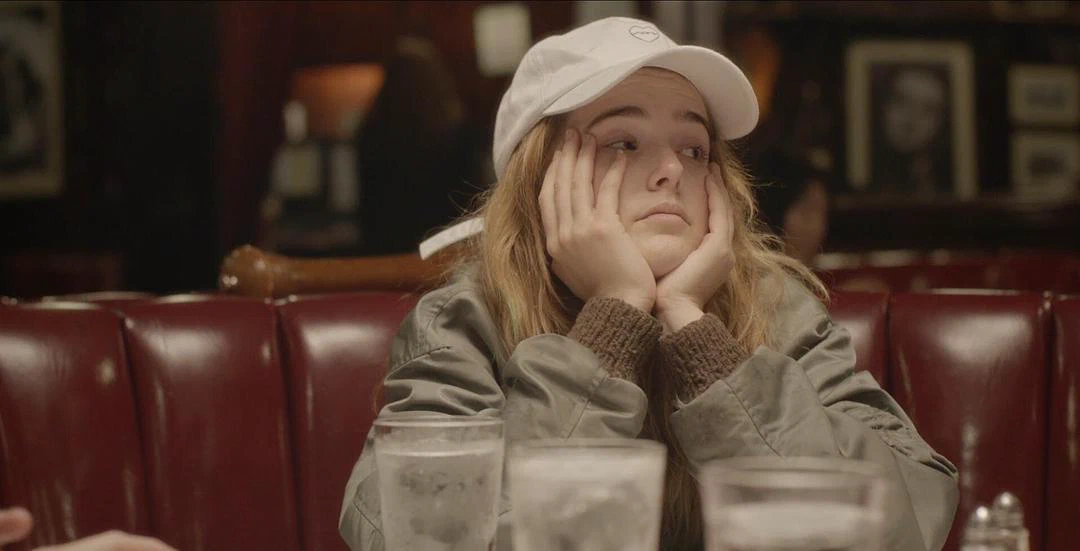
The probability of quadruplets is one in 64 million.
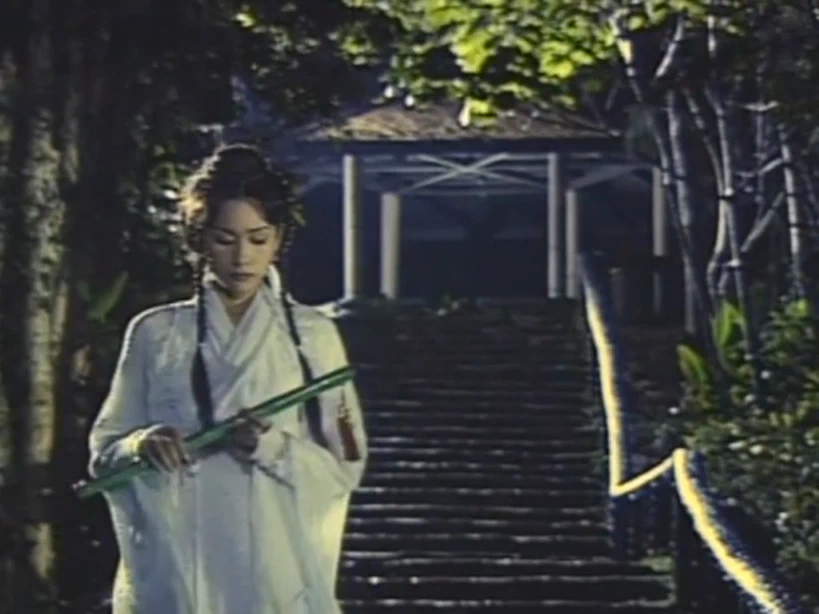
That probability is incredibly low! It amazes me who gets chosen by God like that — and National Geographic actually found such a case! Setting aside the amazement, what concerns me more is the mother’s body — as the film says, quadruplets can’t stay in the womb for the full 10 months (7 months in this case), which creates a lot of risk (I assume to the mother), and each baby weighs less than 1 kilogram at birth, meaning many of their bodily systems aren’t fully functional yet — most notably, they may not be able to breathe on their own. Looking at it this way, being a quadruplet isn’t all that lucky after all.
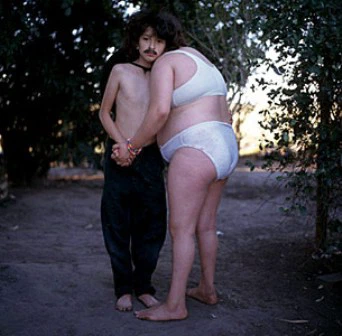
Waking Into Reality

A classmate told me she doesn’t like dreaming, because it leaves you exhausted once you wake up. Maybe so. Dreams take memories that are already distant and toss them even further away, so that you reach for them with all your strength and still can’t grasp them. Those memories turn into something cloud-like and imagined, or some state that can’t be named at all, existing only in the past, and in the life experiences you cared about and treasured the most.

After a long time passes, you think you’ve finally forgotten that person, those things — she no longer appears in your life. Slowly, she becomes a name, an expression, or just a single sentence, and later still, everything disappears, even the feeling itself.

But then, one morning, you’re jolted awake by a dream, your eyes wide open, your body burning hot, your mouth opening and your hand reaching out, desperately trying to call out, to grasp something. You feel as if something has gone wrong — why did you have to wake up into the real world? Thinking back on it, you’d felt at peace, wrapped in a settled sense of happiness; that person — whom you hadn’t seen in who knows how many years — had truly, vividly come back. Details that once felt close enough to touch — her gestures, her expressions, her clothes, even the way her lips moved when she spoke — you feel a fierce desire to keep them from slipping away.

Every time you think of this, you get scared, afraid that you might have just talked loudly in your sleep and your roommates heard you. You sit up, glance around, and see them still sound asleep, snoring away — nothing happened. Even if they had heard, they wouldn’t know who she was — are you just confusing yourself? You get out of bed quickly, walk fast to the bathroom, and stare at your own bewildered, haggard face in the mirror, then splash on cold water, again and again, washing everything clean, so that nothing is left behind. That’s what you thought, and that’s what you did.

Lately I’ve been having a lot of dreams, dreaming of all sorts of strange old things — not nightmares, but exhausting all the same. No matter how late I go to sleep, I always wake up at the tail end of a dream before six. I want to live a settled, ordinary life, but I can’t manage it. I’m troubled by dreams again — I don’t want to wake into reality. This entry isn’t about anyone in particular — it only comes after the dream.

The Redemption of the Internet

IPv4: addresses represented by 32-bit binary data, grouped into four sets of eight digits, then expressed in decimal. As is well known, today’s internet protocol is IPv4, now 26 years old. When it was created, IPv4 was more than enough to connect the few thousand computers of that era, and its inventor believed that 4.3 billion IP addresses would be enough to meet humanity’s needs forever. But 30 years later, in today’s world of computing devices, 4.3 billion is no longer enough — and the reason is that within that theoretical 4.3 billion, far too many IPs sit idle. Many campuses hold huge numbers of IP addresses but only make them available to people within the school, which creates enormous waste. At the same time, many places are facing IP exhaustion — Germany’s IP supply will only last another 4.5 years, and once the last IP is used, new users will have to access the network by sharing addresses, with multiple users unable to get online simultaneously — imagine the inconvenience that would cause! IPv6 was born out of exactly this situation. IPv6 represents addresses with 128-bit binary data, grouped into eight sets of sixteen digits, then expressed in decimal. Its notation is far more cumbersome than today’s IP addresses. But it can allocate 667×10^15 addresses — with this system in place, we can assume that even a thousand years from now, humanity still won’t be able to exhaust it.

In terms of usage, IPv6 offers higher security and optimization for VoIP. The security features it introduces include payload length, next header, and hop limit. IPv6’s advantages for mobile use are also self-evident — every mobile device can have its own unique IP, so it can use the same IP to get online no matter where it is. At the same time, operating systems have already prepared to welcome IPv6’s arrival. Support for IPv6 was provided as early as Windows XP SP1. If XP was the foundation, then Vista is the towering building on top of it, because Vista offers full support for IPv6 and can automatically switch between IPv4 and IPv6, making this transition far more convenient. And it’s not just Microsoft — Mac and Linux have also prepared for IPv6. However, because server manufacturers aren’t yet ready, we won’t be able to use IPv6 for the next few years. But there’s no doubt that IPv6 has raised the curtain on the internet of the new century — in the future, the internet is bound to become even more tightly woven into human life.

Necrophilia

I’ve always longed to hold you and sleep in your arms, to embrace your body and kiss your face

You have no heartbeat, no breath, yet I can still see your smile

Pale Green Eyeshadow

photo by john john jesse

I don’t know whether there are still stories left in this world, or how much of a “story” there is in any single real event. When you encounter a love story tangled up with death, are your tears really for the tragic beauty of the love, or for the sorrow and weight of the death? Their love was pure, without a trace of impurity, so important and so perfect in each other’s memories — is first love still like that today? I wonder whether what’s in the story is really love — the pale green eyeshadow, the single earring, the flowing long hair — and whether any of it was real.

Falling for That Airy Feeling

I’ve been coming down with a cold lately, and the sky has stayed overcast. It made me think of a photographer named Shimamoto Marisa. I’d seen her photography before, and back then I wasn’t really fond of her overexposed treatment, even though plenty of people praised the fresh, beautiful whiteness in her work. I listened indifferently, thinking that this kind of light couldn’t possibly produce whatever people called an “airy feeling.” Thinking about it now, the heaviness I felt at the time made me overlook the beauty in those photos. Let me put up a few pictures — if you google this photographer, most of what you’ll find looks like this. A lazy cat dozing in the afternoon sun; a blue sky with sparse white clouds drifting by; the smell of beach and seawater, watching the waves catch and flash with light. I’ve fallen for this kind of treatment, letting sunlight spread over everything, and that feeling… what’s called the “airy feeling” turns out to be sunlight plus air plus water. The more I look, the more I feel how beautiful life can be, and the paleness of time seems to disappear.

Life, a Comma

In a piece of writing, every comma is a pause, a sign that the text isn’t over yet
After the comma is an unknown riddle, leaving you curious and eager to explore
Especially after the heart-pounding drama of the first half of a sentence, we look forward even more to seeing how the latter half resolves
A comma is a strange and ordinary spiral, leaving you unable to see clearly, unable to grasp it
Life itself is a comma, brimming with infinite possibility
Even this morning, you had no idea what the afternoon would bring
The only thing you can do is steady your spirit and face the unknown challenges and variables
Gather your energy, let your boiling blood surge, and watch closely — remember this after every comma in life

God’s Dice

I happened to come across a theorem called Gödel’s theorem, which roughly states this: in a complete theoretical system (one in which every theorem can be proven true), there must exist a proposition P and a proposition not-P (on the premise that P and not-P must be one true and one false). In other words, in any theoretical system there must exist propositions that can be proven neither true nor false — meaning all theoretical systems are incomplete. At first I thought it was some “expert” daydreaming in a vacuum, dressing up his own nonsense in professional language to pass it off as a theorem. Later I learned this theorem is actually a mathematical one, and a proven one at that (I still find this hard to believe — apparently if you’ve studied mathematical logic you’d just get it)! And it once overturned Hilbert’s philosophy of mathematics. Thinking it over carefully, this theorem tells us not just its own content, but also that humans can never fully comprehend this world. There’s another theorem that gives me a similar feeling — the uncertainty principle — which likewise hints that people can never fully grasp the entire universe.

These past few days I keep thinking of something Joseph Ford once said: God and the whole universe play dice, but the dice have been tampered with. Humanity will never know all the laws of nature — if humans ever did know all the laws, humanity would go extinct, because at that point people would try to change those laws, and the only result of changing them would be extinction. P.S. This reminds me of a blog post by Hua-something that was similar to this one — its last line captured perfectly the strange wonder between humans and the world. I looked at it again carefully today, and it seems the uncertainty principle doesn’t actually say that all particles can’t be measured.

Evolution

“The left and right eyes see the same object from different angles; the images formed on the retina are not entirely identical. After the brain combines these two images, it can distinguish front from back, near from far, thereby producing stereoscopic vision.” — Baidu Encyclopedia (on stereoscopic film)

I watched an episode of Discovery about the differences in stereoscopic vision among animals. The angular difference between what the two eyes see is the stereoscopic field of view; biologically, a wider stereoscopic field means a faster ability to judge and locate moving objects in space. Large cats, for instance, all have a wide stereoscopic field, allowing them to react quickly to prey movement. Herbivores, by contrast, tend to have a narrower stereoscopic field, because when a predator comes, they usually only need to bolt in one direction, so they don’t need too wide a field. Look closely, and you’ll see that the eyes of predators differ from those of ordinary (hunted) animals. Nothing about how things develop is accidental. Nature is cruel — it forces living things to evolve, and only those who manage to squeeze through the cracks earn the right to keep living.

A Report on Life

I really wish feelings could follow simpler logic
Even when you mean to throw your words out gently, sometimes they still turn into hurt
At the very least, what happened today was unpleasant
In the days ahead I need to learn to cherish
Cherish the people I love and the people who love me
Never hurt them — never, ever

For the things you want, you should chase them with everything your life has
For the things you’ve gained, you should tend them with every bit of your heart
May everyone cherish the people who appear in their lives
Send them a blessing from the bottom of your heart
Sometimes something simple is already enough

I should be a decisive, exacting director
Shouting “cut” loudly at the eight or nine times out of ten life goes wrong
Or be a willful, unruly drifter
Shouting “fuck it” at the crowd whenever I’m unhappy
But in the end these are nothing but shouting into the void
After the shouting fades, the mood and the life still have to be slowly cleaned up
My wish is simple
To keep some tension alive even within the plainness
Is a life like that really impossible?
Everything still has to move slowly
As slow as a lover’s gentle hand plucking a flower
As slow as moonlight and cherry blossoms drifting down in the night

It’s getting colder
Today when I got up, breakfast was already gone
My hands and feet were cold too
And then something else came along to make me unhappy
State of mind really does affect the body
Learning to face things calmly is what I need most
Mixing a cup of oatmeal, sitting at the computer, chatting about nothing in the group
I don’t know how to respond to everyone’s comfort
Like an uncivilized child listening to a lecture
But at least there are things I’ve finally come to understand
Writing this entry to record whatever feelings I can still capture
Hoping life won’t depreciate like a stock

Watching the steam rise off the oatmeal like thick ink, my heart actually warmed
And so, there is hope after all