Just an Ordinary Thing to Say
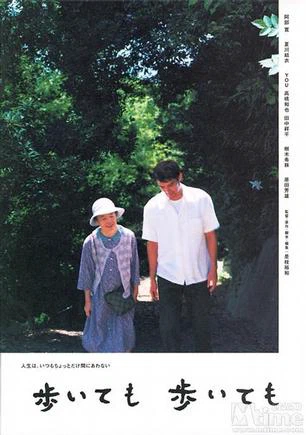
Still Walking was named one of the ten best films of 2008 by Japan’s Kinema Junpo. Compared with the so-called visual feasts that come out of Hollywood, it feels more like a delicate, fragrant little snack. You could say the whole film plays out like a home video shot casually by a family.
What stuck with me most was the mother, devoted to cooking, which reminded me of the scenes of my grandmother making meals every year when I went back to Taiyuan. Cooking, at its core, is made up of trivial chores: buying vegetables, washing vegetables, rolling out dough, kneading dough… and the delicious meal that finally emerges looks simple, yet takes so much effort. All I (like most people) ever cared about was my favorite knife-cut noodles, while overlooking the feelings my grandmother put into the meal. Some might find it strange to say that — what does food have to do with feelings?
I think cooking is also a kind of language — communicating with the eater’s taste buds through prepared ingredients. Every time I ate noodles, my grandmother would ask if they tasted good, and looking back now, there was emotion folded into that bowl of noodles — she knew she couldn’t give me satisfaction in other material ways, so the most she could give me was the food I loved to eat. A finished meal is like a letter, carrying feelings that words alone can’t express, feelings no master chef’s skill could ever fully convey.
The mother in the film is just the same — preparing meals for her son’s family as they arrive, slicing vegetables quickly with her knife, turning the beef simmering on the stove, shucking corn kernels, turning it all into delicious dishes, all while talking about what everyone in the family likes to eat. It makes you realize how great housewives really are — with sincere hearts they tend not just to the food but to so much of the time that makes up family life, and they never think of themselves as quiet, unnoticed presences — how could someone who carries love and devotion in their heart ever truly be unnoticed?
Then there’s the stern-faced father, who isn’t especially likable in the film — rigidly set in his ways, unwilling to let others interfere, refusing to carry the shopping bags, scolding the kids for damaging the plants, walking off unhappily during the group photo. He’s exactly the rational image of an old-fashioned father rooted deep in our minds, everything about him so stiff and formal. But looked at from another angle, this is simply the way social gender roles interfere with how fatherly love gets expressed — look closely, and aren’t there warm moments in the film too? Talking with his little grandson, missing his eldest son — they reveal that restrained, melancholy fatherly love.
After the film ends, close your eyes and you’ll picture that winding mountain road — years apart, it’s the son and the mother, the mother and the father, the son’s own family, walking slowly along that road. The son’s gentle narration reveals the continuation of life, accompanied by Japan’s lush greenery, the deep blue coastline, a butterfly rising up to echo the one earlier in the film, set against soft guitar music — what lingers in the heart is a long, drawn-out tenderness, one you keep returning to in your mind.
Many critics describe the single day this film portrays as a microcosm of life, with the story in between expressing the son’s regret and life’s unpredictability. But I’d rather understand it this way: the love that exists within a family never stops — it gets passed down generation after generation, and the misunderstandings of the past turn into understanding, the resentments of the past turn into forgiveness. A person walks a long road toward understanding how to live within society, and that road is hard — it takes time to accumulate and digest.
I won’t stretch Still Walking any further than this, though I could — I just don’t want to. Because it’s sincere, and it moved me in a real, grounded way; mixing too many extra thoughts into the warmth it left behind wouldn’t do it justice. And I’m glad to have felt moved like this — it makes me feel that I’m not too far removed from “myself.”