Death by a Thousand Cuts: Torture and Liberation
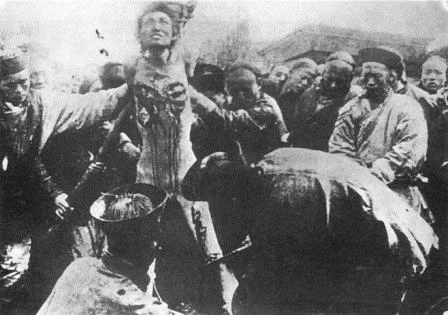
Above is an old photograph of a late-Qing execution by torture that I came across today. This form of punishment is called lingchi — death by slow slicing. The person being executed was a “licentious woman.”
Xunzi once said: “A bank three feet high, an empty cart cannot climb; a mountain of a hundred ren, a laden cart can ascend. Why is that? Because of the gentle slope” (Xunzi, “The Right to Sit”). Originally the term meant “a slope that rises gradually,” but it later came to name a form of execution meaning “to die slowly.” I find myself wondering what force, what mindset, drove humanity to invent such a punishment — one that lets the executioner watch the condemned’s life ebb away slowly amid acute agony.
The woman in the photograph is just a “licentious woman” — a woman who stood up for the liberation of sex and love. But do you see it? She holds her head high to the very end (perhaps from the pain, but I’d rather not think that!), and her disdain, her transcendence, are more than enough to ward off the dread that the very word “lingchi” inspires.
Anyone who endures such torture is a great warrior. When the dark side of human nature lays itself bare through so cruel a method, when the crowd looks on coldly, when the body is dismembered piece by piece — by then you have already been liberated, and that is more than death, because the “you” being destroyed is no longer merely physical. You have transcended everything and become the person Plato spent his whole life searching for in his ideal realm.
This torture, lingchi, liberated humanity.