Eunuchs
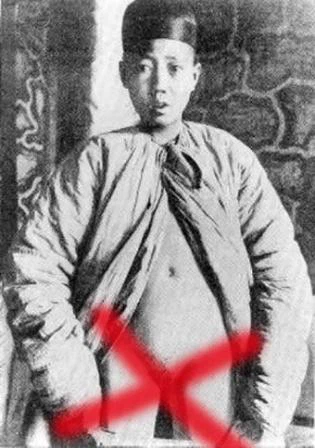
The Ming dynasty’s eunuch agency was called the Eastern Depot (Dongchang). It was invented by the Yongle Emperor, Zhu Di. Its characteristics were:
Its scope of surveillance was extremely broad: whenever the court held joint trials of major cases, or the Embroidered Uniform Guard’s Northern Bureau interrogated serious criminals, the Eastern Depot would send people to listen in on the proceedings; every government office had Eastern Depot personnel stationed within it, monitoring officials’ every move; important documents from key offices — such as the Ministry of War’s border reports and dispatches — were all inspected by Eastern Depot agents; even the daily lives of ordinary commoners, down to the prices of firewood, rice, oil, and salt, fell within its scope of surveillance. Intelligence gathered by the Eastern Depot could be reported directly to the emperor.
At first the Eastern Depot was only responsible for surveillance and arrests, with no authority to interrogate prisoners — suspects it caught had to be handed over to the Embroidered Uniform Guard’s Northern Bureau for trial. But by the late Ming, the Eastern Depot had its own prison as well. (Baidu Baike)
From the reign of Zhu Yuanzhang onward, every Ming dynasty made heavy use of eunuchs. Agencies wielding the power of life and death — the Eastern Depot, the Western Depot, the Directorate of Ceremonial — were all controlled by eunuchs. What did this lead to? The number of eunuchs swelled enormously, and most of them had castrated themselves. In 1424, Zhu Di issued an edict declaring that anyone who castrated himself would be charged with the crime of unfiliality. Later emperors repeatedly reiterated that self-castration was forbidden, but such prohibitions were essentially useless. At the same time, employing all these self-castrated men created an enormous fiscal burden. According to historical records (New Sayings of the Glorious Dynasty, vol. 4), when Li Zicheng’s forces breached Beijing in 1644 (the seventeenth year of the Chongzhen reign), the total number of eunuchs was no fewer than 100,000. What an enormous number this is… It also gives some sense of just how anxious life was for the common people of the Ming.
Regardless of what mindset led these castrated men to mutilate themselves, or to be subjected to castration, they were all incomplete — one could even call them deformed. Setting aside historical reasons, their physiology differed from normal people’s: they had no genitals, and so could not have a normal sex life, yet on the other hand they desperately longed to become “normal” again — for instance, it was often said that some eunuchs kept their own beautiful young concubines. And the court relied heavily on these very men, having them make arrests, conduct surveillance, and carry out interrogations. Shen Defu’s Unofficial Gleanings from the Wanli Era, volume six, “Debauchery Among the Palace Eunuchs,” records that when Ming eunuchs were castrated before entering the palace, only their testicles were removed. One eunuch, in the midst of having intercourse with a young opera performer, forced his unable-to-fully-rise penis into the boy’s anus — only to find he couldn’t pull it back out, and his penis kept swelling larger and larger inside. The boy eventually died from the pain, and the eunuch was sentenced to death. I have no way of knowing whether this particular account is true, but it reflects the author’s disgust toward eunuchs — disgust strong enough to devote an entire column to condemning them.
There’s a witty remark perfectly suited to eunuchs: “I pity you, yet I also find you shameless; I find you shameless, yet I also pity you.” You look at the world, you scrutinize the world, with incomplete bodies and deformed minds — and that is disgusting. The ancient Greek philosophers placed great weight on linguistics and rhetoric, seeing them as the path to truth; thousands of years later, Dominique Laporte likewise discovered that “language only becomes language once it has been castrated” (History of Shit) — which also explains why the French word for “language” (langue) is feminine, and which in turn seems to offer a “rational” basis for the literary inquisitions of the successive Ming reigns. So perhaps it’s still best to follow the old saying: “Be sparing in speech, diligent in action.”