How Can One Be Free - 2
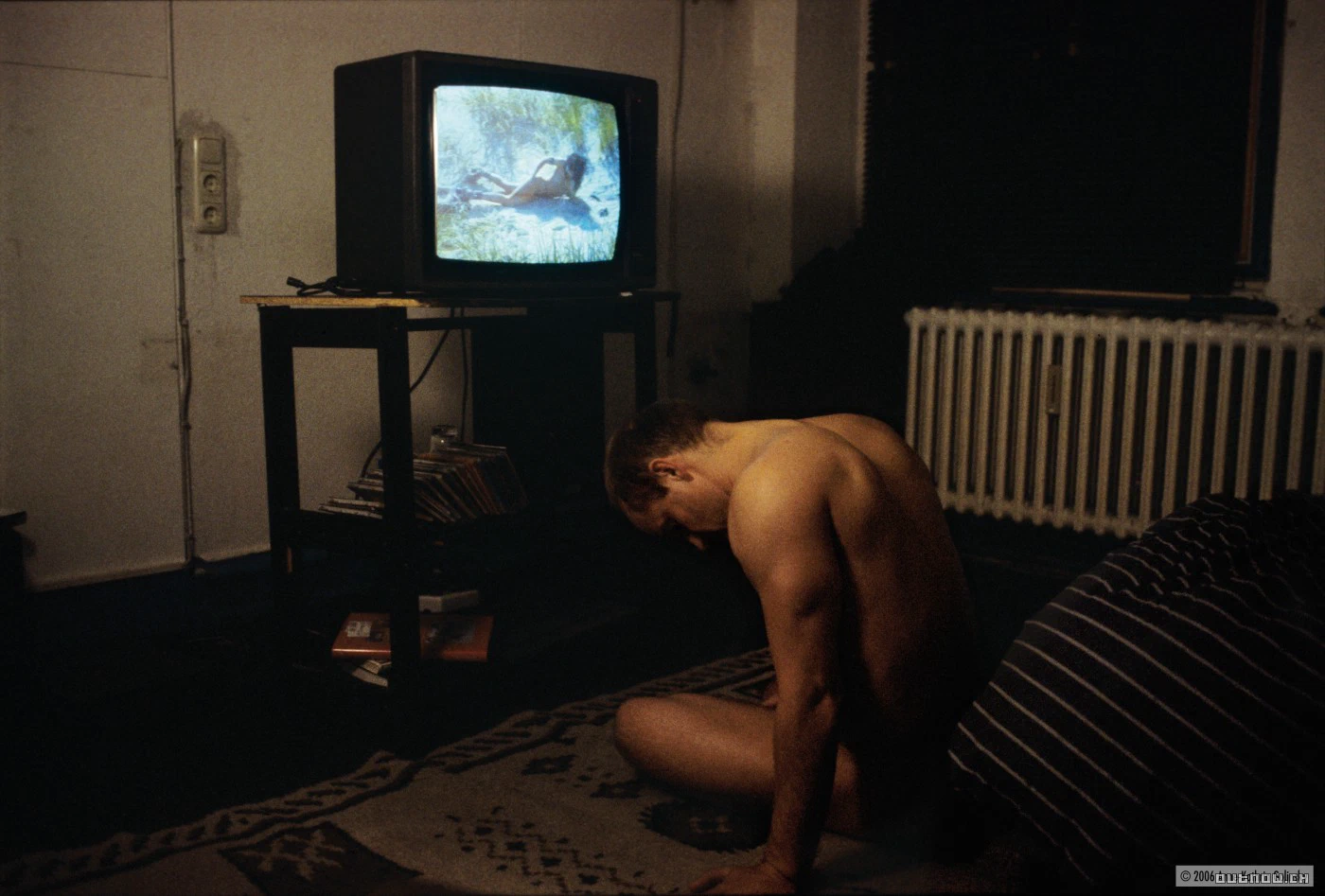
I think there are films you don’t want to watch before you’ve even started, films you don’t want to write about after you’ve watched them, and films you don’t want to watch again after you’ve written about them. The Free Will (Der Freie Wille, 2006) happens to possess all three of these traits at once. After letting it sit for a very long time, I finally picked it up and watched it; and after watching it, more time passed before I decided to write about it. But I’ve made up my mind that I will never watch it again — the reason for all this tangled hesitation is that it is simply too human.
The film is about a rapist who, after treatment in a psychiatric hospital, returns to a normal life, but finds he seemingly no longer feels sexual desire toward women. Later he falls in love with a woman who has an ambiguous relationship with her own father, yet he still cannot escape the temptation rooted in his past as a rapist. In the end, on a beach, before that woman’s eyes, he slits his wrists and kills himself.
The whole film feels long and unflinchingly real to me. Scenes like masturbation and rape appear with no concealment whatsoever. This deserves credit — we “hairless bipeds” spend our entire lives trying every means to release our sexual energy. To avoid sex is to avoid humanity itself. This isn’t some Freudian pansexualism (pansexuality) — that theory merely breaks things down into fine pieces and slaps a “sexual” label on each one; what I’m thinking of is that sex is the very foundation that holds humanity together, because it’s through sex that emotion exists, and that’s what ultimately keeps us from becoming purely rational animals.
Some say this film explores the “evil” of human nature, but I think it’s more than that — how can the good and evil of human nature even be separated? Among the population of rapists, as long as you’re willing to set aside all your preconceptions and get to know them, they are absolutely, every one of them, human beings, brimming with hot, vivid “humanity”; they are not “perverted,” not “deviant,” and certainly not “frightening.” Likewise, in those events that supposedly display the brightest side of human nature, who knows how much evil is also folded in. The protagonist’s “evil” is nothing more than a lost lamb wandering a grassland where he doesn’t belong. His mode of sexual release — rape — is not the “evil” of human nature, but its protrusion, its raw exposure. Under certain circumstances, in certain special conditions, the deviance of some people instead becomes the prophet who leads the way, rather than the lost lamb.
Speaking of human nature, one cannot overlook Kubrick’s A Clockwork Orange (1971). By comparison, The Free Will goes even further — it has already conceived of a method for liberating human nature, for achieving “free will”: suicide. It’s just like what Natsume Sōseki wrote in I Am a Cat — that in the future there will no longer be such a thing as natural death for humans, and everyone will resolve their lives through suicide instead. Many people will surely think that suicide is an affirmation of the “evil” within one’s own nature — but that’s wrong. Aside from suicide, is there any other way to achieve “free will”?