How Can One Be Free
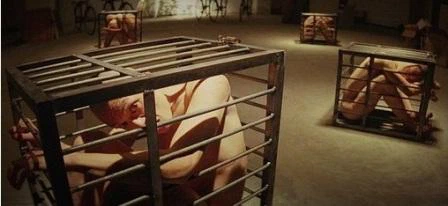
Just one more week until exams. Looking back on the two weeks since classes ended, life has become very regular: asleep by 11:30, up at 7:30, a full day in the library. This morning I woke at 7 without an alarm, fully alert, and lying there tossing and turning I found myself thinking that I’m becoming more mechanical every day, repeating a pre-set pattern step by step. I don’t know whether that’s good or bad.
Thinking about it, the brain really is quite “physical” — it receives stimuli and produces responses. In theory, if we understood the laws governing every physical form’s operation, we could easily predict the behavior that follows, much like in many documentaries where scientists keep deconstructing the brain to explain things people previously couldn’t understand. But saying this is bound to draw objections from many people, who firmly believe they possess a clear, independent spirit and a freely beating heart, rather than being some “ATM machine” constantly depositing and withdrawing “money” from the brain.
There was a time when I thought this way too, because doesn’t this view deny the very freedom I want?
Actually, not quite. All freedom is built on top of unfreedom. If we hear that Blogger has been unblocked, we’re bound to feel we’ve gained some freedom — but isn’t that just suddenly stepping out of some continuous state for a moment, and suddenly finding the lotus blooming differently red? Frankly, it’s just an illusion. Whether it’s unblocked or not is still entirely up to the relevant state authorities — the temporary unblocking just slaps a “freedom” label onto the shackles and chains binding us.
And it’s not just that. Most of our time is spent on highly mechanical processes — most people just don’t want to admit it. Take eating, sleeping, using the bathroom, and so on — these processes are all quite procedural, and saying this isn’t some Matrix-style claim at all. If you’re used to scooping your rice first and then picking up your spoon, then once that order is switched, it will definitely take a few days to get used to. And at night, when you sleep, you’ll unconsciously favor lying on your left or right side — force a change in direction and you definitely won’t sleep soundly. Even more famous is that question of which finger ends up on top when you cross your hands.
If you still don’t believe it, or lack good enough self-observation skills, then think about the people around you. Can’t you predict what your good friends will say, what gestures they’ll make, what kind of clothes they’ll wear? Or you’ll know that someone you keep tabs on will show up at a certain spot in the library at a certain time. Seen this way, that so-called scientific “mind-reading” is, at its core, nothing more than observing the minutiae of life.
But does this make you feel unfree? I think we simply overestimate what we call freedom, and underestimate humanity’s “proceduralism,” or mechanical nature (doesn’t it resemble The Matrix?). But in the end, we are still unfree — which brings to mind the method of achieving free will mentioned in The Free Will (Der Freie Wille, 2006) — death. And now it seems the question is whether death is really an exit into freedom — does it achieve freedom, or merely escape unfreedom? These two are fundamentally different.