On Death, Again
Photography/ Joel-Peter Witkin
After finishing Synecdoche, New York, I was drawn back into a long-standing confusion of mine — or perhaps of humanity’s — death. What exactly is death? A spirit, a culture, something we project our longing onto? Or is it the mourners left behind, grieving, the wreaths of yellow and white flowers, the feelings hidden behind an elegant tombstone? It seems to resemble so many of humanity’s emotions: just as mysterious, mysterious enough to inspire fear, so that people are reluctant to even speak of it; just as overwhelming, always provoking endless contemplation, endless elegy. But all of this is merely the surface of death, because I myself cannot see through to its core.
The Ci Hai dictionary has a clever trick: when defining certain nouns and adjectives, it always defines them by their opposite. When explaining “fat,” for instance, it says it’s the opposite of “thin.” Naturally, in explaining “death,” it uses the same clever device — the opposite of “life,” of “being alive.” But experience tells us, again and again, that life does not end with death — at least not on the psychological level. It’s said that certain mediums can photograph the souls of the dead, which has stirred enormous controversy within parapsychology. Of course, experts accustomed to the standard, scientific photographs of the laboratory mostly scoff at these supposedly paranormal images, dismissing them with contempt. Indeed, whether these things are fact or fantasy, to science they amount to nothing more than “an ant trying to topple a tree” — yet they nonetheless show how persistently people manufacture and propagate death, or half-death. By contrast, we habitually subject stories about “life” to scrutiny by reality — those who spread rumors we call “rumor-mongers,” those who tell bizarre tales we call “delusional.” Yet legends about “life” are everywhere around us, and most of them are voiced through collective consciousness — we are constantly told that in such and such a year the economy will improve, that we will live happier lives; more absurdly, the ideas propagated by certain films suggest that some people are simply better than others and ought to save this group or that; and most absurd of all, some people’s words have actually come to be treated as “scientific thought,” carrying everyone along in a shared delusion.
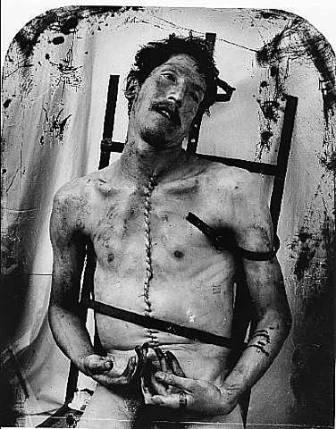
We all know that the concepts of fat and thin, big and small, good and bad are not absolute. Yet it’s precisely “life” and “death” that carry the heaviest, most primal distinction — there is, it seems, an absolute dividing line: with one cut, the heart stops or the brain dies, and “life” instantly crosses over into “death.” This strikes me as utterly inconceivable. I understand the weight and shock of death, of course, and I believe in it — but I am even more convinced that “absoluteness” cannot truly exist in anything, anywhere.
But does this world really contain a state of being “half dead, half alive”? I imagine anyone trained in medicine would be powerless to answer. Judging life and death this way is rather like judging male and female by gender alone — too arbitrary, too detached from reality. In matters of gender, the existence of intersex individuals already breaks down the boundary between male and female. What about life and death? As far as I know… no one has ever died, then gotten back up some time later to tell us what death felt like. Does that alone prove the distinction between “life” and “death” is sound? I don’t think so. If the life/death divide is supposed to be more scientific and rigorous than the male/female divide, then how do we explain all the legends of ghosts and spirits that persist (setting religion aside)? Moreover, we can loudly declare “I am a man” or “I am a woman,” yet almost no one ever says “I am a living person.” Of course there’s a cultural taboo at work here — we habitually avoid the subject of death — but is this avoidance really born of fear of death, of fear of losing “life”? Or is it that we fundamentally cannot discern the true nature of life and death at all?
When capital began to be privatized, the psychological fear of loss emerged — or rather, began to be magnified and intensified. This sentiment quickly generalized, spreading from people to objects and beyond, eventually reaching concepts like “life” and “death.” The earliest humans had no idea what death was. Somewhere on earth (I no longer recall exactly where), archaeologists once discovered a strange burial practice: the dead were buried face-down with their bodies curled up. It’s been surmised that this posture resulted from the body having been bound. So why would anyone bind a corpse? The answer is simple: because, at the time, people didn’t realize the person was dead! They still treated him as part of their daily human activities, but decay inevitably set in, and out of fear — that most primal of human emotions, as I mentioned before — they buried him, yet feared he might somehow respond again (come back to life), and so they bound him. Chronologically speaking, this is the earliest “funeral rite” humanity has left behind.
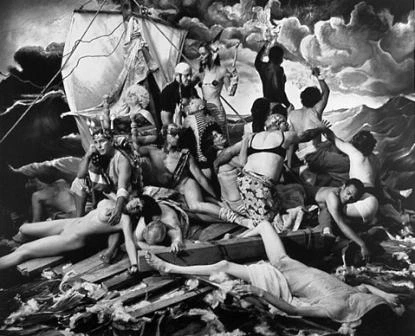
Cultures around the world all take measures to avoid confronting death directly. In China, for instance, when someone has truly died, we still tend to use euphemisms: “they’ve gone,” “they’re no longer with us,” and so on. Mourning for the dead is something imposed by culture, while death itself precedes culture. On this point, I agree with what Haruki Murakami wrote in Norwegian Wood: death is not the opposite of life, but exists forever as a part of life.
Religion always instructs us to do good and accumulate virtue so that we may ascend to heaven after death — in reality, this is meant to ease people’s fear of the unknown, of death. Naturalists, for their part, emphasize letting nature take its course, passing through death calmly and peacefully — which, in effect, is also a way of diluting the concept of death. Freud, that analytical madman, is probably the first person I can think of who brought death up close. He classified death as one of humanity’s primal instincts, calling it the “death instinct” (as opposed to the “life instinct”) — for example, humanity’s tendency to wage war and destroy is, in his view, a direct expression of the death instinct. Not long after Freud’s ideas held sway, humanistic schools of thought — parapsychology, transpersonal psychology, and other doctrines connected to “spirits” — began emerging one after another… the paranormal kept resurfacing, like a ghost that simply refuses to disperse.
Death really is like this — leaving us utterly at a loss for words, yet at the same time filling us with dread. This, I think, is the essential nature of all mysterious things. Once you peel back death’s many veils, perhaps it really is just as the Ci Hai says: merely the opposite of life, merely a definition humans have assigned to something. Put more plainly, it’s nothing more than a disease everyone eventually contracts — a disease that no amount of effort, across however many years or generations, has ever managed to cure. Or perhaps, like “life,” it too is merely a matter of form — its product simply invisible to us.