On Emotion, Starting from The Art of Loving
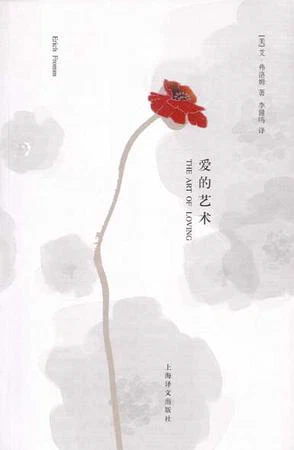
A few days ago I bought the Shanghai Translation Publishing House edition of The Art of Loving, which has a real edge in binding and layout over my old Jinghua Publishing House copy, making it much more pleasant to read, and sparing me the annoyance of missing pages. The pity is that the translation feels less fluent than the earlier one — in some places it’s less clear, less easy to follow than what I’d read before. Picking it up again, I found new things to take away from it, so I’ll use this as a “hook” to rethink love, and that magic-trick-like thread of ours we call emotion.
As for love — biologists say it’s a kind of biological hormone, sociologists say it’s an economic relationship, mathematicians might think of it as some kind of functional relation, and political scientists would treat it as a form of interpersonal politics. Fromm, meanwhile, holds that love is an art, something that can be treated as a “discipline,” one that can only be mastered through continuous, diligent study. But all of this is just one school of thought, a “one-sided construction” — not enough to capture the whole, but more than enough to reveal love’s complexity.
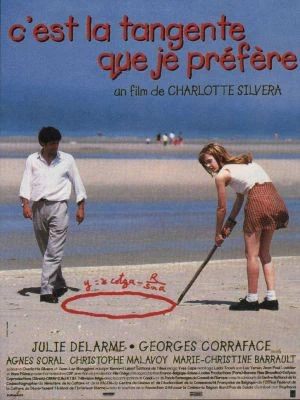
Even more interesting is a French film I once heard about called C’est la tangente que je préfère (1997), whose heroine is a math prodigy who sets the footprints she shares with her lover as coordinate points, using them to build a coordinate system and a function. But who can be calculating while they’re in love? Even an already-complicated function still can’t trace the trajectory of love — no one will ever know which quadrant lovers will slip in from, or which quadrant they’ll tumble out of.
But really, love is just one of our many emotions. When it comes to human emotion, we’re not only unable to predict it, we often can’t even describe it. Give you a past relationship, and can you be sure you could explain it clearly? We always grasp at the big direction, the big trend, hastily labeling things good or bad, thereby overlooking countless small details — and these are usually the very “essence” of the thing. It’s like looking at historical figures: don’t just look at the major events and outcomes, look at the small details, because they’re the ones that radiate the full, dazzling spectrum of human nature. Interestingly, when we root our focus in these “trivialities,” we can actually see a “small scenery” entirely different from the larger world.
In the world of emotion, whatever you believe will always feel right to you. No one has ever agreed that emotion has anything “objective” about it. To put it plainly, everyone is groping at their own part of the elephant, holding forth grandly while occupying just one local patch — and when you laugh at someone else’s attitude toward emotion, they can perfectly well counter with a completely different “touch” of their own. I think that if we occasionally swapped heads and took a look, instead of clinging to our own “worm’s-eye view,” we’d probably gain more feeling, and see a much wider world.