The Absurdity of Reason
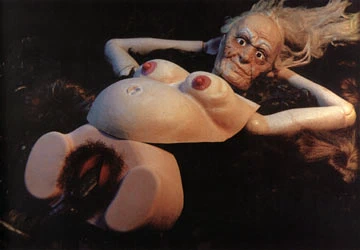
In his Meditations on First Philosophy, Descartes raises a question like this: Is there anything that is self-evident and therefore beyond doubt? Is it possible that our lives are nothing but a dream, or that the world is merely a fiction of our own imagining?
On the surface this question seems simple enough, yet it has genuinely stumped no small number of philosophers! Russell’s The Problems of Philosophy opens with exactly this maddening question. He makes a whole production out of a wooden table. First there’s the color you see when you look at the table — different people will see different colors depending on how light reflects off it; a person with normal vision and a colorblind person see it differently, and someone wearing blue-tinted glasses sees it differently still. Then Russell turns his attention to the table’s grain — on the surface it looks flat and smooth, but under a microscope it’s full of rough hills and valleys. And so on and so on — think it through carefully and you’ll find even more such problems.
If that’s the case, can we really say the table is not a “physical object,” but rather a heap of some xx? Let’s see how various thinkers have answered what that xx actually is. Leibniz (1646–1716) tells us it’s a heap of souls; Bishop Berkeley (1685–1753) says it’s an idea in the mind of God. Both of these famous idealists, without exception, manage to think the poor table out of existence entirely. But look at what our rigorous science has to say — it’s an enormously vast swarm of violently moving electric charges. This, too, seems to point toward an idea: that the table is a phantom conjured by the human brain…
Following this mode of thinking, we can think something that plainly exists out of existence, and we can also think into existence something that doesn’t exist at all. Given that, have devils, gods, ghosts, and spirits actually been “produced” in just this way?
In fact, even if we manage to come up with answers we feel are correct to the two questions above, an even deeper question immediately follows — the very faculty by which we’re able to think these questions through at all, —reason itself — is it sound, or is it absurd? As the book (The Pig That Wants to Be Eaten) puts it: “Our rational faculties are the basis on which any serious thinking proceeds. We can question whether any particular piece of reasoning is sound through painstaking thought. But we cannot doubt whether our general capacity for reasoning itself is flawed. At most we can say it appears to serve us well.” But clearly, this too is a deeply contradictory question…
Perhaps we should all just wave our hands at the question of “reason” and say: we’re off to buy some soy sauce… and then the question returns — is the soy sauce we bought even real?