The Corpse of a Book
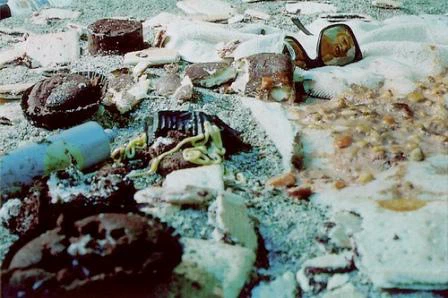
After nearly two years at Sichuan University, the books on my shelf have gradually multiplied. Looking at the piles of academic books that fill me with despair, alongside the beautifully bound translated novels, I find myself thoroughly annoyed. Walk into any bookstore of decent size and you’ll see that famous line — books are the ladder of human progress. But are books really so great? Think about it carefully: a book is nothing more than a vessel carrying human thought. What we actually need is the thought recorded within it. Once that knowledge grows old, once times change and new knowledge keeps emerging, old books become obsolete even faster than old knowledge does. At that point, aside from satisfying our quasi-necrophilic nostalgia, what meaning does the book itself still hold?
Living as we do in an age of extreme informatization, can our lingering attachment to old books really evolve into the kind of devotion Yeats describes in his famous poem “When You Are Old” — growing old slowly together with you? Perhaps that’s far too idealistic. Just as the foul air accumulating in the body eventually needs to be expelled, once old books pile up high enough, they too need to be dealt with. But what I fear most is exactly this process of “sorting the genuine from the false,” of selecting and discarding. Or rather — beyond the knowledge itself, these books also hold fragments of my own past, every joy and sorrow contained in every volume, every page, chapters of life touched by a faint, lingering fragrance. If only there were some parallel dimension where I could store everything I’ve left behind in each moment of my life — like Doraemon’s jars, used to store the four seasons separately. Unfortunately, faced with stacks of old books, I still have to make a choice, and that’s when this thoroughly unsatisfying nostalgia flares up again.
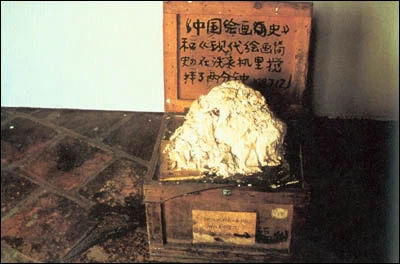
Huang Yongping’s once-sensational work, in which he placed A Concise History of Chinese Painting and A Concise History of Modern Painting in a washing machine and ran it for two minutes, seems to offer one possible solution — like a performance artist, blending the two books together. But I still lack the nerve, or perhaps I doubt whether there’s really any value in blending them together at all. In fact, what Huang Yongping shows us is that what’s now called “art” doesn’t need any “accumulated weight of history” — it only needs to be relevant to the present. So could this approach catch on?
In truth, looking across the vastness of the world (again, far too idealistic a way to put it…), the answers to the problems we encounter are usually already brewing within those very problems. Take something as iconic as the college entrance exam: the moment the test is over, those once-treasured reference books instantly become worthless scrap. Some students sell them, others burn or tear them up… even whip them with sticks. I imagine the ancient practice of “book burning” arose under similar circumstances. But to me, the methods above feel far too “violent and bloody.” It seems the best way to avoid producing more corpses is simply not to produce more living things in the first place. If that’s the case, will the corpses of books ultimately turn into an “indictment” against me as well?