The Rose Boy and Gender Equality
No era has ever been as fascinated by androgyny or intersexuality as our own. People are forever coming up with strange and wonderful ideas about gender, like the “third sex” and “queer theory” that scholars have since proposed. I’ve also read articles before calling for the removal of the gender field on ID documents, the promotion of “standing toilets for women,” and so on. The existence of gender itself is facing more and more challenges — why should the labels “male” and “female” alone be enough to divide several billion people into two camps? I’m against this kind of binary division.
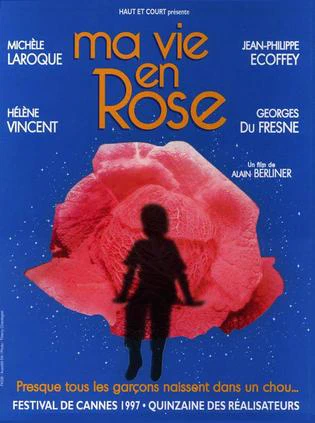
The 1997 film Ma vie en rose tells the story of a boy named Ludovic coming to terms with his own gender. At home, he plays with Barbie dolls and copies the graceful dances he sees on TV; at a party he puts on heavy girl’s makeup, and at the same time falls for a boy at school, innocently wanting to marry him. Paired with that face only little boys have — pure, intoxicatingly so — calling him the “Rose Boy” really couldn’t be more fitting.
On the other hand, the neighbors find his strange behavior unsettling, and one after another keep their own children from associating with him. Finally, when he secretly plays Snow White in a school stage performance, it provokes the other parents’ anger, and they sign a joint petition to have him expelled from the school. His family, troubled on his behalf, brings in a psychologist to counsel him — but is he himself not just as anxious about it? Lovable Ludovic believes that an “X” chromosome must have fallen into the trash, that he’s a hermaphrodite, a scientific error.
The film never offers a real resolution. Even by the end, though his family gradually begins to accept him, under the dominance of society’s binary stereotypes, Ludovic still has a long road ahead. Growing up is never easy for anyone, and the exploration of gender is no exception. The shaping of a concept as complex as gender is accomplished jointly by history, culture, and psychology, and so a great many problems still arise when trying to weave an idea like gender equality into everyday life.
Indeed — you’ll always hear someone hurling “tomboy” or “sissy” at others as an insult. As Kevin Tsai put it so well: discriminatory words that hurt people are like a samurai sword that wounds — you can tie as many pink ribbons on the blade as you like, and when it’s swung, it’ll still cut just the same. Facing these traditional customs, only a shift in awareness can ever overpower the force of language — gender is, in the end, nothing more than one of a person’s traits; no one is absolutely male or absolutely female, and so however someone is, they deserve respect.
But as far as I can see, gender equality is wildly out of place in China. Take, for instance, the kind of “equality” manufactured by public opinion, which always leaves people with the impression that women are “rising up” to snatch men’s rice bowls; or take the popularity of terms like “fake girl”; worse still, schools set standard hairstyles for boys and girls alike… What I want to say is, we should all hold at least one basic conviction: everyone’s growth deserves care and concern, and all the labels society piles on will only collapse of their own accord once truly understood.