Sisters in Sin
Qian Zhongshu, writing on Aesop’s Fables, observed that small children always manage to win the adults’ affection, while conflict always seems to exist between the older child and the younger one. A ravishing young girl will always attract the jealousy of girls her own age, while an older woman, lamenting how quickly youth slips away, lectures these young girls on knowing their place. As in the example I mentioned before from “The Long Song,” the scene suddenly swings from beautiful imagery to grim reality, and in teaching people to cherish their time, it also seems to conjure up a rather terrifying image: an elder telling a child at play, “you’re about to die, so enjoy yourself while you can.” In short, culture’s attitude toward “the lesser one” is deeply conflicted: it must extol the virtue of cherishing the young, while also resisting the instinct to fear being overtaken by them. The contradiction runs roughly along those lines.
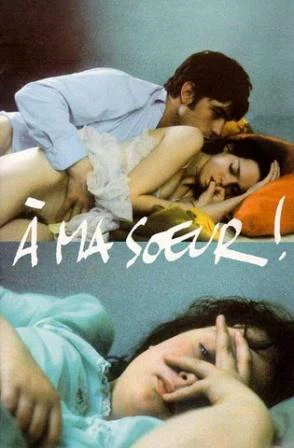
In the film Sisters in Sin, the older sister is beautiful and captivating, while the younger one is heavyset and unwieldy, drifting monotonously between eating and sexual fantasy. Does the older sister really hate her sister? I don’t think so. If she did, she wouldn’t pull her sister aside to share rather private details about that man, nor would she say such sisterly, intimate things to the mirror. Even if there is a sliver of dislike, it’s driven by nothing more than conventional ideas of beauty. Meanwhile, the younger sister, upon overhearing her sister having sex, clenches her fists and lets a look of pure venom cross her face. She is the black cat lurking in the night, watching for something. And what exactly is that “something”? It’s love — love built entirely on imagination.
Anyone who has been touched by love, even imagined love, can hardly avoid jealousy. In ancient times, a certain Persian king’s wife had every woman who’d had an affair with the king brutally “remade” — subjecting various parts of their bodies to mutilation: hands, feet, tongues, breasts, and so on. But where does jealousy actually come from? Nothing but love — it is precisely the love the younger sister imagines for herself that makes her so envious of her sister losing her virginity, and so indifferent to her sister and mother’s deaths.
Indeed, anyone who clings so tightly to love is already somewhat sick. The younger sister’s jealousy isn’t innate — it is entirely provoked by comparison. Even though the younger sister poses no threat whatsoever to her, the older sister never stops commenting on her figure and eating habits. If we could really let go of certain attitudes toward “the lesser one,” then even if everything else still happened exactly the same way, there would have been no film to make.
Some people weep openly while reading The Sorrows of Young Werther, and some even feel a kind of helpless, baffled tenderness toward it. Werther, who falls ill from jealous love and suffers from heartbreak after heartbreak — is it Goethe elevating a pathological mental state into something noble, or is it our era that has cheapened what was once a noble feeling? I honestly can no longer tell.
For us ordinary people, jealousy is jealousy, but life still has to march forward, step by step — as dull as the film’s opening line about going from ten o’clock to six, and then from six o’clock back to ten. Jealousy spreads, tediously, through the tedium of everyday life. Or maybe jealousy is simply a byproduct of boredom? It’s precisely because every day is so insufferably dull that there’s room to endlessly play out love and hatred. We should be like Schopenhauer, firmly believing that existence is empty, that life — and even existence itself — has no meaning. At that point, the thing humanity fears most quietly creeps up beside us: nothingness. Sartre, for his part, would say that fearing nothingness, fearing that love, hatred, and death are all meaningless, all of it is simply nauseating.
Thinking about it, the love between two people really is like an assembly line — sampling, screening, mass production — nothing more than a void manufactured in the intermissions of boredom.