Childhood Is Every Person’s Cannon Fodder for Growing Up
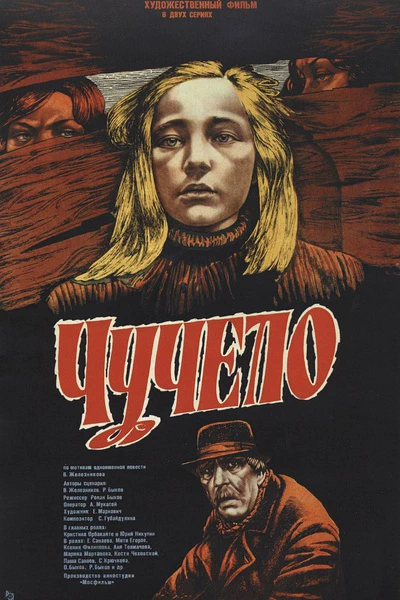
Even before watching the film, I already sensed it wasn’t simply a film about children. Having finished it, I find myself deeply moved: a child shoulders so much blame, accusation, and attack that was never hers to begin with — what kind of feeling must she have carried through it all?
It’s 1983, and the Soviet Union has not yet collapsed. Even the red scarf on the chest of the lovable children in the film hints faintly at a spirit of collectivism. At an age meant for love, she chooses to protect the heroic image of the boy she loves; as a member of a collective, she accepts being branded a “traitor”; and as the granddaughter of an old man well versed in the art of letting go, she also embraces the nickname “Scarecrow.” Add to that her achingly pure face, and calling her a “saint” wouldn’t be an exaggeration. And yet, in the furnace of that great collective, even a saint becomes a shameless scarecrow, cast out as other.
That tightly organized little clique is worth dwelling on. What struck me most were the shrewd “Iron Nail” and the dim-witted, short girl. Both of them get along just fine. Iron Nail is the leader, basking in supreme political power; the dim girl stands apart from it all, cracking the occasional joke, playing the clown. The roles each of them symbolizes within the group are unmistakable.
Perhaps the girl admitted to being a “traitor” purely out of love, but the way this collective treats outsiders without any concern for right or wrong is truly terrifying.

Confucius said: “攻乎异端,斯害也已” — often interpreted as “attack incorrect views, and the harm will be eliminated.” But I believe the final character “已” here functions as a sentence-final particle of exclamation. Read this way, the whole line means: “Attack views that differ from your own — that itself is the harm!”
Within a vast collective, the individual is always small, easily overlooked, easily suppressed — just one of countless fragments making up the whole. In the same way, childhood, within the larger arc of a person’s growth, is merely cannon fodder for that growth — like the tiger that borrows the pig: it never gives it back.