Deeper Than the Deep Blue Sea
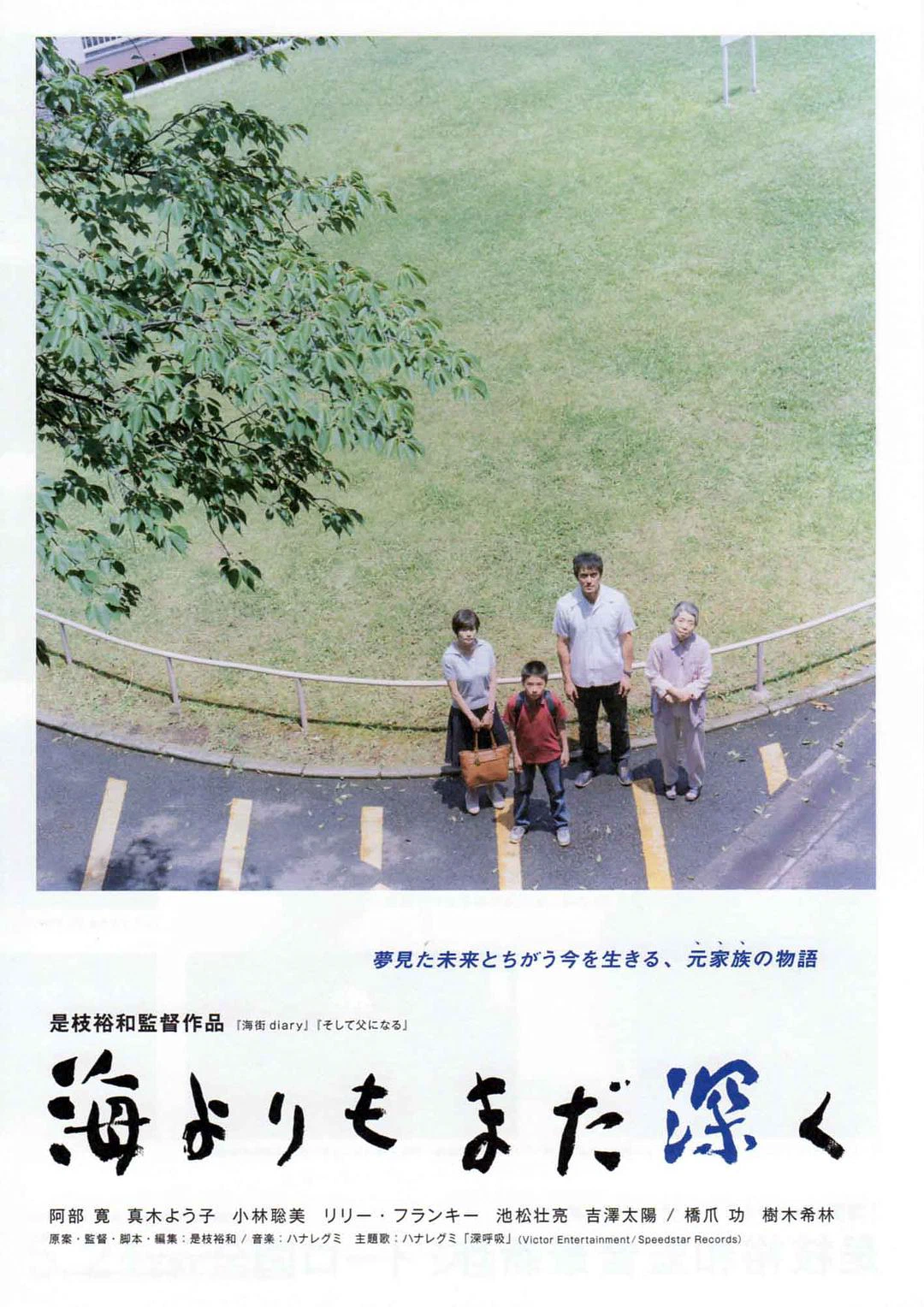
Hirokazu Kore-eda’s 2016 film After the Storm (海よりもまだ深く, “Deeper Than the Sea”) is exactly this kind of film. For a viewer used to blockbusters, the first hour or so of slow, everyday scenes might feel unbearably dull, but the unhurried unfolding of the ending left me deeply moved. I love seeing the small house where the mother lives, and her lingering attachment to the people and things that once filled her life there. At the end, after the rain clears, she waves goodbye on the balcony with a face full of smiles at her son’s “family” — radiating a warmth and tenderness that lingers.
As the film nears its end, the pleasant sound of whistling and the air after the typhoon has passed will only bring to mind those mundane, fragmentary scenes from the first half: the mother making ice cups, Ryota snooping around everywhere… A film this delicately observed is a rare thing.
Tucked away in a corner of that small house, you might feel a brief moment of warmth — but peel back the layers of that tenderness, and a far more sobering reality emerges: Ryota’s career is a mess, he’s extorting money from a high-schooler, selling off his late father’s belongings; his ex-wife, in the name of “planning her life,” is seeing a wealthy man, though there’s no real feeling between them; even his innocent young son flatly declares he doesn’t want to grow up to be like his father.
It’s hard not to sit with the question — why are we all rushing through life like this? A scene from The Three Burials of Melquiades Estrada is worth thinking about here. In it, an old cowboy, after his friend is wrongfully killed, faithfully honors his friend’s last wish: he drags the killer along on a journey into Mexico to bury his already-decaying corpse at a particular spot. In the end, it turns out that the address — and the wife he claimed to have — were entirely made up.
Rushing in, rushing out — where exactly are we all headed?