Doubts About Education
I remember sitting in on an educational psychology class as an undergraduate, where the instructor screened Les Choristes (The Chorus). That kind of gentle, transformative teaching is bound to leave any viewer in awe of the gardener-like artistry of the teacher in the film. In fact, education has long been a recurring theme in cinema. Among films portraying ordinary teacher-student relationships, Dead Poets Society is perhaps the most famous; among those depicting more unusual subject matter, there’s the well-known The Blue Lesson (教室别恋); and films that tie education to human nature together have their classic in The 400 Blows.
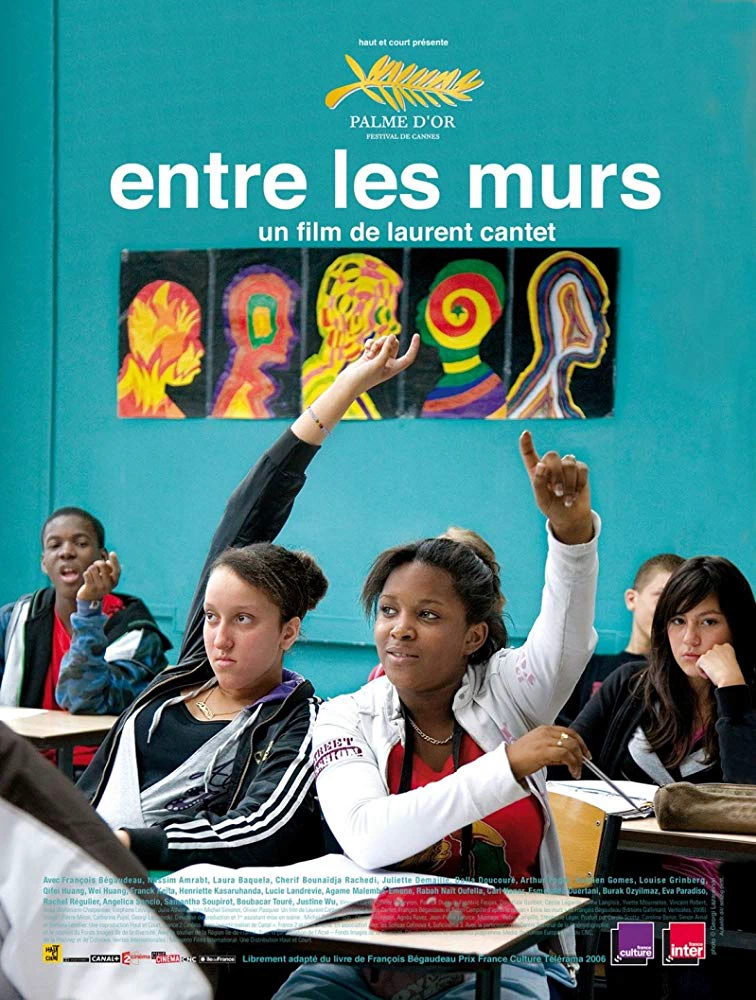
Compared to these tightly plotted, fast-paced films, The Class (Entre les murs) is inevitably a duller watch — two hours that consist of nothing but trivial classroom incidents, faculty meetings, and parent conferences. And yet, precisely because of this, it feels real. Real almost to the point of being a documentary. This distinctly European style of filmmaking comes across as pure and unadorned, as if it were never made to move anyone in the first place.
The students in the film are thirteen or fourteen years old. I’ve never worked directly with kids that age, but having spent four years as a teaching assistant in college, I’ve encountered all kinds of students. Because of that, I can appreciate all the more the particular tolerance and warmth this teacher extends to certain students. I dislike punishment just as much as he does, but I don’t fully believe that education is, at its core, built on love. Just as with the student expelled in the film, there really are troublemakers in real life. When it comes to dealing with them, an education rooted in love seems to fail — but should we instead turn to something like the reform school in The 400 Blows?
This line of thinking has led me to doubt education itself. How much power, how much meaning, does education really have? Does it enlighten people, or corrupt them? These past two days I’ve watched a number of interviews with Amy Chua, and I find myself wondering: is education an accomplice to humanity’s will to dominate?