What Is “Beauty”?
The one thing worth mentioning about this Thanksgiving is that I finally read Spring Snow. I won’t go into detail about Mishima Yukio’s aesthetics here, because whatever beauty it contains feels far too small next to the emotional impact of the experience of reading it. But on the concept of “beauty” itself, there is so much to think about and uncover. Its definitions alone are countless:
- The most beautiful is also the most just. — so said the Delphic Oracle, when asked what judgment of beauty’s appreciation should be.
- Looking upon beauty with the eye of the mind, what he produces is not the semblance of beauty but the truth, bringing forth and nurturing true virtue, becoming a friend of the gods and immortal. — Plato, Symposium
- Since all things are beautiful, … all things must therefore possess numerical proportion. — Bonaventure, The Mind’s Road to God
- Beauty consists in proportion, since the senses delight in things well-proportioned. — Aquinas, Summa Theologica
- Natural beauty is a beautiful thing; artistic beauty is the beautiful representation of a thing. — Kant, Critique of Judgment
- Wit is to the intellect what beauty is to the eye and harmony to the ear. — Gracián, The Art of Worldly Wisdom
- The longer one contemplates any kind of beauty, the more inevitable it becomes to compare it with several other kinds and degrees of beauty, and to assess the proportions between them. — Hume, Of the Standard of Taste
- Beauty is no quality in things themselves: it exists merely in the mind which contemplates them. — Hume, Of the Standard of Taste
- In the sensory world, far from being the cause of beauty, perfection is, in women possessing the highest degree of beauty, almost always accompanied by an idea of weakness and imperfection. — Burke, A Philosophical Enquiry into the Origin of Our Ideas of the Sublime and Beautiful
So what exactly is “beauty”? Some believe beauty should be a combination of inner and outer beauty; others lean one way or another: “Among ten plain women, there’s still one who’ll find a partner; among ten beautiful women, nine will”; “So-and-so isn’t especially beautiful, but there’s a natural beauty radiating from within.” Such disagreements are no problem at all, because views on any single thing ought to be plural. Beauty, too, should come in many forms and colors.
The French artist Marcel Duchamp (1887–1968) exhibited a work in 1917 titled Fountain:
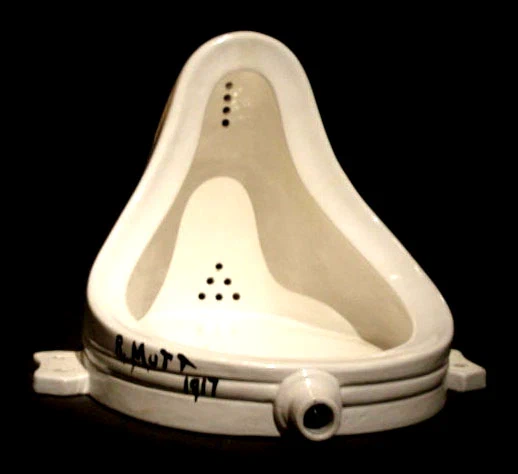
In December 2004, 500 experts from Britain’s art world voted Duchamp’s Fountain the most influential artwork of the 20th century. And yet, as we can plainly see, it’s nothing more than a urinal.
Art is plural, and so is our understanding of beauty. What is beauty? Everyone carries their own answer in their heart.