Another Possible White Snake
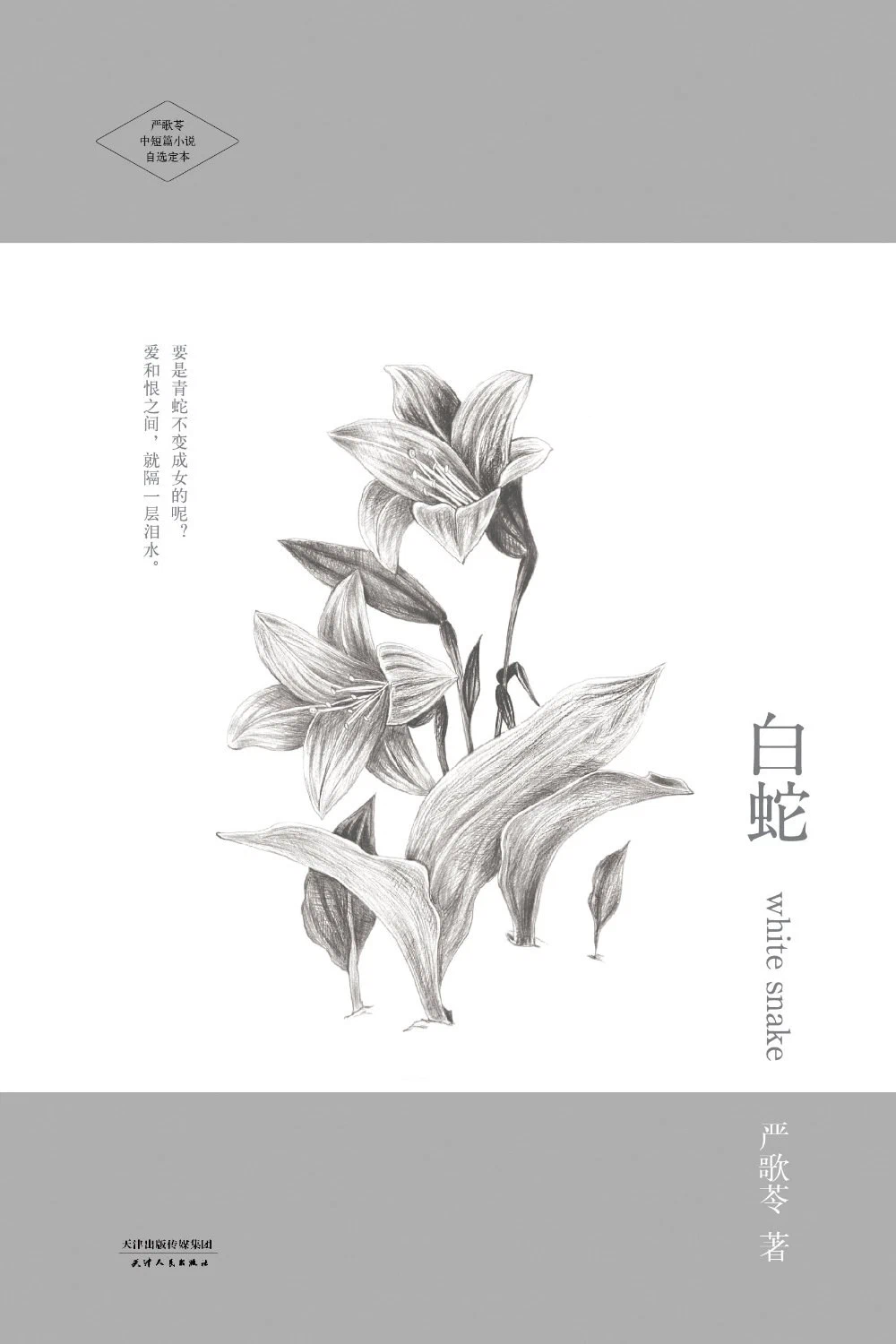
White Snake is a short story written by Yan Geling in 1999. Sun Liqun, a dancer renowned for her role as the “White Snake,” falls into disgrace during the Cultural Revolution. Her figure changes, she becomes an object of ridicule, even mocked while using the bathroom. Gradually, she grows accustomed to this kind of life. The arrival of a central government official named Xu Qunshan disrupts this surface calm. Xu’s admiration warms her cold, quiet life like autumn sunlight. What she doesn’t expect is to soon discover that Xu Qunshan (actually Xu Qunshan, a woman) is in fact a girl. This may be the final straw that breaks Sun Liqun — after her breakdown, she’s sent to a psychiatric hospital. After all manner of turns and changes, the two come to understand each other, find release, and fall in love. After the Cultural Revolution ends, Sun Liqun becomes a dancer again. And just after her solo performance, the long-absent Xu Qunshan reappears. By then, each of them has her own family, and it seems as though their earlier infatuation was merely an episode in the larger course of life.
In a heterosexual world, any love between two people of the same sex is an arduous road of resistance. Sun Liqun and Xu Qunshan move from an attraction that begins, seemingly, between “opposite sexes,” into a tangled same-sex entanglement — a love that drags on messily, painful yet not without its warmth. But what they face is not merely the parental authority that Romeo and Juliet, or Liang Shanbo and Zhu Yingtai, had to confront; it is the crushing erosion of an entire society, like a thick fog hanging over a dim, oppressive sea, settling there as something eternally renewed and never lifting.
The final scene of the story is rich with implication: Sun Liqun sighs that all her longing can finally come to rest; Xu Qunshan, clumsily, is learning to become a “woman”; Sun Liqun can’t help reaching out to smooth Xu Qunshan’s hair; Xu Qunshan wipes away Sun Liqun’s tears… It can’t help but make you wonder — were they really assimilated by the secular world? Were they really violated by the heterosexual world? Did they really both become bisexual?… Of course, the answer to that is unknown. What happens after can only live on in the reader’s own thoughts.
Many TV series these days end this same way — some confusing, some seemingly complete — and behind these surface appearances lies an openness. Viewers can imagine all the different lives Rose might lead after The Story of Rose; they can fantasize about the wonderful struggles of the three characters after Hidden Love (or Ripe Town). As Valéry said: “There is no true meaning of a text.” That captures the essence of openness precisely: it is the free combination of infinite possibilities. Sartre, too, believed that “existence” cannot be reduced to any fixed set of expressions, because an individual’s existence keeps changing with each person’s free choices.
Rather than say there is no ending, it would be more accurate to say the ending never began.