Monster OST
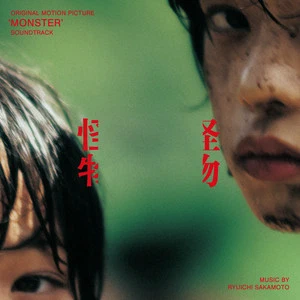
Hirokazu Kore-eda’s 2023 film Monster (かいぶつ). A single mother suspects her son, Minato Mugino, is being bullied, takes it up with the school, and finds herself in an endless tug-of-war with the teacher involved. Meanwhile, the tangled relationship between her son and a classmate, Yori Hoshikawa, unravels piece by piece.
The film opens with a fire in the busy part of town and closes on a calm, settled note. Fields, blue sky, white clouds, children walking carefree to school — everything signals the quiet peace of this small Japanese town. It reminds me of the town of Spectre in Big Fish, where people hang their shoes on the wires and live happily on soft green grass. Even the houses are painted in cheerful, cozy colors. But the extreme conservatism hiding in people’s hearts there is also part of what makes it a small town — no ambition left, idleness shading into boredom, a poet who can no longer write poems. Such a town is undoubtedly the product of a fairy tale, and also its end.
If Big Fish is built on a fairy tale, then Kore-eda’s Monster carries more of a social edge: a surface calm riddled underneath with holes, full of sanctimonious posturing. A dead cat is examined in close, careful detail — set alight, you can almost smell the corpse; the principal, who seems so meek and deferential, may have killed her own granddaughter; the boy’s dead father is “fashioned” by the mother into a role model meant to inspire her son’s growth, when in fact he died unexpectedly while having an affair… At the same time, the film is full of details worth lingering over, with a distinctly psychoanalytic flavor — the little drawing that falls to the ground midway through with the word “monster” scrawled on it, the wall covered in students’ handprints, and of course Kore-eda’s signature warmth, which always leaves you thinking long after the credits roll.
This OST (click to open) is full of understated color, yet shot through with something mysterious and eerie. Aqua renders that uncanny mood to the fullest. Listening to the score, it’s easy to picture the scenes of Minato and Hoshikawa together, as if it forms a strange feedback loop, breaking you apart bit by bit and then putting you back together bit by bit. A mood of melancholy, strangeness, and dreaminess lingers in the ear like a dream itself.