Shadows of the Bed
Loving sleep is, more or less, a human instinct. A newborn infant sleeps roughly 20 hours a day, and once grown, aside from a few rare exceptions who need little or no sleep, most of us manage around 7 or 8 hours a night. But in this fast-spinning age, the luxury of waking up naturally, whenever the body decides, isn’t really available to most people. The folk tunes, the idleness, the wandering, the vagrants that Milan Kundera longs for in Slowness seem, against this backdrop, like an especially blessed kind of leisure.
Lying in bed can be a real pleasure. Lu You, lying idle in bed, once wrote “A Sudden Storm on the Fourth of the Eleventh Month” and “Spring Rain Clearing in Lin’an.” “All night the rain falls softly on the little tower; by dawn, deep in the lane, someone hawks apricot blossoms.” Such poetic lines have shaped no small amount of distinctly Chinese romantic fantasy — spring rain falling gently in the night over quiet streets, soaking and cleansing the thirsty alleys; by day, the poet, lingering in bed, is roused by the warm sun, half-aware of a peddler’s cry drifting in from outside. Chen Yuyi, too, as the ice thawed in the second lunar month, wrote: “A traveler’s days pass within the pages of poems; news of apricot blossoms arrives in the sound of rain.” The apricot blossoms here, the sound of rain — too delicate, too refined, falling short, in the end, of Lu You’s deft little tower.
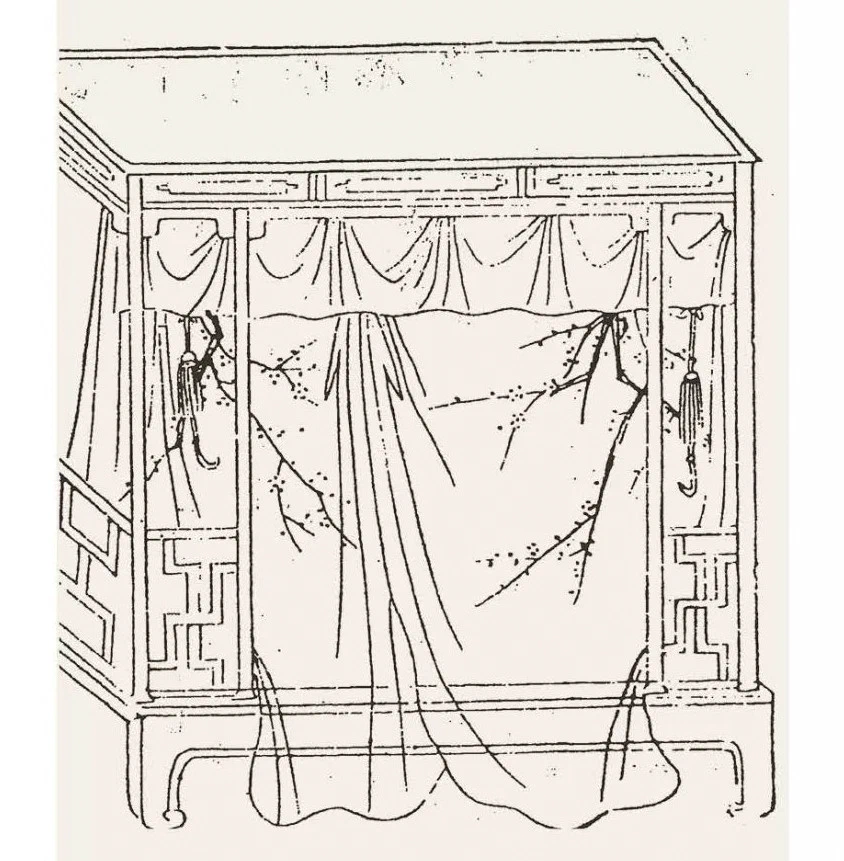
The Qing-dynasty novelist Li Yu, stepping outside such poetic imagery, devoted a section of Sketches of Idle Pleasure specifically to beds and bed curtains. He wrote: “This bed is the thing I have shared half my life with — even ranked ahead, in some sense, of the wife who shared my hardships from our wedding day. Of all the things a person treats with the deepest regard, none surpasses this.” Here, Li Yu compares his bed to his own wife, which tells you he must have been someone who truly loved sleep. He also proposed four ways to beautify a bed: “First, let the bed bear flowers; second, let the curtain have a frame; third, the curtain should be fitted with a lock; fourth, the bed should wear a skirt.” Specifically, “letting the bed bear flowers” means placing potted flowers by the bedside; “letting the curtain have a frame” means setting up a mosquito net with an internal structure to keep insects out; “the curtain should be fitted with a lock” suggests a mosquito net with three fasteners, so mosquitoes can’t slip in; and “the bed should wear a skirt” means adding a valance to the bed, both for looks and ease of cleaning. Li Yu also wrote about his own methods for keeping a room cool in summer and warm in winter.
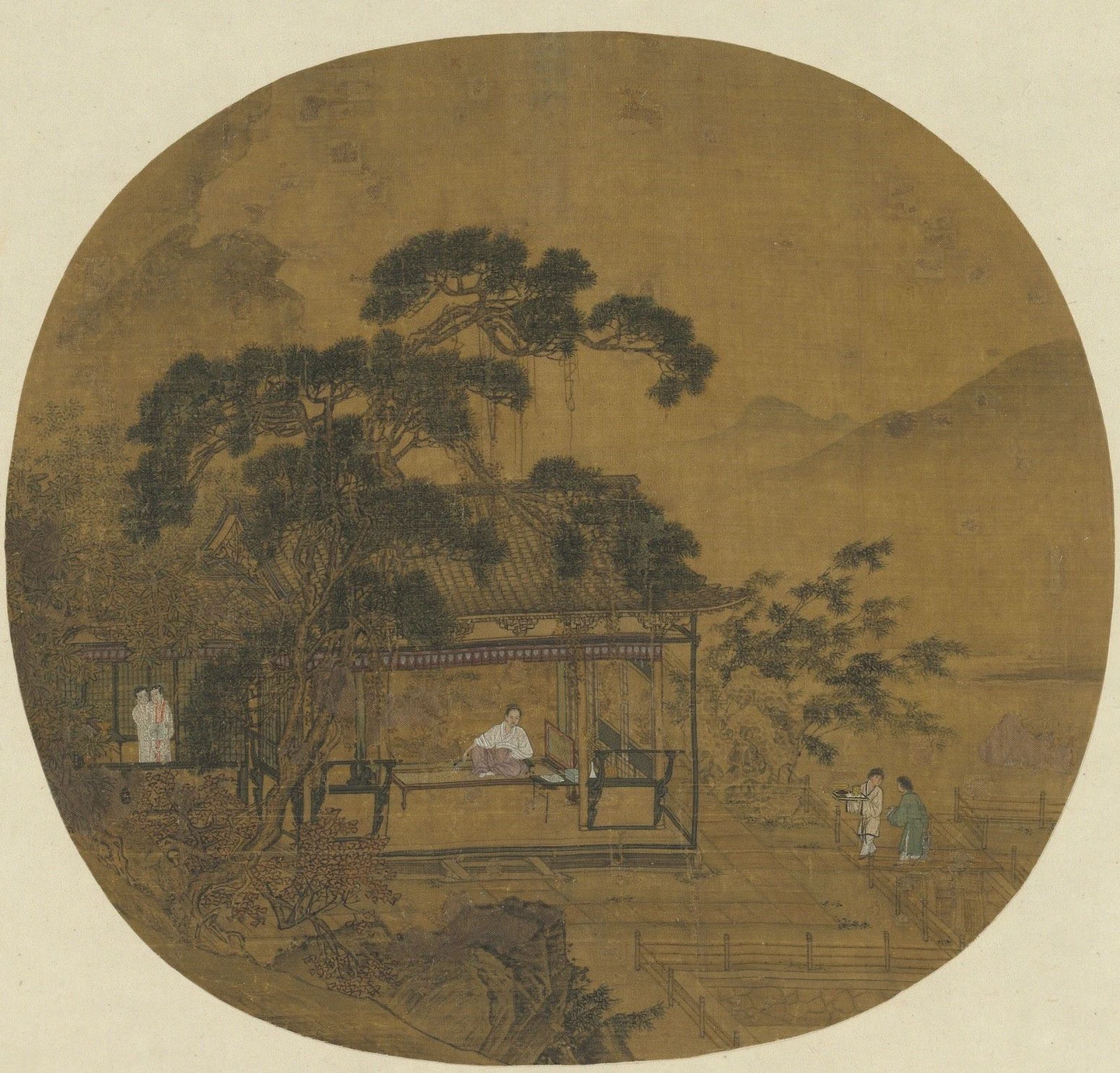
There’s a clear difference between the beds of the ancients and those of today. In the painting Reading by the Window, you can see a small folding screen placed at the head of the bed — what the ancients called a “painted screen,” “small screen,” or “pillow screen,” generally meant to block drafts. Ouyang Xiu’s “On a Plain Screen” likewise reflects the feeling he had for one such painted screen.
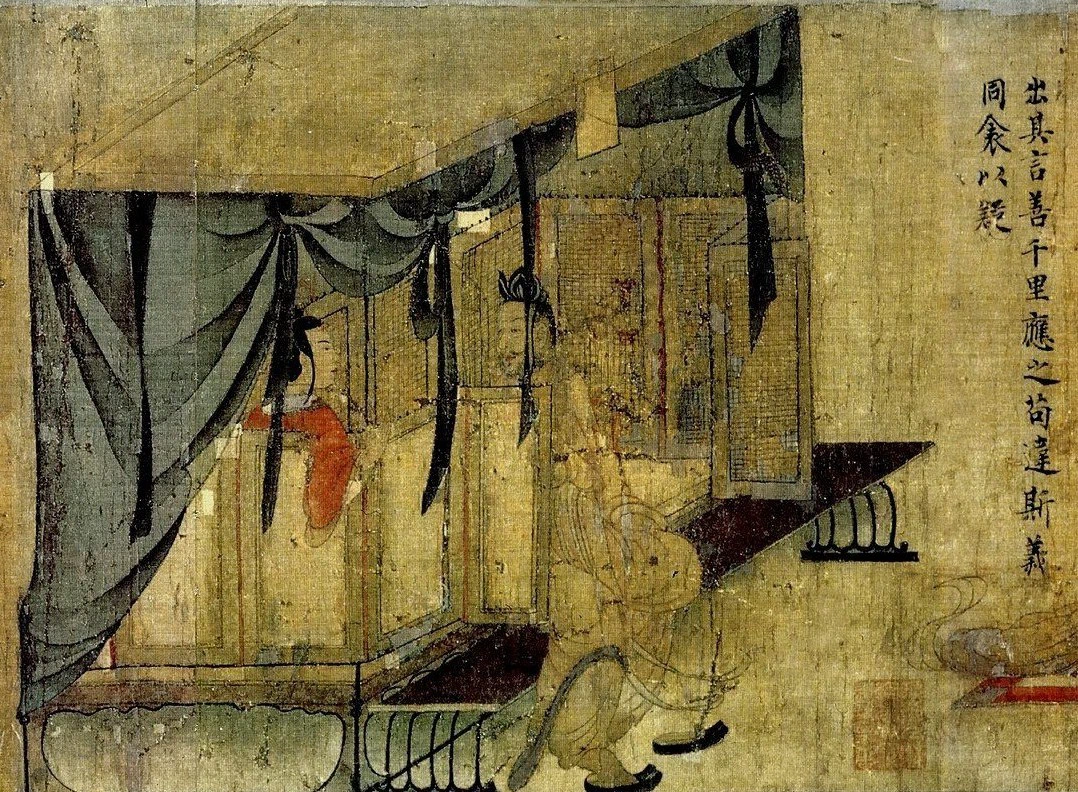
Before the Tang and Song dynasties, beds were more like the one shown in Admonitions of the Court Instructress by the Jin-dynasty painter Gu Kaizhi — typically designed with railings enclosing them, a structure that can later be seen in Japan as well. This kind of fixture always struck me as a bit stifling and rigid. Such beds were probably meant either to conceal certain private acts, or to keep children from rolling off while asleep.
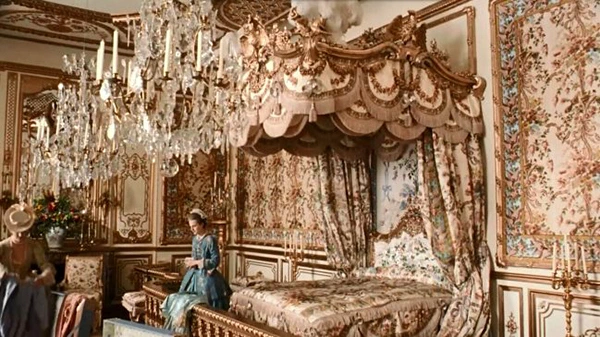
European beds show a different sensibility altogether. Take, for instance, the architecture and ornamentation seen in the film Marie Antoinette — the Rococo-style beds still carry forward the lavish extravagance of the Baroque period, and amid all that extreme opulence, you can already glimpse the first hints of the simplicity that would follow classical styles. As Neoclassicism, naturalism, and rationalism developed, later European architecture abandoned those wanton, eccentric, overly ornate lines. Setting aside architectural aesthetics, if you look closely at the beds in that film, you’ll notice a similarity to Jin-dynasty beds: both feature large bed curtains. What might this mean? Is it a tool for concealment used by people of high status? Or is it simply, like the painted screen, just a device to block drafts?
Of course, the gold-and-jade splendor of those European headboards is far less interesting to me than the Chinese painted screen. The landscape paintings and paintings of court ladies on a painted screen tell so many stories. Records of the Listener mentions someone who kept seeing a beautiful woman every time the lights went out, and who later discovered, upon taking the screen apart, the secret behind it: underneath the screen was an older painting, and the woman in that older painting had become a spirit.
I’ve been troubled by my bed lately. Last night I took some Unisom and slept without a single dream — “Drink one cup at dawn and sleep through a whole nap; what in this world is worth all the fuss?”