There Should Still Be a Little Curiosity
This is an age of dazzling pleasures, an age of bizarre and bewildering spectacle, an age indifferent to right and wrong. So many things have become habit without anyone knowing their origin or reason. I’ve never quite understood why Leonardo da Vinci is so revered, just as I’ve never understood why psychology discussion groups are supposed to relieve anxiety, or how someone can hold forth at length about how to “not grind” while “casually” letting slip which district they live in, how many properties they own, and how many of their children got into Ivy League schools…
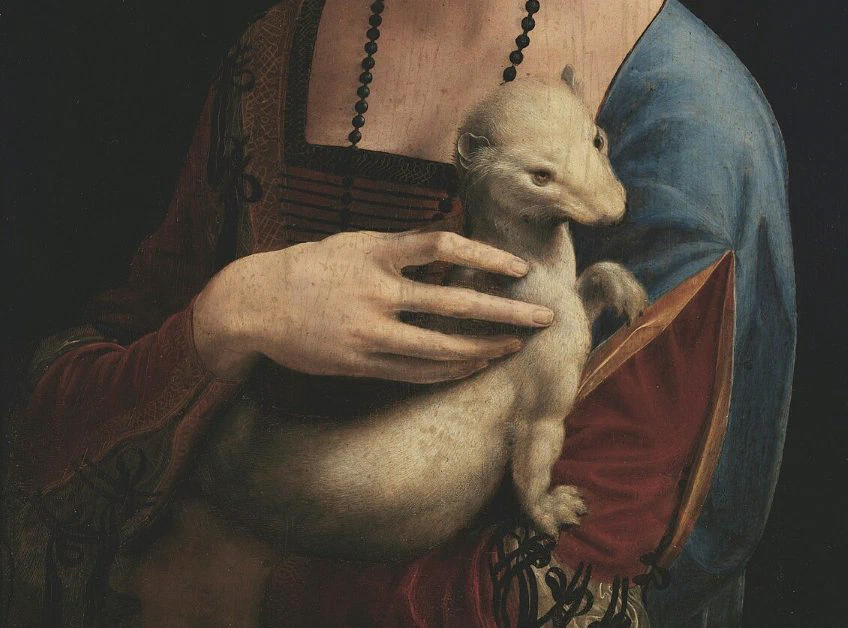
Granted, da Vinci is a master of some sort — though exactly what sort is hard to pin down. Many people say his paintings inspire a mysterious longing, but my first glance at the Mona Lisa only made me think: a person with no eyebrows. My first look at his manuscripts: the doodles of a scientist. My first look at The Last Supper: an old man, sick of painting murals, putting on airs of profundity… The one exception was Lady with an Ermine — I gazed at it for a long time, as if conducting a careful psychoanalysis; I suspect there’s more than a little of the dream-world mixed into its creation.
A patchwork documentary, The Genius of Leonardo Da Vinci (click to watch), seemed to offer me a small revelation. Da Vinci never handed down “master’s” pearls of wisdom, nor did he confine anyone to his own way of thinking — he simply showed a way of seeking answers. Faced with complicated questions like “science,” “happiness,” or “joy,” what’s needed isn’t some intangible debate over which came first, mother or child (Chapter 52 of the Tao Te Ching), nor the all-embracing idea that the whole universe fits inside a mustard seed — what’s needed is to understand the world outside and the world within, to stay curious, and then — to ask oneself honestly.