Every Day a Good Day - Part 2
(Part 1) Otemae (お手前) refers to the formal procedures and etiquette for preparing, whisking, and serving tea in Japanese tea ceremony. It’s not just a set of instructions for movement — it’s the tangible expression of the tea ceremony’s spirit (harmony, respect, purity, tranquility). Broadly, it varies by school (Omotesenke, Urasenke, Mushakojisenke, and others), and further branches into many variations — “usucha temae” (thin tea), “koicha temae” (thick tea), “ro temae” (sunken hearth), “furo temae” (portable brazier) — depending on the season, utensils, and occasion.
In its narrowest sense, “otemae” refers to the precise sequence of interactions and movements between host and guest within the tea room — literally, “temae” means making tea in front of the guest. But in a broader sense, it also refers to the artful shaping of time, space, utensils, and state of mind throughout the entire tea gathering. Setting aside the elaborate choreography, otemae is essentially a spiritual practice of seeking stillness within motion. Its core utensils include the tea bowl, the whisk, the tea scoop, the tea container, and the water jar. In theory, every shift in movement should resonate with the dim light of the tea room and the turning of the seasons outside the window. Each school has its own distinct aesthetic, and both the choice of utensils and the rapport between host and guest demand great care. Beyond these technical considerations, the fluidity of the movements and the visual beauty of the ritual matter just as much.
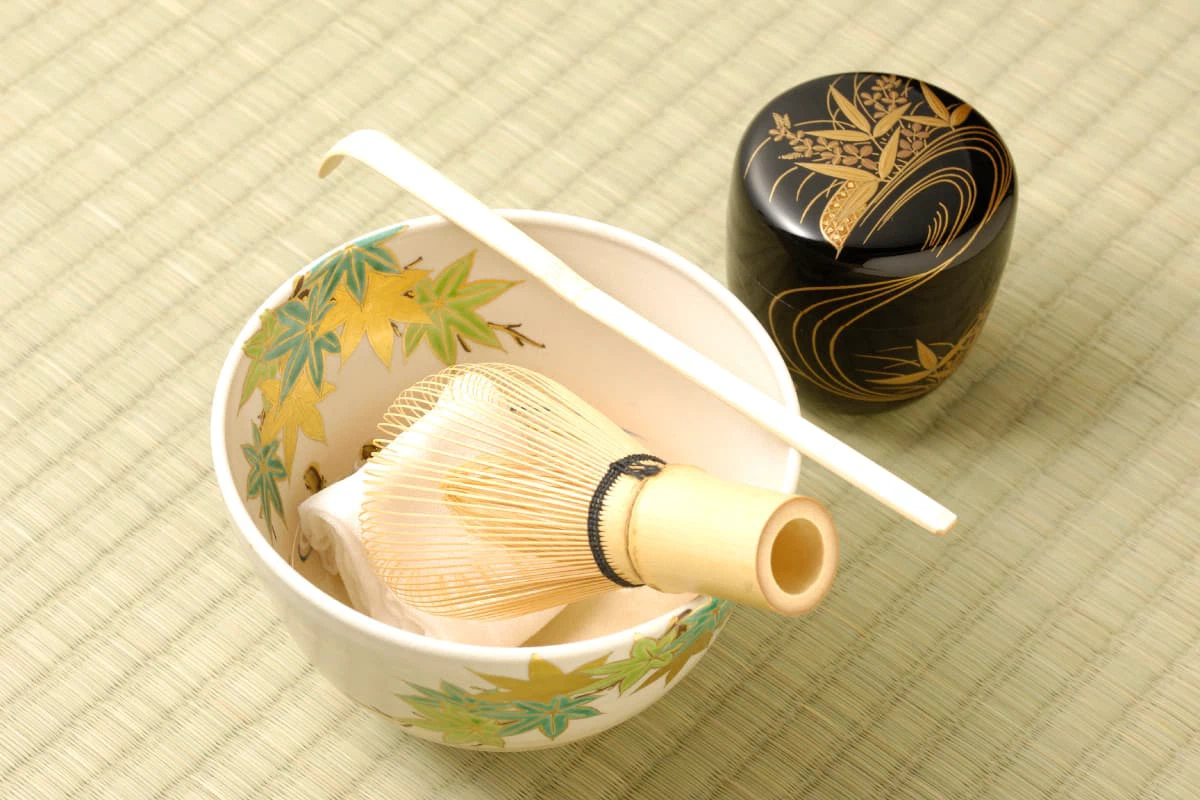
Apart from the rhythm of the whisk striking the tea, the external tools of tea-making have remained largely unchanged in their austere form; yet the seemingly rigid internal choreography demands that the host, through years of practice, peel away distraction and restlessness layer by layer with focus and mindfulness, until the tea reaches its ideal flavor and state.