Past Lives
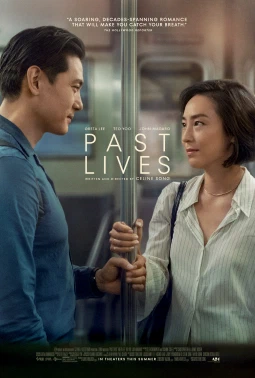
In Gu Long’s classic The Sentimental Swordsman, Ruthless Sword, the middle-aged swordsman Li Xunhuan, his heart turned to ash, climbs Mount Song on a snowy night and briefly entertains the idea of abandoning the world of martial arts. But he doesn’t stay there — he chooses to return to that world instead. The film Past Lives (2023) seems to tell a similar story of “not being able to stay.”
Nora and Hae Sung were childhood classmates who liked each other. Nora’s emigration split their life paths apart completely. Twelve years later they reconnect online, video-calling across the Pacific — and then twelve more years pass before they finally meet in person on the streets of New York. Three separate timelines, two missed chances: there are moments of “maybe we could have,” but they never truly fall in love or end up together.
Setting aside their back-and-forth and the Buddhist notion of “inyeon” (fate/destiny), the ending doesn’t give the audience the “happily ever after” they might expect. Nora is already married to her American husband, and Hae Sung’s visit twenty-four years later is less a reunion than a farewell ceremony. The scene where the three of them sit together at the bar is worth dwelling on. Sitting there, they both know that the relationship they had when they were young can never be recovered. Nora has a husband now; Hae Sung has his own life. The three of them (Nora’s husband included) drinking together — that awkwardness is even more pronounced than if the two of them had met alone.
I like how the director handles this relationship. She doesn’t turn it into the story of “soulmates who missed each other,” nor does she stage a solemn, deliberate goodbye. In the final scene, Nora watches Hae Sung leave, walks back alone, and once inside, breaks down crying in her husband’s arms. I don’t think that shot can be fully explained by asking “does she still love Hae Sung?” What she’s crying for may not be Hae Sung alone. Perhaps it’s simply that, in this moment, she finally realizes this relationship is truly over.
Freud once said that mourning is the slow process of withdrawing one’s attachment from what has been lost — and it’s a process people are usually reluctant to go through. I recently read The Twisted Time of Krems, in which none of the five protagonists manage to finish this process; they all still seem to want an explanation from a youth that’s long gone. But thinking about it more, this is really most people’s flaw.