The Humanistic Sensibility of the Social Researcher
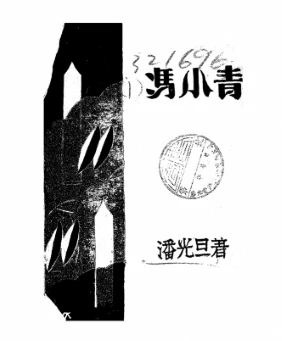
What used to be called “shadow-love” (影恋) is what we now call narcissism. Most people know the root of the term from the Greek myth of the beautiful young man Narcissus — the English word “narcissism” is simply a variation of his name.
Compared to our modern “narcissism,” the older Chinese phrase “shadow-love” sits closer to the classical idiom “to pity one’s own reflection” (顾影自怜). In the words of the scholar Pan Guangdan himself: “Whether the reflection is a mirror image, a ripple on water, or a painted or photographed likeness, it can all be summed up by the character for ‘shadow’; China has long had the saying of pitying one’s own reflection — some minimal form of shadow-love is a psychological state shared by everyone…” Likewise, in Pan’s translations, terms like “withered-willow love,” “the wild-goose phenomenon,” and “gene” all carry a distinctly local flavor. Li Yinhe, in Subculture of Sadomasochism, adopted the term “love through cruelty,” noting that the translation captures both the cruelty and the love embedded within it. Indeed, “love through cruelty” sounds far more humane than “sexual abuse.”
The surprises in the language don’t stop there. Read this book closely and you’ll keep finding little delights. Take “Nasha-Xishi phenomenon” (奈煞西施现象) as a rendering of “Narcissism” — a translation so much better than a flat phonetic transliteration that I couldn’t help but applaud. Some social researchers’ translations can barely achieve basic clarity, reading as if Chinese were being forced into the original language’s word order. And looking at the horrifying translations AI now produces, I sometimes think I’d be better off just learning a foreign language myself. The prose in this book reads almost like poetry — its retelling of the Greek myth takes only a few sentences, yet captures both the form and the spirit, flowing beautifully… there’s no end to what one could praise here.
On the case of Xiaoqing discussed in the book, Pan Guangdan says it is “the earliest example I have found in the historical record, and without doubt the most elegant one” — its psychological value, he writes, “surpasses many of the cases documented in the West over the past forty years.” That alone speaks to how valuable the Xiaoqing case is. It is, in fact, a real pity for the history of scholarship East and West that Pan never rendered this significant case into English.