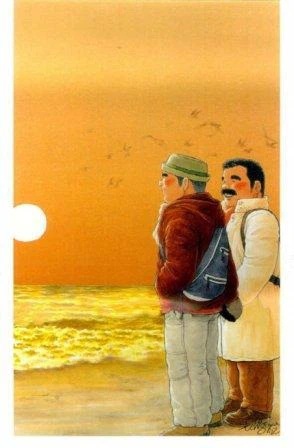
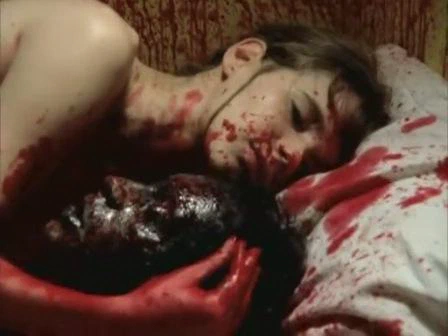
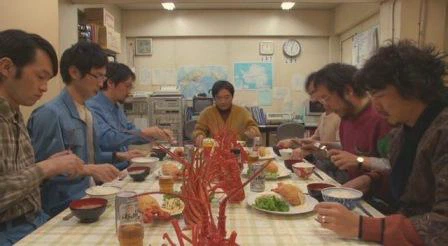
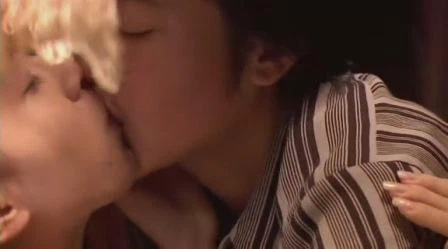
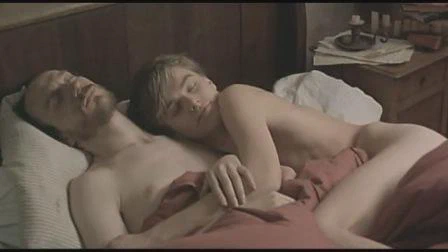
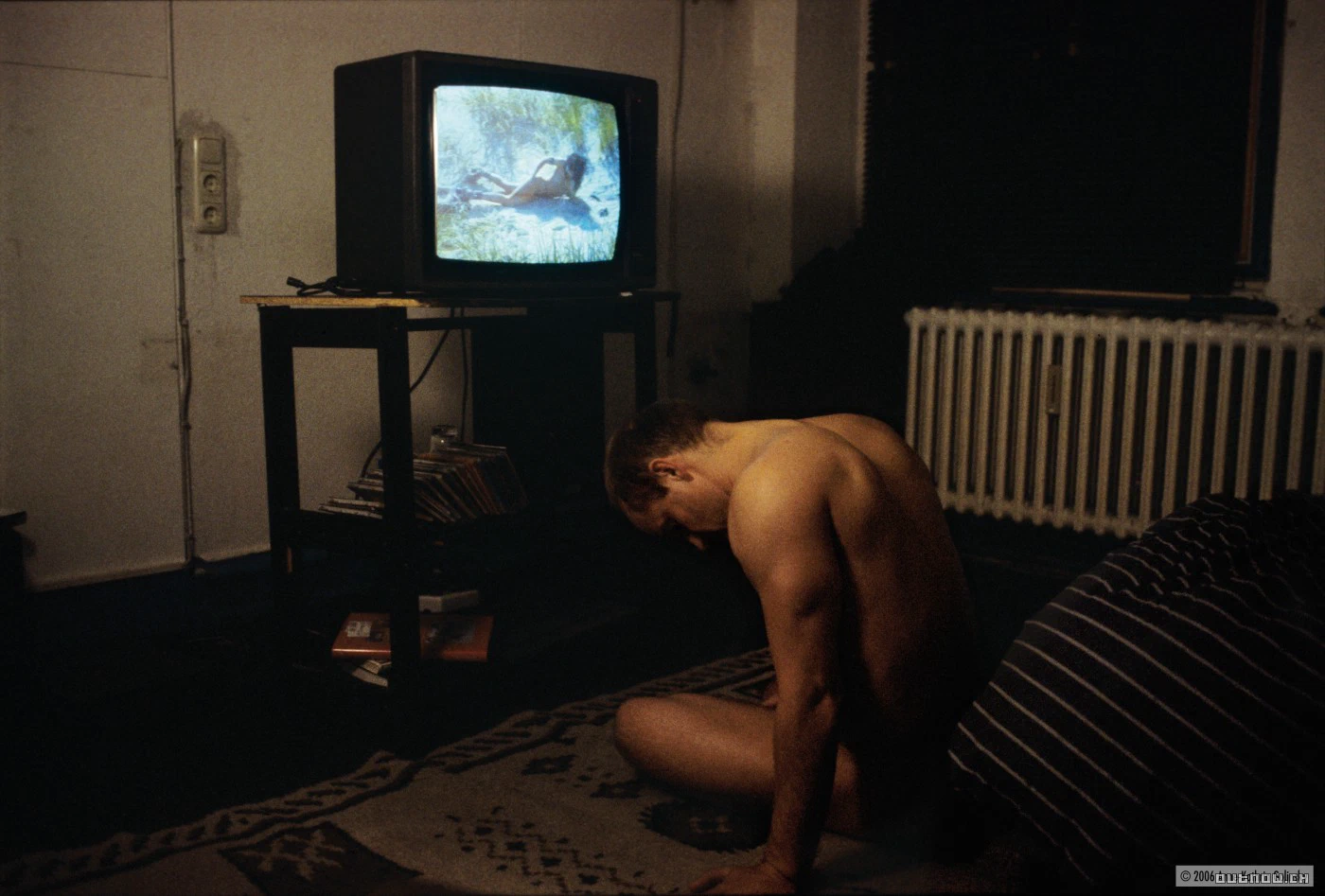
The Mutants ought to be seen as a manga about portraying human nature. The lines in this manga feel like a pair of eyes watching you from behind. The series isn’t finished yet — the first nine volumes already contain the spiritual and physical hand-to-hand combat between Nagoshi and the mutants — conveyed through sex, through blood, both primal and real.
The protagonist is a vagrant, a celebrity, an actuary, a mutant — or perhaps just an empty shell after plastic surgery — and isn’t he, covered in labels, really just like one of us? Once he peels off his own labels, he’s left bewildered, even unhinged — and what about us? What would be left once we peeled off the labels stuck to us? Would it amount to nothing as well? Below are some excerpts from the original text. Note: Homunculus refers to the little person inside one’s head — twisted around, in our own words, it’s something like an inner demon.
Between birth and the age of about a year and a half, a human skull still has gaps in it — meaning it remains in an open, perforated state — before it seals up as the person grows into adulthood. By opening holes in the sealed skull of an adult, the pressure inside the skull changes, allowing a large amount of blood to flow into the brain, restoring it to an active state — at which point a person may gain a kind of sixth sense. The protagonist underwent surgery to open holes in his skull, and through it gained the ability to see the mutations within the human heart — the mutants.
When humans feel something intensely, they reach for the mouth and the hands — put in the most extreme terms, this means sex. Beyond touch, humans also have sight, hearing, smell, and taste — all information arrives through the five senses. Gathering information through the senses is what we call experience. Experienced events, together with time, become memory in the brain. When the experiences humans gain through their five senses, accumulated as a memory map inside the brain, are given three-dimensional form, the result is a pure Homunculus. The places where a person sinks and twists deep within themselves become all manner of monsters — and what you see there is the Homunculus. Physical pain doesn’t turn into a visible Homunculus; it’s emotional and inner wounds — psychological distortion — that become Homunculi visible to be seen.
Everyone has a self-image different from their outward appearance. This so-called self-image exists in an unconscious state. For this original self to emerge, it has to happen in dreams. In dreams, the self appears in unimaginable forms — it can fly, it can melt.
Humans are made up of consciousness and the unconscious. The unconscious accounts for 95% of a person. When a thought entered into consciousness doesn’t match what was originally there, the original thought gets suppressed in the unconscious, frozen and sunk into its depths. Because it’s buried so deep, consciousness can no longer recall it, producing what we call forgetting. But simply hiding it away doesn’t make it disappear — it keeps tangling itself up in places consciousness can’t understand, which is why unexplained binge eating and vomiting, obsessive thoughts, fear of eye contact, and even symptoms of mental illness can appear. The original thought retains the emotional temperature it had at the time, spreading through the unconscious. This entity then keeps looking for a chance to resurface into consciousness and find release. The way to achieve that release is to pull the frozen emotion buried deep down back up into consciousness and thaw it. Humans take in all kinds of information through the body, grasping it with extraordinary precision: the body’s subtle tension, the contraction of muscles, shifts in the center of gravity, twitches in the facial muscles — together with the unease, anger, joy, and desire that a person’s body and expressions reveal — and, without even realizing it, we come to understand living beings by reading these constantly shifting emotional states within the body. For example, when you receive a gift from someone and open it, you smile and say thank you to show your delight — but were you really, genuinely happy in that moment? We’re all fooled by that word, “feeling.” In truth, the body unconsciously lets out an enormous amount of information, which is unconsciously received by the other person. Relying on the five senses, humans exchange information at this unconscious level, in places we can’t see, all while dressing it up with polite phrases and friendly smiles — animals of a rather base sort, when you get down to it.
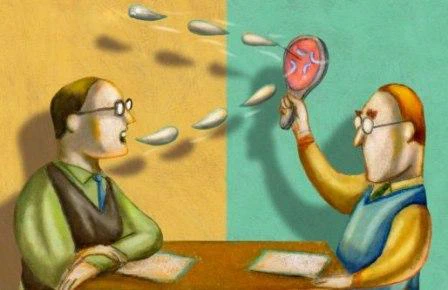
Everyone has their own behavioral patterns, and because of the interference of these patterns, people end up doing things they never expected, without even realizing it. Every person’s body has two sides: one is the conscious side — the side turned outward, the one that understands social niceties, that knows how to lie, the side that follows the rules, though it can feel a bit rigid. The other is the unconscious side — representing the real you, the side whose emotions can be read at a glance, the side you want to protect from other people’s prying eyes, the side that isn’t rigid at all. We use both sides without even noticing. Human eyes don’t just see the world in front of them — within that visible world, there’s also something that reflects yourself back at you. When you look at a Homunculus, the Homunculus is looking right back at you.